Peter Paul Montgomery Buttigieg, born January 19, 1982, is a notable American politician and former naval officer, recognized for his service as the 19th United States Secretary of Transportation from 2021 to 2025. A member of the Democratic Party, he previously held the position of mayor of South Bend, Indiana, from 2012 to 2020, earning the moniker “Mayor Pete.”
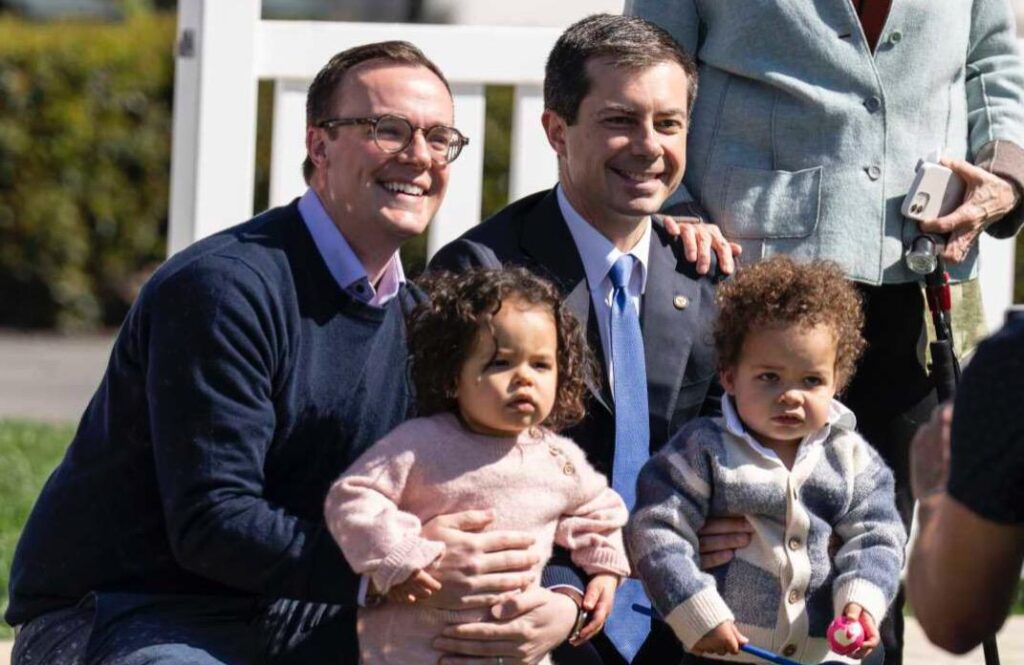
Pete Buttigieg graduated from Harvard College and the University of Oxford, where he was a Rhodes Scholar. He worked at McKinsey & Company for three years starting in 2007 before serving as an intelligence officer in the United States Navy Reserve from 2009 to 2017, achieving the rank of lieutenant.
His military service included a deployment to Afghanistan in 2014 for seven months. Prior to his mayoral election in 2011, Buttigieg was involved in campaigns for other Democratic candidates, including Jill Long Thompson, Joe Donnelly, and John Kerry, and he campaigned unsuccessfully as the Democratic nominee for Indiana state treasurer in 2010. Notably, while serving as mayor, he publicly came out as gay in 2015.
In June 2018, he married Chasten Glezman, a schoolteacher and writer. Pete Buttigieg decided not to seek a third term as mayor. He launched his candidacy for the 2020 Democratic presidential primaries on April 14, 2019, making history as the first openly gay man to run for the Democratic presidential nomination. Despite initial low expectations, he gained traction throughout 2019, succeeding in the Iowa caucuses and achieving a close second in the New Hampshire primary, thereby becoming the first openly gay candidate to win a presidential primary or caucus. Ultimately, he withdrew from the race on March 1, 2020, subsequently endorsing Joe Biden.
When Biden was elected president, he nominated Buttigieg for Secretary of Transportation in December 2020. His confirmation on February 2, 2021, by a significant majority (86–13) positioned him as the first openly gay Cabinet secretary in U.S. history. At age 38, he was also the youngest member of the Biden Cabinet and holds the distinction of being the youngest individual ever to lead the Department of Transportation. Although he was mentioned as a potential running mate for Kamala Harris in the lead-up to her 2024 presidential campaign, he was ultimately not selected.
Early life and career of Pete Buttigieg
Pete Buttigieg, born on January 19, 1982, in South Bend, Indiana, is the only child of Jennifer “Anne” Montgomery and Joseph Anthony Buttigieg II. His parents, both educators at New Mexico State University, met and later married. Joseph Buttigieg, originally from Ħamrun, Malta, emigrated to the U.S. to pursue his doctorate, eventually becoming a professor of English at the University of Notre Dame, which is located near South Bend. His mother also taught at Notre Dame for 29 years.
Joseph’s academic pursuits included translating and editing works of Marxist philosopher Antonio Gramsci, particularly Gramsci’s “Prison Notebooks.” This intellectual environment significantly influenced Pete Buttigieg’s inclination towards literature in his college studies.

Education
Pete Buttigieg, the valedictorian of St. Joseph High School in South Bend (class of 2000), distinguished himself by winning the first prize in the Profiles in Courage essay contest at the John F. Kennedy Presidential Library and Museum. His essay focused on the integrity and political courage of U.S. representative Bernie Sanders, which earned him a trip to Boston where he met notable members of the Kennedy family.
That same year, he was also selected as one of two delegates from Indiana for the United States Senate Youth Program, a competitive scholarship program.
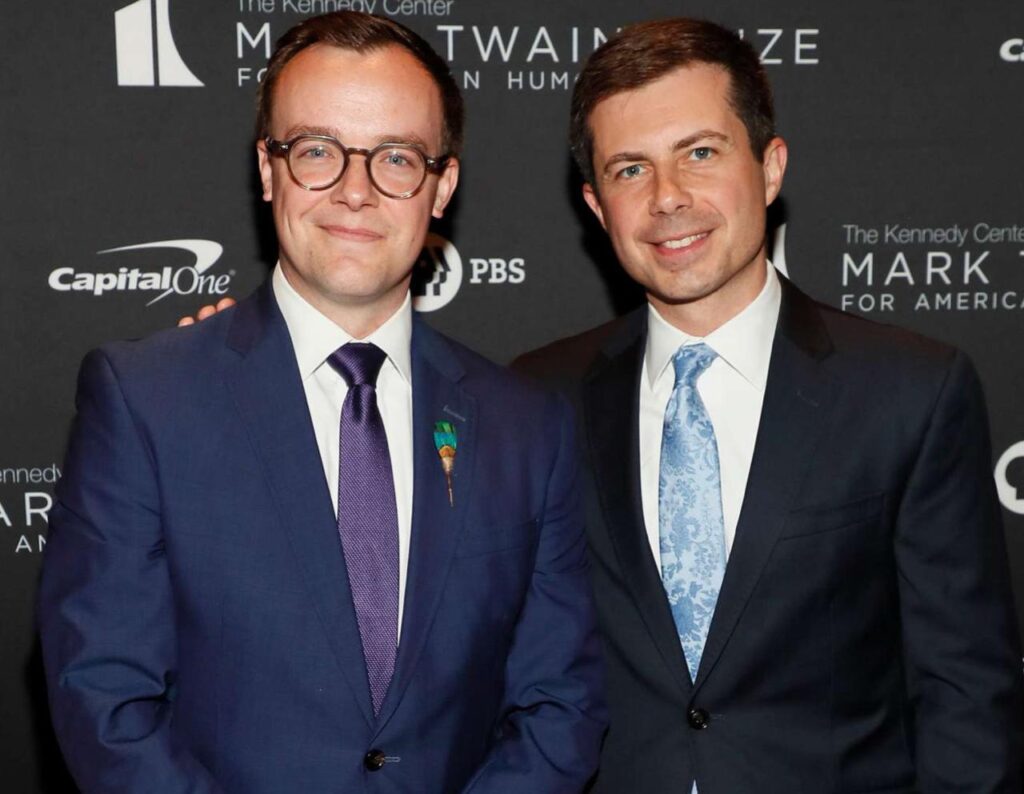
Upon graduation, Pete Buttigieg attended Harvard College, where he majored in history and literature, became president of the Student Advisory Committee at the Harvard Institute of Politics, and contributed to the institute’s research on youth political attitudes. His undergraduate thesis explored Puritanism’s impact on U.S. foreign policy, as illustrated through Graham Greene’s novel, The Quiet American. In 2004, he graduated magna cum laude and was inducted into Phi Beta Kappa.
Pete Buttigieg academic journey continued with a Rhodes Scholarship to the University of Oxford. He graduated in 2007 with a Bachelor of Arts degree, achieving first-class honors in philosophy, politics, and economics from Pembroke College. During his time at Oxford, he served as an editor for the Oxford International Review and co-founded the Democratic Renaissance Project, a group dedicated to political debate and discussion among students. His educational accomplishments set a strong foundation for his future career in politics.
Professional career
In 2007, after graduating from Oxford, Pete Pete Buttigieg began his professional career as a consultant at McKinsey & Company in Chicago, where he specialized in various sectors including energy, retail, economic development, and logistics over a span of three years.
His client portfolio comprised notable organizations such as Blue Cross Blue Shield of Michigan, Best Buy, and Canadian supermarket giant Loblaws, in addition to several nonprofit environmental groups like the Natural Resources Defense Council and the Energy Foundation. He also collaborated with multiple U.S. government agencies, including the Environmental Protection Agency, the Department of Energy, the Department of Defense, and the Postal Service.
In 2008, Pete Buttigieg temporarily left McKinsey to serve as research director for Jill Long Thompson’s campaign for governor of Indiana, which did not succeed. His consulting role at McKinsey also included international assignments to Iraq and Afghanistan, experiences he tends to keep private. In 2010, he made the decision to leave McKinsey to fully concentrate on his campaign for the position of Indiana state treasurer.
Additionally, Buttigieg has been a part of the Truman National Security Project since 2005, where he has contributed as a fellow focusing on issues related to Afghanistan and Pakistan. His continued involvement with the organization was solidified when he was appointed to its board of advisors in 2014.
Military service
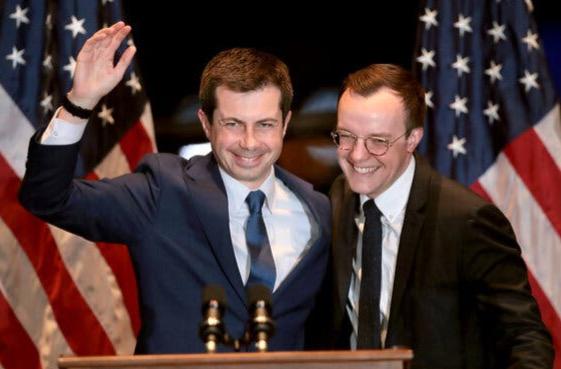
Pete Buttigieg joined the U.S. Navy Reserve in September 2009 through the direct commission officer (DCO) program, starting his service as an ensign in naval intelligence. During his tenure as mayor, he took a seven-month leave to deploy to Afghanistan in 2014. In Afghanistan, Buttigieg’s unit was tasked with identifying and disrupting terrorist finance networks, primarily operating out of Bagram Air Base.
He also served as an armed driver for his commander, undertaking over 100 trips into Kabul, where he monitored for ambushes and explosive devices to ensure the safety of their transport, a role he humorously termed “military Uber.” Additionally, he was part of the Afghan Threat Finance Cell, a counterterrorism unit focused on disrupting Taliban financing. For his service, Buttigieg received the Joint Service Commendation Medal and concluded his service in the Navy Reserve in 2017.
Indiana state treasurer election
Pete Buttigieg was the Democratic nominee for the position of state treasurer in Indiana during the 2010 election, where he garnered 37.5 percent of the total votes but ultimately lost to the Republican incumbent, Richard Mourdock. A significant focus of Buttigieg’s campaign was his criticism of Mourdock’s investment decisions regarding state pension funds, specifically highlighting Mourdock’s choice to invest in Chrysler junk bonds. Additionally, Buttigieg pointed out that Mourdock had filed a lawsuit against Chrysler’s bankruptcy restructuring, an action Buttigieg contended jeopardized Chrysler-related jobs within Indiana.
Mayor of South Bend
First term
In 2011, Pete Buttigieg ran for the Democratic nomination for mayor of South Bend, focusing on job creation, education, international investment, increased public safety presence, and improved city services. He won the primary on May 3, 2011, and was elected mayor in November 2011 with 74% of the vote, defeating Republican Norris W. Curry Jr. and Libertarian Patrick M. Farrell. Buttigieg assumed office in January 2012 at the age of 29, becoming the second-youngest mayor in South Bend history and the youngest incumbent mayor of any U.S. city with over 100,000 residents.
After a federal investigation uncovered illegal recordings of several police officers, Buttigieg demoted South Bend’s police chief, Darryl Boykins, in 2012. Buttigieg’s first major error as mayor was asking for Boykins’s resignation, which Boykins contested, leading to a racial discrimination lawsuit. A settlement of over $800,000 was reached for Boykins and four officers. The controversy surrounding the police recordings and their legal implications became a significant issue, with Buttigieg facing political pressure regarding the tapes’ release, which was ultimately ordered by a judge in 2021.
During his tenure, Buttigieg initiated various development projects, including a $700,000 laser-light display along the St. Joseph River, and launched a 3-1-1 city service system in 2013. His notable “Vacant and Abandoned Properties Initiative” aimed to repair or demolish blighted properties and achieved its goal of addressing 1,000 properties within 1,000 days, with substantial demolitions taking place, which sparked distrust among communities of color.
Buttigieg served seven months in Afghanistan as a naval lieutenant, temporarily handing over mayoral responsibilities to Deputy Mayor Mark Neal. In 2015, amid debates over Indiana Senate Bill 101, criticized for its potential to discriminate against LGBTQ individuals, Buttigieg publicly came out as gay and aligned himself with the LGBTQ community, marking a significant moment in his career against discrimination.
Second term
Pete Buttigieg announced his intention to run for a second term as mayor in 2014, subsequently winning the Democratic primary in 2015 with approximately 78 percent of the vote against Henry Davis Jr., a city councilman. In November 2015, he was re-elected with over 80 percent of the votes, defeating Republican Kelly Jones by a significant margin of 8,515 to 2,074 votes. Following his reelection, Pete Buttigieg enacted an executive order in 2016 to establish a recognized city identification card.
To enhance South Bend’s downtown area, Pete Buttigieg introduced the Smart Streets urban development program in 2013. By early 2015, after conducting traffic studies and public hearings, he secured a bond issue funded through tax increment financing for this initiative. Smart Streets aimed to implement a complete streets approach, enhancing economic development, urban vibrancy, and road safety. The project’s initial elements were completed in 2016, with the overarching project officially concluded in 2017, earning recognition for stimulating private development within the city.
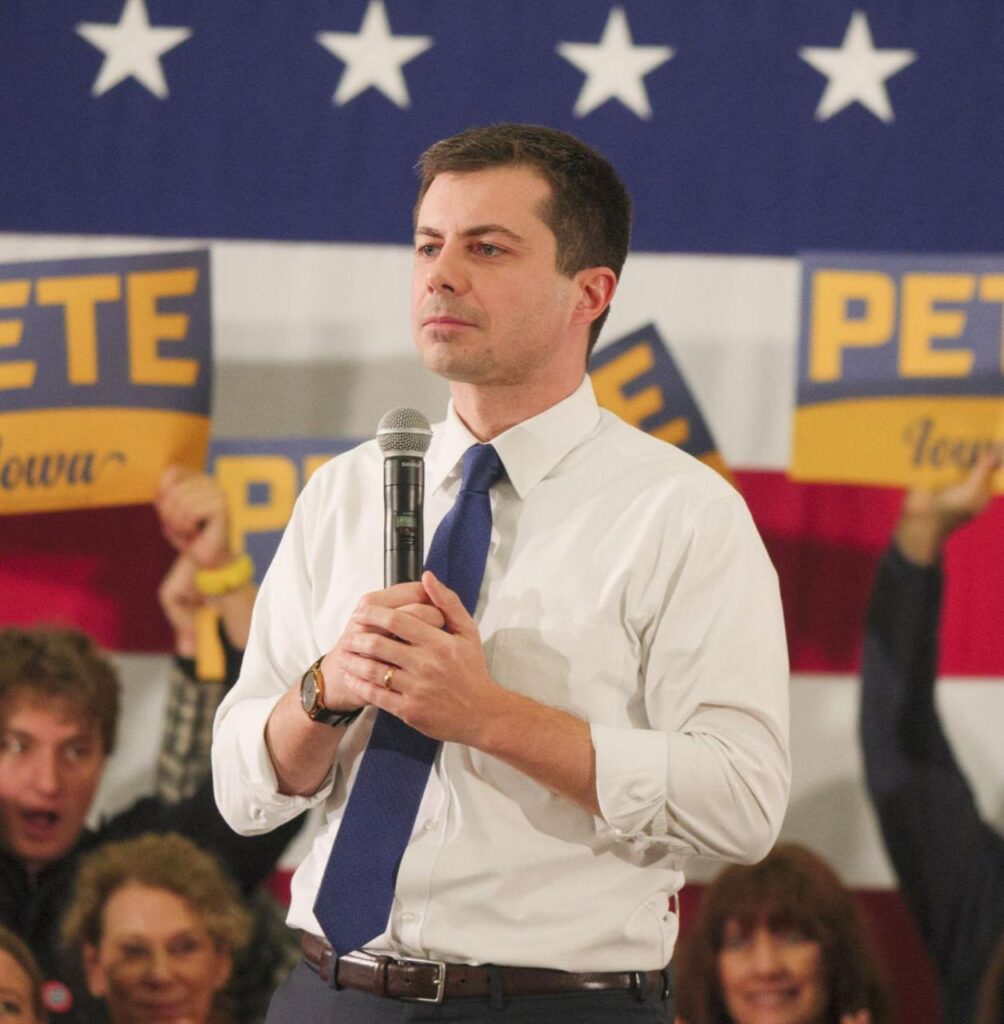
Additionally, under an expanded phase of the Vacant and Abandoned Properties Initiative, South Bend collaborated with the Notre Dame Clinical Law Center to offer free legal assistance to eligible individuals seeking to acquire vacant lots. This initiative, in conjunction with local nonprofits, focused on repairing or constructing homes and providing support for low-income homeownership using funds from South Bend’s Housing and Urban Development program.
In 2016, the City of South Bend, in collaboration with the State of Indiana and private developers, initiated a $165-million renovation of the former Studebaker complex, aiming to enhance industrial and housing opportunities within the Renaissance
District, which includes Ignition Park. Subsequently, the long-abandoned Studebaker Building 84, or Ivy Tower, was earmarked for exterior renovations, funded by $3.5 million from Regional Cities and $3.5 million from local tax increment financing, with intentions for it and other related structures to function as a technology hub. The redevelopment efforts garnered recognition from Best Cities, which ranked South Bend 39th among the 100 best small cities in the U.S. in 2020, highlighting the revitalization of the Studebaker factory and Downtown led by then-Mayor Pete Buttigieg.
Under Pete Buttigieg’s leadership, South Bend also launched a smart sewer initiative, completing its first phase in 2017 at a cost of $150 million, substantially funded by federal resources. This initiative was motivated by a 2011 EPA fine for violations of the Clean Water Act and resulted in a 75 percent reduction in combined sewer overflow by 2019. In that year, Buttigieg requested the city’s release from a previous EPA agreement that mandated extensive sewer system upgrades by 2031.
In April 2019, the Common Council authorized Buttigieg to create a city climate plan, contracting with the Chicago-based Delta Institute for development. By late November 2019, the Council unanimously approved the Carbon Neutral 2050 plan, targeting a 26 percent reduction in emissions by 2025 and a 45 percent reduction by 2035, in line with the Paris Agreement.
Furthermore, Pete Buttigieg’s administration supported private development, leading to significant investments in South Bend. By 2019, private investments in mixed-use developments reached approximately $374 million since Buttigieg took office, with Downtown South Bend alone attracting around $200 million in private investment during his tenure.
In August 2018, Mayor Pete Buttigieg proposed relocating the South Shore Line station from South Bend International Airport to downtown South Bend, with a target completion date set for 2025. This initiative was part of a broader effort to enhance the city’s infrastructure, complemented by the launch of Commuters Trust in 2019—a transportation benefit program developed in collaboration with local businesses and providers such as South Bend Transpo and Lyft. This program was made feasible through a $1 million grant from the Bloomberg Philanthropies Mayors Challenge. Additionally, Buttigieg’s administration invested $50 million in revamping city parks that had been neglected for years.
However, Pete Buttigieg’s tenure was marred by the controversial police shooting of Eric Logan, an African American man, by a white South Bend police officer in June 2019. This incident drew Buttigieg away from his presidential campaign to address the resulting public outcry. Notably, police body cameras were not activated during the incident, leading to increased scrutiny. In response, Buttigieg organized a town hall meeting with activists and Logan’s family, amid accusations from the local police union that he was exploiting the situation for political purposes. To further investigate police practices, Pete Buttigieg secured $180,000 in funding for a review to be conducted by the Chicago-based consulting firm 21CP Solutions.
Despite these efforts, Pete Buttigieg faced criticism from some in the African American community who accused him of perpetuating systemic racism. Notable among his critics was former councilman Henry Davis Jr., who claimed Buttigieg tolerated discrimination, and Michael Harriot of The Root, who characterized Buttigieg’s comments on educational role models for children of color as “racist paternalism.” Further complicating his legacy, Buttigieg’s decision to fire Darryl Boykins, the city’s first black chief of police, was also questioned, as Boykins alleged that Buttigieg used a racially charged scandal as justification for his dismissal.
Increased national profile
In the context of the 2016 U.S. Senate election in Indiana, Pete Buttigieg campaigned for Democratic nominee Evan Bayh, criticizing his opponent Todd Young for supporting the military’s don’t ask, don’t tell policy, which Bayh had voted to repeal. During the 2016 Democratic presidential primaries, Pete Buttigieg endorsed Hillary Clinton and also supported Lynn Coleman for Indiana’s 2nd congressional district election that year, which included South Bend.
His work as mayor of South Bend garnered attention, with Frank Bruni from The New York Times suggesting he could potentially be “the first gay president.” Barack Obama later acknowledged Buttigieg as a significant talent within the Democratic Party in a profile by The New Yorker.
As Pete Buttigieg gained national recognition following his bid in the 2017 Democratic National Committee chairmanship election, speculation regarding a possible gubernatorial or presidential run in 2020 began to circulate by early 2018. In preparation for the 2018 midterm elections, he established the Hitting Home PAC and endorsed 21 congressional candidates in October of that year.
Additionally, he backed Mel Hall, the Democratic nominee for Indiana’s 2nd congressional district, and campaigned for Joe Donnelly’s reelection in the Senate election. His campaigning efforts spanned more than a dozen states, including crucial early presidential primary locations such as Iowa and South Carolina, which further hinted at his ambition to run for president. He formally announced his candidacy on January 23, 2019.
Pingback: Breaking: WWE Night of Champions 2026 Results and Winners - internationalmediawire.com