Supreme Court
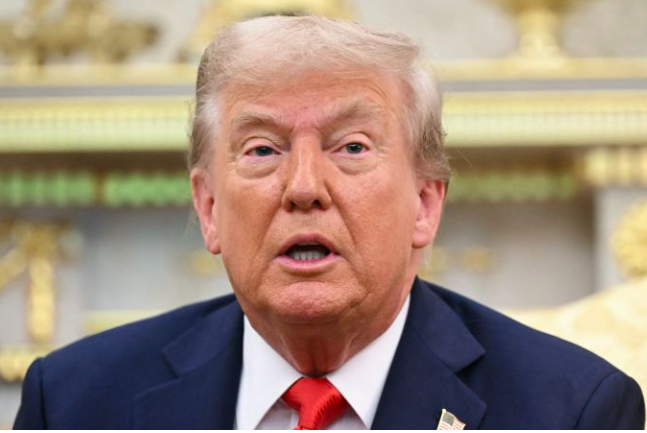
On the second-to-last day of the Supreme Court’s term, a notable ruling emerged as a significant win for Donald Trump, centering on expansive presidential power. However, this decision also hinted at potential limitations, with indications that Trump may not always secure favorable outcomes. Three key takeaways from this dramatic morning include the following: despite the conservative majority of the court, which stands at 6-3, the justices have shown unexpected alliances, with some liberal justices siding with conservative viewpoints.
Supreme Court Over the course of its nine-month term, the court delivered substantial conservative victories in areas such as presidential power, immigration, elections, and social issues, while simultaneously imposing restrictions on Trump’s agenda. Specifically, while the court advanced the Republican goal of augmenting executive power by diminishing the influence of independent agencies, it concurrently set limitations on presidential authority regarding monetary policy and trade.
The Supreme Court has shown strong support for Republican initiatives, notably in efforts to redraw electoral maps aimed at enhancing Republican electoral prospects. The justices also maintained protections for mail-in voting, which former President Trump and some Republicans oppose. Furthermore, the Court largely upheld Trump’s stringent immigration policies, both for legal and illegal immigration, but rejected his attempt to alter the long-standing principle that anyone born on U.S. soil is a U.S. citizen. On cultural issues, particularly concerning transgender rights and gun rights, the Court has consistently ruled in favor of conservative positions, marking a significant term for the justices with a clear trend favoring right-leaning ideologies.
Supreme Court Takeaways: Presidential Power
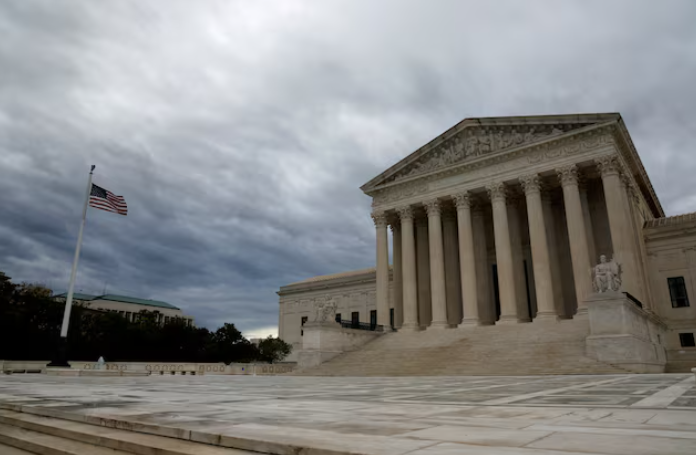
The Supreme Court recently adjudicated three significant cases concerning former President Trump’s attempts to expand the powers of the presidency. While Trump experienced losses in two cases, he achieved a notable victory that may enhance presidential influence over federal regulatory agencies, which Congress had intended to allocate to nonpartisan experts.
In one case, Trump invoked the International Emergency Economic Powers Act to create a global tariff regime, believing the act afforded him expansive authority to implement import taxes despite the absence of the term “tariff” in the law. The Supreme Court, however, ruled against him in this instance but indicated that alternative options might still exist for him to enforce tariffs on imports.
In another recent case, the court ruled against Trump regarding his interactions with the Federal Reserve. Trump’s push for the board to hasten interest rate reductions did not receive judicial support, as the court maintained that Fed Governor Lisa Cook was entitled to retain her position despite Trump’s attempts to terminate her. The administration alleged misconduct against Cook, including accusations of mortgage fraud, yet presented limited evidence to substantiate Trump’s claim that he met the required “for-cause” standard for her dismissal.
On the same day, the justices of the Supreme Court delivered a significant ruling that expands presidential authority over various regulatory agencies, contradicting a 1935 precedent which had allowed Congress to safeguard certain agency leaders from being removed by the president at will. This case specifically addressed former President Trump’s dismissal of Federal Trade Commissioner Rebecca Slaughter, a Democratic appointee. The Court’s decision ruled against Slaughter, thereby nullifying the protections that had previously been in place for leaders of such agencies. As a result of this ruling, the president is now empowered to dismiss similar appointees across government agencies without needing justification, marking a pivotal shift in the balance of power between the presidency and regulatory bodies.
Immigration: Supreme Court Rulings and Trump Policies
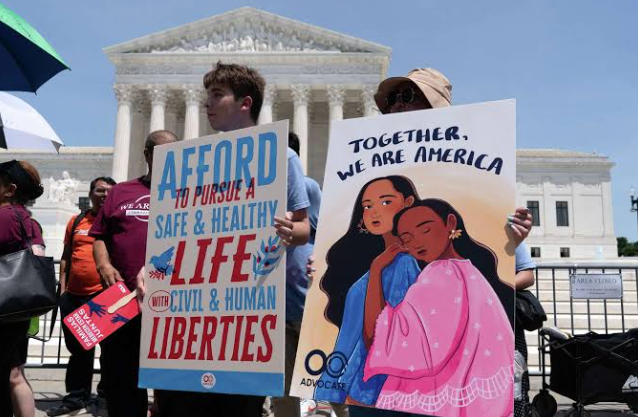
In a series of three rulings that reflected ideological divisions, the Supreme Court facilitated former President Trump’s commitment to intensify efforts against immigration and implement extensive deportation measures. These decisions aligned with his campaign promises and established a legal framework that supported his administration’s immigration policies, thereby influencing the direction of immigration enforcement in the United States.
The court’s conservative majority upheld several significant actions by the administration regarding immigration policies. This included the decision to remove the protective status of hundreds of thousands of Haitian and Syrian immigrants, allowing for deportation as their home countries remain in unsafe conditions. Furthermore, the court backed the government’s prerogative to physically block asylum seekers from entering the U.S. via the Mexico border. Additionally, it facilitated measures that complicate the re-entry of lawful immigrants who have been accused of committing crimes when they return from trips abroad.
The court delivered a significant setback to former President Trump’s immigration policy by rejecting his attempt to restrict birthright citizenship. This policy, which he aimed to implement on his first day back in office, would have resulted in the denial of citizenship to hundreds of thousands of infants born annually to non-citizen parents on U.S. soil.
The ruling came through a 6-3 decision, where Chief Justice John Roberts, appointed by Republican President George W. Bush, stated that there was “scant evidence” supporting what he described as the Trump administration’s “dramatically revisionist view” of established U.S. law concerning birthright citizenship. This decision reaffirmed the traditional interpretation of citizenship granted by the 14th Amendment of the Constitution.
Voting and Elections: Key Supreme Court Rulings
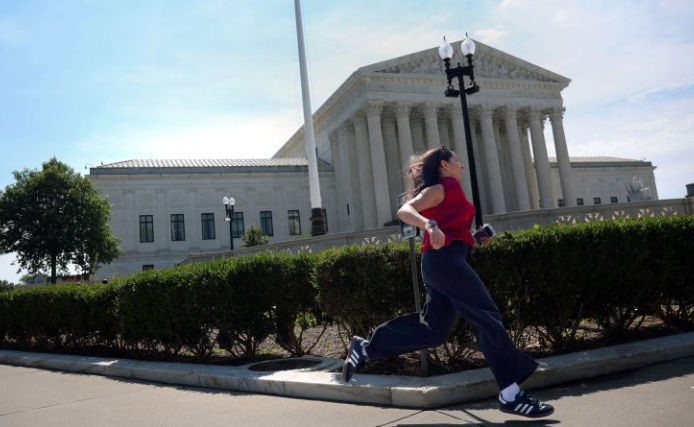
In the context of the upcoming midterm elections in November, Republicans are facing a crucial struggle to maintain their control over Congress, as the Supreme Court has delivered significant rulings that favor Donald Trump and the Republican Party on issues related to voting rights and election administration. One notable decision made by the court in April involved significant changes to the 1965 Voting Rights Act, allowing states to redraw congressional districts.
This alteration has been perceived as detrimental by election experts, particularly concerning Southern and Republican-led states that have utilized these legal adjustments to dismantle majority-minority districts. Consequently, this strategy may jeopardize the reelection prospects of many Black members of Congress, amplifying concerns about representation and equity in the political landscape.
The court has invalidated limits on the expenditures of political committees in coordination with individual candidates, thus overturning a long-standing 25-year precedent. Federal law had previously restricted the contributions major party committees could make to campaigns. This decision comes in the wake of a challenge by Vice President JD Vance during his 2022 senatorial campaign, arguing that such restrictions infringed upon the freedom of speech of political parties.
The justices’ ruling adds to a series of recent campaign finance triumphs for Republicans. In contrast, Trump and the Republican party experienced a setback regarding mail-in voting; the court ruled that states are permitted to accept mailed ballots that are postmarked before Election Day, even if they arrive after polls have closed. Trump has consistently criticized mail-in voting without substantiation, attempting to hinder predominantly Democratic states from sending out mailed ballots.
Social Issues: Major Cases Before the Supreme Court
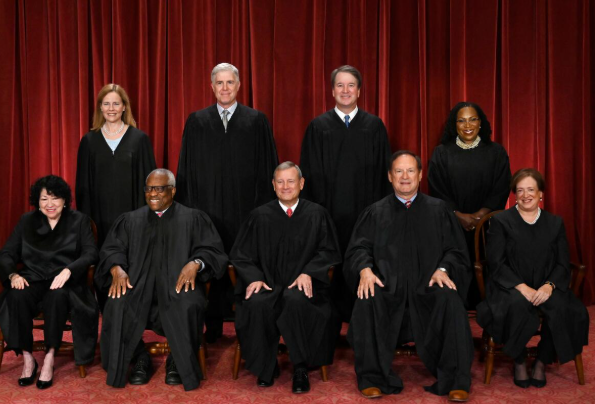
The recent court ruling illustrates a strong alignment with conservative views regarding the rights of LGBTQ individuals and gun ownership, which was unexpectedly bolstered by support from some liberal justices. On Tuesday, the court’s conservative majority affirmed legislation in Idaho and West Virginia prohibiting transgender athletes from competing in girls’ sports teams within public schools. Notably, all three liberal justices concurred with the conservatives in their determination that these state laws did not breach civil rights statutes aimed at preventing educational discrimination based on sex.
Nonetheless, they dissented from the majority’s assertion that these laws also comply with the 14th Amendment’s equal protection clause, indicating a significant judicial divide on issues relating to gender and equality under the law.In March, the Supreme Court reached an 8-1 decision in which two liberal justices sided with the conservative majority to reject a Colorado law prohibiting psychotherapists from employing conversion talk therapy aimed at altering an LGBTQ minor’s sexual orientation or gender identity. The justices determined that this state law violated the free speech protections established by the First Amendment of the U.S. Constitution.
Last week, a court issued a ruling that overturned a Hawaii law limiting the carrying of handguns in private businesses, reflecting ideological divides. This decision follows a unanimous ruling in June, where the court found that prohibiting gun ownership for millions of Americans who use marijuana was excessive. This previous case garnered support from both right-leaning gun rights advocates and left-leaning civil libertarians, indicating a rare convergence of viewpoints on the issue of gun rights and personal freedoms.
Trump has vowed to vigorously oppose the legal actions against him, particularly the defamation claim, asserting on his social media platform that he will fight this “weaponization and lawfare” targeted at him with all his power. He proclaims that such an “injustice cannot be allowed to stand.” While he intends to appeal a significant $83.3 million damages ruling in another case involving Carroll, it appears he may have reached the limit in contesting the recent $5 million judgment. The finality of Supreme Court decisions serves as a crucial reminder for Trump, encapsulated by his mixed emotions following their rulings earlier in the week.
Pingback: Breaking: Federal Judge Temporarily Blocks Trump Student Loan Forgiveness Policy 30 June - internationalmediawire.com