Iran Attack on U.S.
Iran has launched retaliatory strikes against U.S. forces in the Gulf following a second day of U.S. airstrikes, marking a significant escalation of tensions in the region. The renewed hostilities come as the fragile ceasefire between the two nations crumbles, underscored by a series of fresh attacks that have rocked the Middle East. This escalation coincides with the final day of elaborate funeral ceremonies for Iran’s slain supreme leader, adding a layer of symbolic significance to the violence. The situation continues to evolve, as both parties reevaluate their positions amid the deteriorating situation and the failure of diplomatic efforts to restore peace.
The Iranian armed forces escalated hostilities on Thursday by launching attacks on U.S. military infrastructure in Gulf states, specifically targeting sites in Kuwait, Qatar, Bahrain, and Jordan. This marked a significant response to prior U.S. strikes on Iran’s southern coastal and eastern provinces. The recent military exchanges are compounding tensions in a fragile ceasefire that has only lasted three weeks.
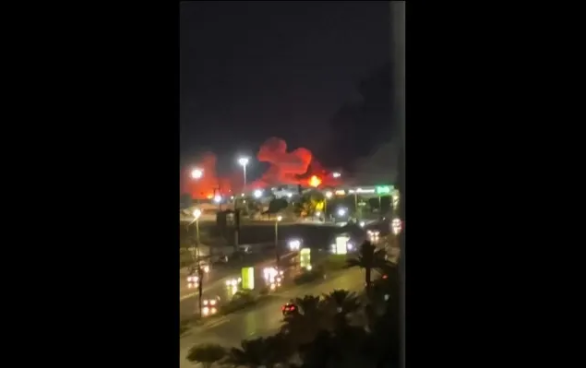
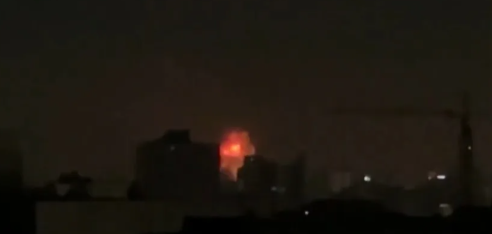
Notably, Iran’s army claimed responsibility for targeting U.S. Patriot missile defense systems in Kuwait, an early-warning site in Qatar, a fuel depot for the U.S. Army in Bahrain, and Jordan’s Azraq military base. Reports indicated that a civilian in Kuwait sustained injuries due to falling shrapnel amidst these attacks.In tandem with military actions, Iranian media reported several explosions across southern Iran, particularly in Bushehr, home to one of Iran’s nuclear plants, as well as in Konarak and Bandar Abbas, indicating heightened military preparedness or potential retaliatory strikes post-events.
The situation unfolded on the same day that Iran conducted a burial ceremony for its deceased Supreme Leader Ayatollah Ali Khamenei at a shrine in Mashhad, following a week of mass funerals and public rallies, suggesting a backdrop of national mourning intertwined with the military unrest. Concurrently, there was a lack of immediate response or confirmation from U.S. military officials regarding the ongoing attacks and their repercussions, maintaining heightened uncertainty in the region.
By Elwely Elwelly, Nayera Abdallah and Tala Ramadan, Reuters
- Further attacks from US, Iran strain fragile detente
- Iran buries Khamenei, killed 28 February at war’s outset in a US strike
- Iran says it targeted US sites in Kuwait, Qatar and Bahrain
- US strikes kill 14 and injure 78, Iranian officials say
- Iran says US strike hit perimeter of nuclear power plant
In a recent report by Elwely Elwelly, Nayera Abdallah, and Tala Ramadan of Reuters, tensions between the US and Iran have escalated, threatening a delicate ceasefire. The situation intensified with the Iranian burial of Khamenei, who was killed in a US strike at the onset of the conflict on February 28. Following this, Iran retaliated by targeting US military installations in Kuwait, Qatar, and Bahrain. In response to these actions, US airstrikes resulted in 14 fatalities and 78 injuries, according to Iranian officials. Notably, an Iranian statement highlighted that US strikes had affected the perimeter of a nuclear power plant, indicating the high stakes involved in this ongoing conflict.
Khamenei was killed in a US airstrike on 28 February, marking the onset of a months-long conflict that has resulted in thousands of fatalities and severely impacted global energy supplies. The fragile ceasefire was shattered due to recent attacks on Qatari and Saudi shipping vessels, leading US President Donald Trump to declare the truce “over.”
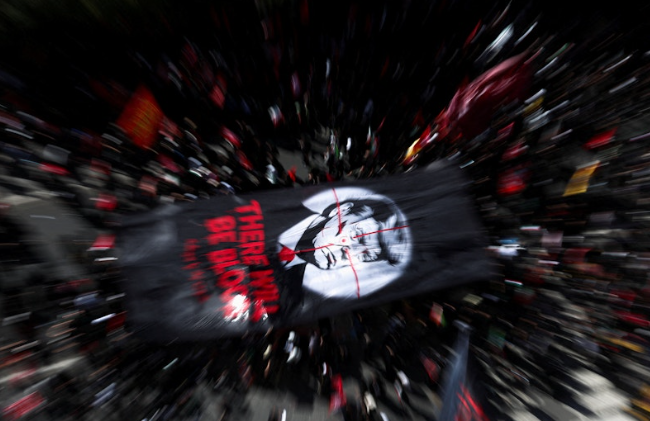
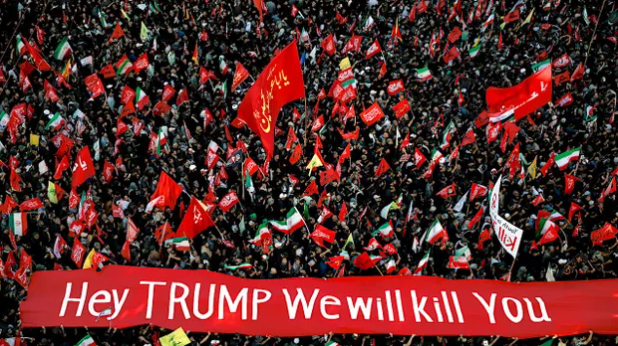
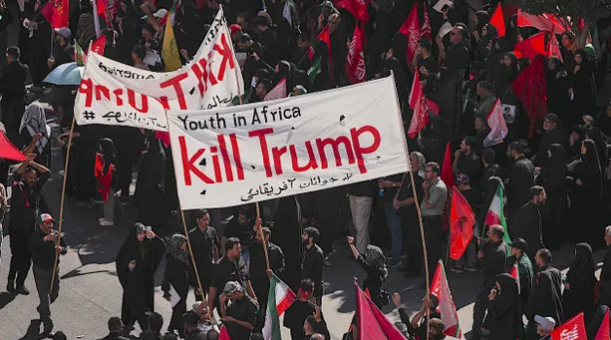
The funeral procession for Khamenei culminated at a holy shrine in Mashhad, where a massive crowd gathered, some holding banners threatening Trump with messages like “We Will Kill Trump.” Iran’s Revolutionary Guards Navy reported that US military actions and interventions were disrupting efforts to reopen the Strait of Hormuz. They noted that the number of vessels operating under Iranian supervision had only returned to about 50% of pre-war levels, with permission granted only to those following routes set by Tehran.
The Guards warned of a “crushing response” to any further US interventions.Amid escalating tensions, US military strikes aimed to maintain open navigation in the Strait after Iranian forces attacked three tankers. These developments coincided with Khamenei’s burial, which follow a week filled with mass funeral processions and rallies. Reports from Iranian officials indicated that US attacks had resulted in 14 deaths and 78 injuries across five provinces. In the midst of these tensions, oil prices that had surged due to fears of disrupted shipping and supplies, experienced a decline. This situation reflects the intricate and volatile dynamics of the conflict and its wide-reaching implications for regional stability and global energy markets.
Iran has not officially claimed responsibility for recent ship attacks; however, analysts suggest that Tehran leverages such incidents to enhance its negotiating position. Oil prices initially surged over fears of potential shipping disruptions and global supply issues, but declined on Thursday as investors weighed the likelihood of the tensions being temporary, or potentially leading to a complete breakdown of the ceasefire.
Iranian authorities reported that U.S. airstrikes on July 8-9 resulted in 14 fatalities and 78 injuries across five provinces, with state media citing a specific U.S. attack on a rail bridge utilized for trade with Russia and China. Reports indicated multiple explosions occurred early Thursday in Iran’s Bushehr province and Bandar Abbas, a significant port city. Notably, Bushehr houses a Russian-built nuclear power plant, and a local official conveyed that a U.S. missile struck an area near the facility, which had previously faced multiple attacks prior to the ceasefire established on April 8.
Targeting US bases in Gulf states, Jordan
Iran’s military has claimed responsibility for a series of attacks against US military assets in the Gulf region, specifically targeting US Patriot missile systems in Kuwait, an early-warning site in Qatar, and a fuel depot in Bahrain. The Kuwaiti armed forces reported engaging with various aerial threats, including a cruise missile, three ballistic missiles, and ten drones, resulting in one injury from falling debris. In Jordan, sirens were activated after missiles launched from Iran were detected, leading to the successful interception of eight missiles without causing injuries or damage.
Furthermore, the Iranian Revolutionary Guards announced the firing of ten ballistic missiles at the Azraq military base in Jordan, which houses US forces, as well as a US military control center in the Middle East. Qatar, which is home to the largest US military base in the region, condemned the attacks affecting commercial shipping and called for diplomatic solutions to the escalating tensions.
Diplomacy and de-escalation were central themes in responses from regional leaders, as the foreign ministers of Turkey and Oman emphasized the necessity of avoiding further military conflict during their discussions with Iranian official Abbas Araqchi. Araqchi also spoke with Pakistan’s army chief, expressing condemnation towards what he described as US “warmongering policies.”
Strategically, the Strait of Hormuz, responsible for approximately 20% of the world’s oil supply before the current conflict, has seen Iran assert more control, effectively creating a stalemate against the US military’s presence in the region. Iran’s chief negotiator Mohammad Qalibaf articulated that the Strait will only reopen on Iran’s terms, rejecting US threats. This situation illustrates the complex and volatile dynamics in the Gulf, reflecting Iran’s willingness to engage in military actions while advocating for its strategic interests.
Trump doesn’t expect return to full-fledged war
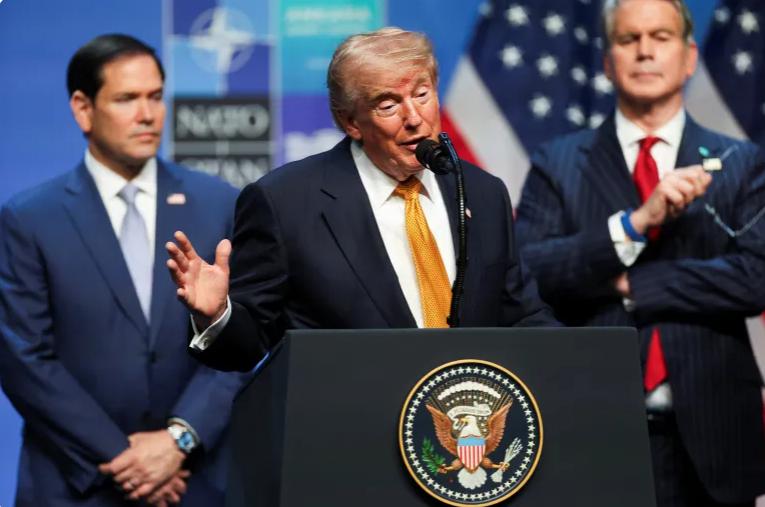
Trump indicated that he does not anticipate a return to a full-scale war with Iran despite recent military actions taken by the US Central Command (Centcom), which targeted approximately 90 Iranian military sites in response to attacks on ships. He communicated this via a post on his Truth Social platform, suggesting that further retaliatory measures could be severe if provoked again. While attending a NATO summit in Turkey,
Trump expressed the belief that the military strikes would not escalate into a major conflict, asserting that any ensuing actions would be swift and contribute to safety, particularly in relation to oil security. When queried about the status of the memorandum of understanding with Iran, Trump implied that he views it as defunct, expressing a disinclination to engage further with the country.
Pingback: Breaking: Trump Agreed About Tehran Ceasefire;Is This True? 10 July - internationalmediawire.com