President of Argentina Milei wants US-style shutdown Mechanism for Argentina government
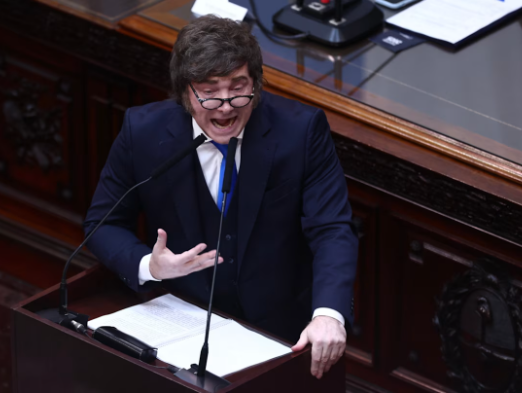
Argentina’s President Javier Milei is advocating for a reform of the country’s budgetary framework by instituting a mechanism akin to the U.S. government shutdowns, which would enable the state to “shut down” when budget funding is insufficient.
This initiative aims to address situations where congressional deadlocks impede spending decisions. Milei, a proponent of austerity, believes that suspending government functions during budgetary impasses aligns with his drive to streamline state operations.
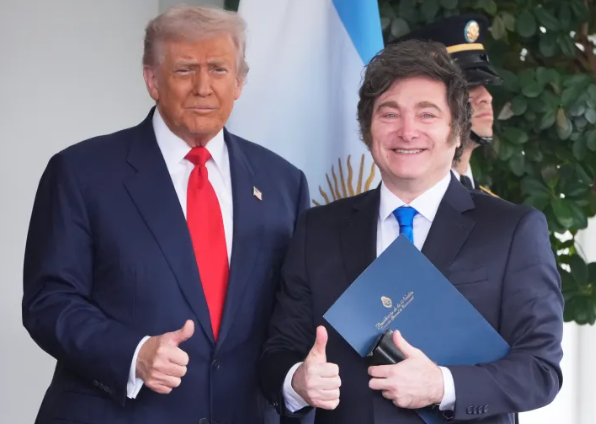
In conjunction with this, Milei plans to introduce a legislative package that includes significant reforms to the Central Bank, designed to restore efficiency and stability to the administration amidst an ongoing crisis. His proposals reflect a broader alignment with U.S. geopolitical stances, particularly those of former President Donald Trump, whom Milei has sought to emulate.
This involves adopting similar economic policies, forming strategic alliances, and even securing a free trade agreement after multiple visits to the U.S. since taking office. Through these reforms, Milei intends to reinforce his government’s commitment to fiscal discipline and the principles of limited government.
In an interview with the Neura streaming platform, Argentine President Javier Milei revealed plans for a legislative initiative that would enable state agencies to automatically shut down when they exhaust their budget. He characterized this process as the “shutdown” of the Executive branch, which, in essence, reflects a broader political system shutdown.
Milei stated that, similar to the United States, where government shutdowns occur due to funding failures, his proposed bill would ensure that once the budget is depleted, no further spending could occur, effectively halting government operations.
Milei Pushes Budget Reform to Strengthen Fiscal Discipline
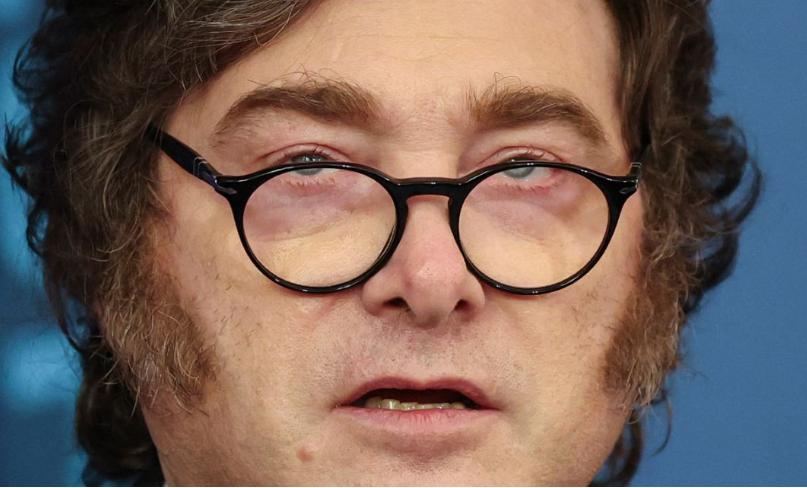
Currently, Argentina’s Congress automatically rolls over the previous year’s budget if the new one is not passed. Milei aims to change this system, which he believes lacks accountability and strangles fiscal responsibility. He emphasized the urgency of his proposed legislation, noting that it is part of a broader political reform agenda intended to regain control of his administration. This follows a period of turmoil marked by a corruption investigation involving Manuel Adorni, one of Milei closest allies, who recently resigned amid public outcry and judicial scrutiny.
In the U.S., government shutdowns lead to a suspension of non-essential services and may result in furloughs or mandatory unpaid work for government employees. These shutdowns are often politically unpopular, affecting the party perceived as responsible.
Milei adoption of this mechanism reflects a shift towards stringent fiscal measures in Argentina, as he seeks to curb what he considers wasteful public spending. His administration has been in crisis for nearly four months, and this aggressive strategy aims to rebuild public trust and stabilize governance amidst challenges.
In recent decades, a prevalent mechanism of government shutdowns has contributed to political gridlock in Washington, culminating in the longest U.S. shutdown from October 1 to November 12, 2025, lasting 43 days due to disputes over healthcare subsidies. In Argentina, President Javier Milei, closely aligned with U.S. President Donald Trump, has announced plans to implement a similar government shutdown mechanism as part of a broader reform package. This mechanism is still under development and is expected to work within Argentina’s constitutional constraints, where budgeting powers are jointly held by the Presidency and Congress.

Since taking office in December 2023, Milei has aggressively cut government spending by 30%, aiming to eliminate the chronic fiscal deficit that had plagued Argentina. Following Congress’s rejection of his proposed budget, the government resorted to real-term spending cuts, exacerbated by inflation that reached nearly 300% in 2024, which devalued previous budgets. These austerity measures have alleviated some price pressures and garnered positive responses from the markets, but numerous industries continue to struggle due to significant declines in economic activity during the initial months of Milei’s administration.
Milei is also pursuing a reform of Argentina’s central bank that would prohibit it from printing money to finance government expenditures. He has identified the prior government’s practices of extensive currency printing as the root cause of ongoing severe inflation. This practice, he suggests, may even become a criminal offense under the penal code, which classifies fraud and currency forgery as crimes.
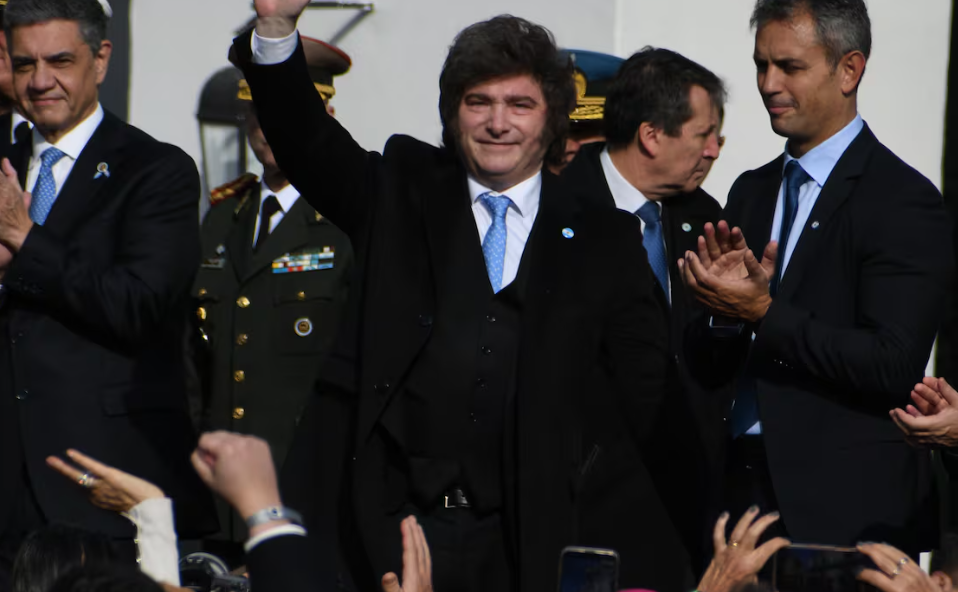
Argentina’s Economic Overhaul Gains Momentum Under Milei
Amidst these economic reforms aimed at stabilizing Argentina’s financial situation—especially before crucial payment deadlines exceeding $45 billion—Milei is advocating for the shutdown mechanism as one of many measures to curb public spending.
His comprehensive economic strategy aims for a financial surplus and includes plans for a revamped Central Bank charter ensuring its independence from political influences, laws affecting capital markets, and initiatives like a fiscal amnesty for legalizing undeclared assets. Milei asserts that these reforms are necessary to rectify decades of governmental mismanagement and fraud against the Argentine populace. In a recent meeting at the presidential residence, he and key ministers outlined the details of these transformative initiatives, emphasizing their urgency and interconnections.

Javier Milei, in a recent interview, outlined proposed reforms targeting Argentina’s Central Bank, capital markets, and a new ‘Fiscal Innocence’ bill. Following discussions with lawmakers from his La Libertad Avanza party, Milei emphasized that these reforms are designed to “repair 91 years of fraud by politicians against decent Argentines.” A central aspect of his proposal includes a strict prohibition on the Central Bank issuing money to finance government expenses, which would be subject to criminal penalties. He stated that any violation of the Central Bank’s independence through financing the Treasury would lead to serious consequences, equating the act of printing money to fraud.
Milei Seeks Major Central Bank and Budget Reforms
The reform intends to shift the paradigm established in 2012, under Cristina Kirchner, which expanded the Central Bank’s role to include promoting monetary stability and social equity. Milei criticized these changes, asserting that a multi-faceted mission for the bank is “an insult to the intellect.” His administration proposes that the current system, which does not allow for governmental shutdowns due to a lack of budget law, be reconsidered.
Instead, legislators might face a binary choice: either approve the budget or trigger a governmental shutdown, reminiscent of the U.S. system.Milei’s approach underscores an ongoing negotiation for political support despite his party’s minority status in Congress.
The implications of his legislative proposals will become clearer once he releases the full text, specifically regarding the potential inactivity of the government without a budget—contrasting with Argentina’s current model, which permits fund distribution continuity from previous years unless adjusted by executive order. Overall, Milei’s reforms signal a significant shift in fiscal policy and the governance of Argentina’s economic framework.
Pingback: Breaking: Trump Close Ally Lindsey Graham Dies at 71 - internationalmediawire.com