US Global tech stocks fall as chip sell off deepens; mortgage rates rise amid renewed Middle East tensions as it happened

In recent developments, global tech stocks have experienced significant declines, primarily influenced by a pervasive sell-off in the semiconductor sector. This trend follows an earnings season that initially provided optimism, with industry leaders like ASML and Taiwan Semiconductor Manufacturing reporting impressive quarterly results.
However, the subsequent market reaction has introduced volatility, as profit-taking and a broader retreat in artificial intelligence-related stocks have raised concerns among investors regarding the sustainability of the recent gains.
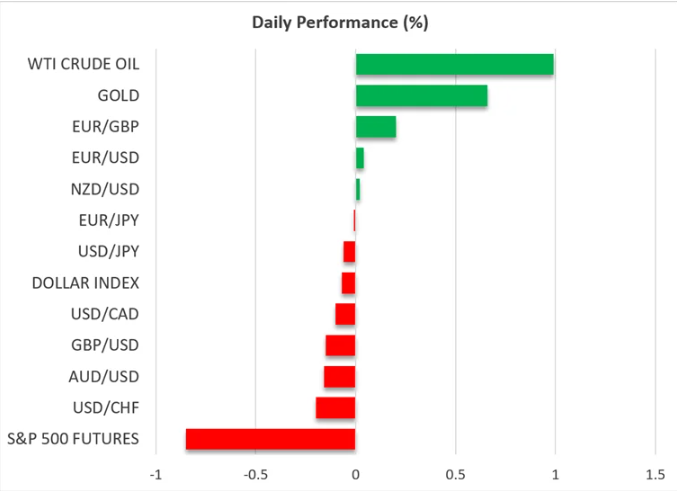
Amid this backdrop, geopolitical tensions have intensified in the Middle East, further exacerbating market anxieties and contributing to a “risk-off” sentiment. Oil prices are reportedly on track for their best weekly performance since April, while safe-haven assets like gold remain popular among investors.
In other news, the UK government has nationalized British Steel to safeguard the future of steel production and protect jobs, a move met with dissatisfaction from China, which views it as a detrimental action against foreign investment confidence within the UK.
China’s Ministry of Commerce has expressed that this nationalization adversely impacts Chinese companies’ trust in investing in the UK market.

Additionally, South East Water has flagged its precarious financial situation, indicating “material uncertainty” over its future following a tumultuous year marked by losses, substantial fines, and executive turnover.
The company still possesses sufficient funds until mid-2027 but requires new loan agreements to ensure its long-term viability, with negotiations reportedly in an advanced stage.
Overall, the intersection of corporate performance, geopolitical instability, and financial uncertainties continues to shape the current economic landscape, influencing stock market movements and investor confidence significantly.
The recent negative sentiment in the tech sector intensified following reports about Alphabet’s AI delays and Netflix’s disappointing Q2 results.
Bloomberg highlighted that Alphabet’s new Gemini 3.5 Pro AI model is significantly delayed, with concerns that the company may be losing its competitive edge in the evolving AI landscape.
In addition, Netflix’s failure to meet revenue estimates and its less-than-optimistic guidance for Q3 raised red flags among investors. As the tech earnings season approaches, there is increased concern over high capital expenditure (capex) across the industry—not only among major cloud service providers (hyperscalers) but also from companies facilitating AI development.
This trend has led to heightened earnings expectations that may be difficult for companies to achieve, intensifying investor scrutiny in the coming weeks.
Oil Steady Despite Tensions, Has Best Week Since April
Oil prices remain steady amidst escalating tensions in the Middle East, highlighted by ongoing military actions between the United States and Iran.
The U.S. has conducted strikes on Iranian targets for six consecutive nights, while Iran has broadened its attacks on U.S. forces in Syria and Bahrain, as well as neighboring countries including Kuwait, Qatar, and Jordan. Despite this turmoil, oil futures have shown modest increases, staying within a narrow range over recent days.
Notably, both West Texas Intermediate (WTI) and Brent crude are poised for their strongest weekly performance since April, with overall gains exceeding 11%.
Traders are largely optimistic about potential negotiations between the U.S. and Iran, which appears to be limiting oil prices from exceeding the $80 mark. However, the absence of concrete discussions keeps market unease prevalent.
Compounding concerns, shipping traffic through the critical Strait of Hormuz has significantly decreased, signaling that energy shortages may intensify in the near future as tensions persist in the region.
Gold Finds Some Love, But Upside Limited
Gold has experienced a modest increase as it approaches the $4,000 support level, likely influenced by ongoing geopolitical tensions and volatility in the stock markets.
Investors appear to be speculating that President Trump may announce a ceasefire as he gears up for the upcoming November midterm elections. However, his current focus seems to pivot towards allegations of Chinese interference in the 2020 presidential election, which could heighten tensions between the US and China.
This shift indicates that Trump may not be looking to de-escalate the situation with Iran, opting instead for alternative distractions as he prepares for campaigning. Despite this gentle upward trend in gold prices, the metal has declined approximately 3% over the week due to rising oil prices, refocusing investor attention on potential rate hikes.
Dollar Off Lows After Fedspeak, Yen Pressured
The recent movements in the foreign exchange markets have been influenced by various economic indicators and statements from Federal Reserve officials.

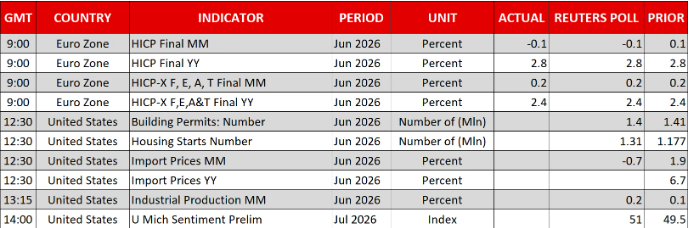
Following the release of weaker-than-expected Consumer Price Index (CPI) and Producer Price Index (PPI) data from the US, market expectations for aggressive interest rate increases by the Federal Reserve have softened. Currently, market pricing suggests only one 25-basis point (bps) rate hike is fully anticipated.
Despite this, hawkish comments from Federal Reserve officials, including Vice Chair Phillip Jefferson and Dallas Fed President Lorie Logan, indicated support for higher rates should inflation remain persistent. These remarks contributed to a modest rebound in the US dollar’s value.
Consequently, the Japanese yen experienced pressure, trading near the 162.50 per dollar mark. In response, Japan’s finance minister Satsuki Katayama expressed the possibility of “decisive action at any time,” marking a significant verbal intervention not seen in weeks, particularly significant ahead of the upcoming bank holiday in Japan.
Looking ahead, market participants are poised to monitor the preliminary consumer sentiment survey scheduled for release by the University of Michigan later in the day, which may further impact market dynamics.
US stock market sinks in AI sell-off
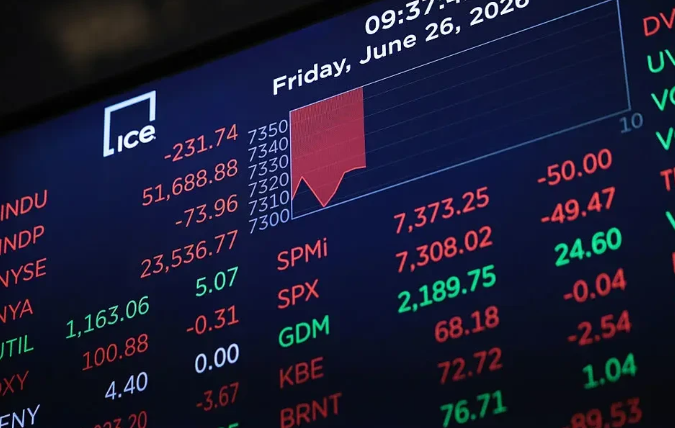
The US stock market is experiencing a significant sell-off, with the S&P 500 index decreasing by 1.3% and the Nasdaq falling by 2.2%, following a previous decline of 1.6%.

This downward trend is primarily driven by investor concerns regarding the sustainability of this year’s AI-inspired market rally.
Notably, shares of Nvidia, a leading chip designer, have seen a decrease of 3.7%. In a noteworthy shift, Apple, which has seen a slight increase of 0.4%, has now surpassed Nvidia to become the world’s most valuable company.
Additionally, Netflix’s shares have plummeted by approximately 10% after the company released disappointing growth forecasts to investors.
Meanwhile, oil prices continue to rise, with Brent crude increasing by 2.9%, reaching a price of $86.68 per barrel. These developments reflect a broader market sentiment characterized by uncertainty and caution among investors.
US stock futures point to painful open
Investors are preparing for a challenging opening in the US stock market, particularly for technology stocks, with Nasdaq futures dropping nearly 2% and the S&P 500 set to decline around 1%. Kathleen Brooks from XTB highlights notable pre-market struggles for major tech companies.
SpaceX is experiencing a significant downturn, down 4% in the pre-market, following a 12% decline over the last five trading sessions, bringing its stock price below the IPO price of $135 per share and projected to open near $125.
This decline is reflective of a broader moderation in chip stock valuations, which have corrected from previous highs. SpaceX’s market capitalization has decreased by $1 trillion since last month, indicating a significant reduction in market exuberance, and suggests a recovery is not imminent.
Another stock of interest is Netflix, which reported its Q2 earnings of $12.56 billion. Despite these revenues, the stock plummeted by 9% in after-hours trading, primarily due to weaker-than-anticipated forward guidance.
This suggests a maturing growth profile for Netflix, which has been in operation for 28 years. Year-to-date, Netflix shares have fallen by 21%, now firmly in bear market territory. The market’s reaction to these earnings suggests that the sell-off may continue, marking a poor indicator as Netflix typically kicks off tech earnings season.
Is now the time to buy NFLX?
ProPicks AI conducts a monthly evaluation of Netflix (NFLX), comparing it against numerous alternatives and utilizing over 100 financial metrics.

The analysis highlights notable past successes, such as Siemens Energy, which saw a 231.5% increase, and Sandisk, with a 189% increase, both identified before broader market awareness. The current inquiry poses whether NFLX presents a compelling investment opportunity or if alternative prospects within the same market might be more advantageous.
Pingback: Breaking: After attacking civilian infrastructure in southern Iran, could the U.S. launch a nuclear attack on Iran? 17 July - internationalmediawire.com