In a recent dissent regarding Birthright Citizenship, Justices Clarence Thomas, Samuel Alito, and Neil Gorsuch expressed their conservative views. Justice Alito, in particular, stated that the ruling is among the most significant in the Court’s history criticized it as a “serious mistake.”
He argued that the decision effectively grants Birthright Citizenship to all individuals born in the U.S., including children of “birth tourists”—mothers who travel to the country solely to give birth before returning home. Alito contended that this interpretation of the 14th Amendment would not necessitate displacing the millions of children born to mothers who are undocumented, suggesting that Congress has the power to address their situations. He urged that the Supreme Court should not veer toward an erroneous reading of the Fourteenth Amendment merely out of concern for potential repercussions on current immigration policy.
A dissenting view from conservative Justice Thomas About Birthright Citizenship
In a 6-3 majority decision, the ruling has elicited a detailed dissent from Justice Clarence Thomas, joined by Justice Neil Gorsuch. Thomas asserts that the decision expands the interpretation of the 14th Amendment of the U.S. Constitution beyond its original scope, which he claims was intended solely for formerly enslaved Black individuals. He emphasizes that these individuals earned citizenship as they were Americans without any allegiance to foreign powers. In contrast, he argues that this should not apply to the children of foreign temporary visitors.
Justice Ketanji Brown Jackson, in her own dissent joined by Justice Sonia Sotomayor, critiques Thomas’s position, highlighting a contradiction in his long-held belief in a “colorblind” Constitution. She notes that Thomas now appears to acknowledge that the Citizenship Clause of the 14th Amendment operates as a race-conscious remedial measure, deviating from his previous ideological stance. Both Thomas and Jackson represent the only Black justices currently serving on the Supreme Court, underscoring the significance of this legal discourse concerning race and citizenship rights.
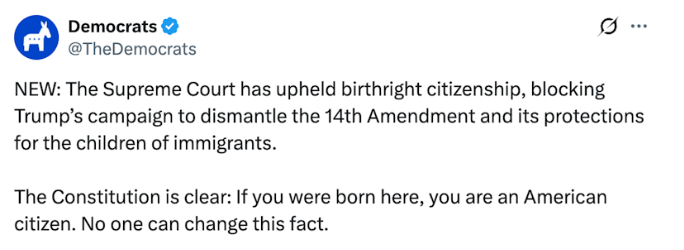
Democrats welcome decision while Republicans say it ‘incentivizes illegal migration’on Birthright Citizenship
Trump celebrates the two rulings that went his way
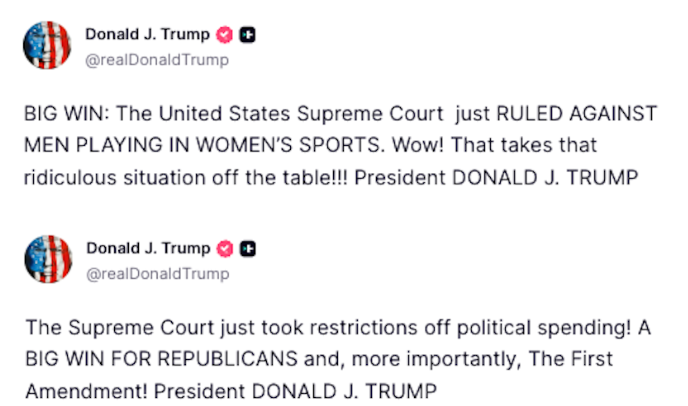
After the court issued its rulings, Donald Trump expressed his views on two of them via his Truth Social platform. He welcomed the court’s decision to allow restrictions on transgender participation in sports and praised the ruling that eliminated limitations on campaign spending, viewing these outcomes as victories for his political stance.
Who are the Supreme Court justices?
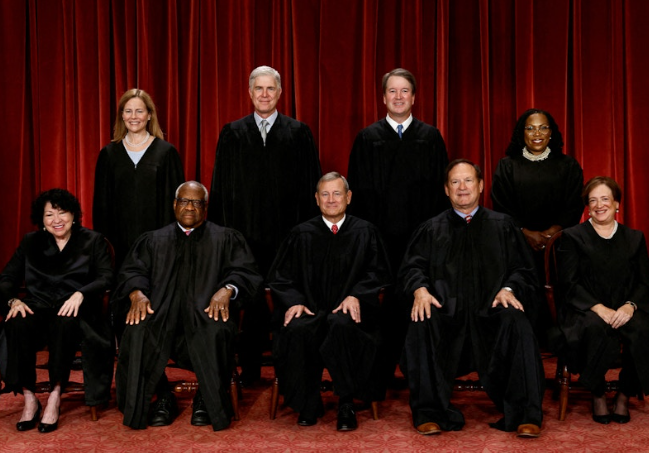
The Supreme Court of the United States, the highest judicial authority, comprises nine justices who are appointed by the president and serve lifetime terms. Since 2020, the court has maintained a conservative majority of 6-3, leading to significant shifts in American law toward conservative interpretations. Chief Justice John Roberts, aged 71, has held his position for two decades and frequently plays a crucial role in split decisions. Nominated by President George W. Bush, Roberts is one of the six conservative justices.
The remaining conservative justices include Clarence Thomas, 78, who is the longest-serving member and was appointed by George H.W. Bush in 1991; Samuel Alito, 76, also nominated by George W. Bush; and three justices appointed by Donald Trump: Neil Gorsuch (2017), Brett Kavanaugh (2018), and Amy Coney Barrett (2020).
The court’s liberal contingent consists of Sonia Sotomayor, 72, and Elena Kagan, both appointed by President Barack Obama, and Ketanji Brown Jackson, who was nominated by President Joe Biden. This composition illustrates the ideological balance of power in the court, particularly under the current conservative majority.
The court ruled 6-3 against Trump’s Birthright Citizenship
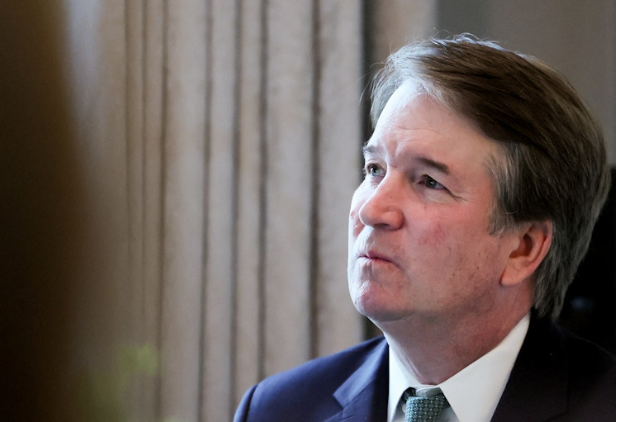
The U.S. Supreme Court recently addressed the contentious issue of Birthright Citizenship, delivering a ruling that concluded with a 6-3 vote against former President Trump’s order concerning this matter. The dissenting opinions came from Justices Clarence Thomas, Samuel Alito, and Neil Gorsuch. Importantly, the majority opinion was formed by a diverse coalition of justices;
Chief Justice John Roberts, along with conservative Justice Amy Coney Barrett and three liberal justices—Sonia Sotomayor, Elena Kagan, and Ketanji Brown Jackson—agreed that Trump’s proposed directive violated constitutional principles. However, Justice Brett Kavanaugh, while concurring with the outcome of the ruling, expressed a distinct viewpoint regarding the rationale.
He maintained that Trump’s order did not contravene the U.S. Constitution but rather conflicted with federal law enacted in 1940, which stipulates that individuals born on U.S. soil are automatically granted citizenship at birth. This nuanced division among the justices highlights the varying interpretations of constitutional law and the implications for birthright citizenship in America.
Justice Kavanaugh criticized the court’s majority for not restricting its ruling to statutory grounds only. He suggested that this limitation would enable Congress to create legislation that provides exceptions to birthright citizenship if it chose to pursue that route. He expressed his belief that if Congress were to implement a law similar to President Trump’s order regarding birthright citizenship, he views such a statute as constitutionally valid.
‘Birthright Citizenship, then and now, was the right to have rights’
Chief Justice John Roberts expressed skepticism regarding the Trump administration’s interpretation of the citizenship clause in the 14th Amendment of the U.S. Constitution, remarking that there is “scant evidence” to support this “dramatically revisionist view.” He noted that if Congress had intended to restrict American citizenship solely to children of individuals residing in the United States, the language of the Citizenship Clause does not convey such an intention. Roberts emphasized that citizenship has always represented the right to partake in the political community, a promise originally extended by the Framers of the Fourteenth Amendment to “every free-born person in this land.” He reaffirmed the commitment to uphold that promise in contemporary society.
‘No reason to depart’ from landmark 1898 ruling, court says
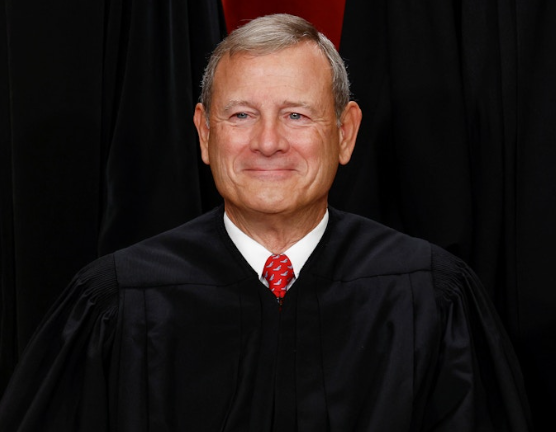
In a significant ruling, the Supreme Court, in a 6-3 decision, dismissed former President Trump’s directive aimed at restricting Birthright Citizenship. Chief Justice John Roberts, in his opinion for the court, referenced the landmark 1898 case, United States v. Wong Kim Ark, which established that the 14th Amendment of the U.S. Constitution confers citizenship to individuals born on U.S. soil, including children of foreign nationals. Roberts emphasized the enduring nature of the Wong Kim Ark ruling, stating that it has been consistently interpreted over the past 128 years to affirm citizenship for all children born in the United States who are subject to its jurisdiction. He concluded by noting that there is no justification to change that interpretation today.
Pingback: Breaking:U.S. Supreme Court Clears the Way for Transgender Sports Bans 30 June - internationalmediawire.com