
Roy Stewart Moore, born on February 11, 1947, is an American politician, lawyer, and jurist known for his role as chief justice of the Supreme Court of Alabama. He held this position twice, from 2001 to 2003 and again from 2013 to 2017, but was removed each time for judicial misconduct by the Alabama Court of the Judiciary. In 2017, Moore was the Republican Party’s nominee in a special election for the U.S. Senate seat left vacant by Jeff Sessions.
Roy Moore His candidacy was marred by allegations from multiple women who accused him of sexual assault while they were underage, leading to his defeat by Democratic candidate Doug Jones. Moore attempted to reclaim the Senate seat in 2020 but was unsuccessful in the Republican primary.
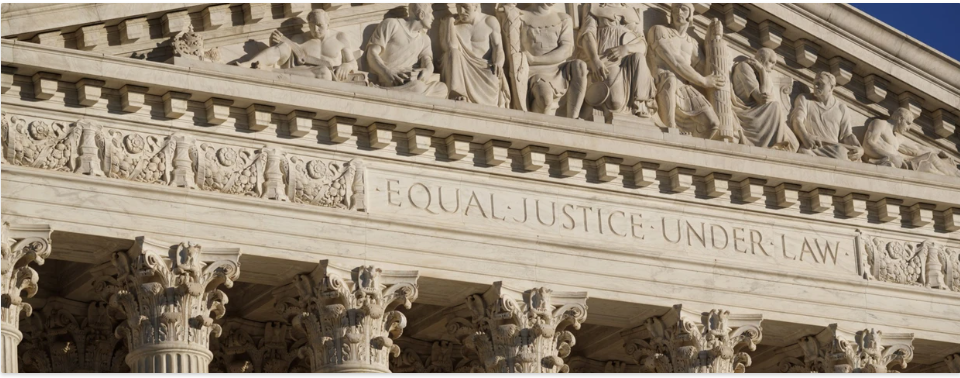
Roy Moore The Supreme Court has declined to assist Roy Moore in preserving an $8.2 million defamation award against a Democratic super PAC. This award stems from a 2017 Senate campaign in which Moore alleged he was falsely depicted in an advertisement suggesting he solicited sex from a 14-year-old girl. The Court’s decision allows the $8.2 million jury verdict to proceed without delay and discharges a bond that had been securing the funds during the ongoing legal battle.
Justice Clarence Thomas specifically rejected Moore’s emergency motion to prevent the enforcement of the federal appeals court’s ruling. This development severely undermines Moore’s options for collecting the award related to his defamation case, marking a significant setback for the former Alabama Chief Justice and Republican politician.
Justice Clarence Thomas, appointed by George H.W. Bush, has denied an emergency application from former Alabama judge Roy Moore. This decision allows a unanimous ruling from the U.S. Court of Appeals for the Eleventh Circuit to take effect, which overturns a previous jury verdict in Moore’s favor. The Eleventh Circuit’s mandate will lead the lower court to vacate Moore’s win and release the supersedeas bond tied to his damages award. Moore contends that this will impede his ability to collect damages if, in the future, the Supreme Court decides to review his case and rules in his favor.
His emergency petition was aimed at halting the appellate ruling while he prepares a full appeal to the Supreme Court. The court’s spokesperson confirmed the denial of Moore’s request, emphasizing the urgency of the matter as Moore seeks further recourse following the appellate court’s decision.
Roy Moore was removed from the Alabama Supreme Court on two occasions: firstly in 2003 for ignoring a court order to remove the Ten Commandments display from the state judicial building, and secondly in 2016 for refusing to comply with the U.S. Supreme Court ruling that recognized the right to same-sex marriage. Following his second removal, Moore initiated a Senate campaign to fill the vacancy created by Jeff Sessions’ resignation to become attorney general in Donald Trump’s administration.
Roy Moore application was directed to Justice Thomas, who is responsible for urgent motions from the circuit court that ruled against Moore in the appeal. Typically, justices provide no explanation for such rejections, and since Thomas did not refer the matter to the full court, it indicates he did not consider Moore’s application significant. However, the justices maintain the option to address Moore’s petition later after he presents it and the opposing side has an opportunity to respond.
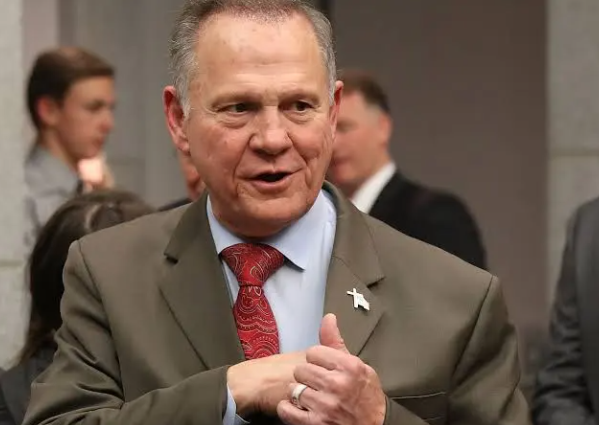
According to Moore, during his unsuccessful campaign, the Senate Majority PAC, which supports Democratic candidates, aired an advertisement that suggested he solicited sex from a 14-year-old girl. This advertisement was broadcast on Alabama television stations 533 times over a period of 10 days and featured various quotes regarding allegations of sexual misconduct against Moore. Key statements included claims that Moore had been banned from the Gadsden Mall for soliciting young girls and noted that one of those he approached was a 14-year-old working as Santa’s helper.
Roy Moore In related emergency litigation, the appeals court upheld its decision to allow the advertisement to continue airing, rejecting Moore’s request to delay the ruling while he seeks further review from the justices. The Senate Majority PAC effectively argued before the appeals court that halting the ruling was unnecessary, citing the Supreme Court’s likely unwillingness to consider Moore’s upcoming petition, let alone rule in his favor.
Roy Moore initiated a lawsuit claiming defamation and false light invasion of privacy, contending that the combination of certain statements misleadingly implied he solicited sexual favors from a minor. The jury concluded that the Political Action Committee (PAC) acted with “actual malice,” a legal standard defined by the Supreme Court in its 1964 decision in New York Times v. Sullivan. As a result, Moore was awarded $8.2 million in damages.
Additionally, Moore referenced his unsuccessful application to reconsider the “actual malice” standard, which requires public figures to demonstrate this level of intent to succeed in defamation cases. He noted that Justices Thomas and Neil Gorsuch have called for reevaluation of this standard, rooted in the landmark ruling. However, the Supreme Court requires four justices to agree to review such petitions, and there has been no significant movement on the issue within the Court.
Roy Moore Seeks Supreme Court Intervention in $8.2M Defamation Case
Roy Moore In April, the 11th Circuit Court reversed a previous ruling, determining that the PAC’s wording in an advertisement constituted “a negligent error at best.” This decision aligns with the stance of other circuit courts, emphasizing that for a claim of defamation by implication, it is necessary for Moore to demonstrate either the PAC’s intent to convey a defamatory meaning or a “reckless disregard” for such an implication. In a related case, Supreme Court Justices Thomas and Gorsuch expressed dissent when the Court declined to hear Alan Dershowitz’s defamation petition against CNN.
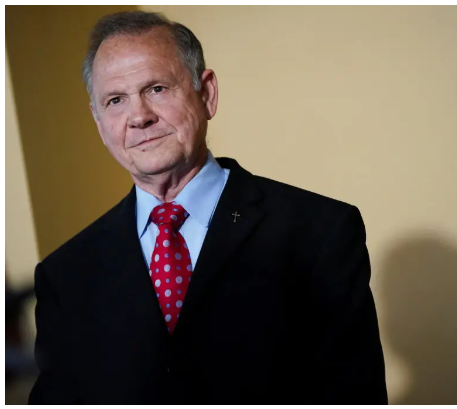
The Senate Majority PAC, opposing Moore’s urgent appeal to the high court, argued that he had not demonstrated sufficient grounds for such extraordinary relief, labeling his concerns as “rank speculation.” The PAC, which is primarily focused on supporting Senate Democrats, asserted its financial stability, indicating that there would be no issue in case Moore ultimately won a reversal at the Supreme Court.
Roy Moore The PAC appealed to the 11th Circuit, which subsequently overturned the jury’s verdict. As a result, Moore sought intervention from the Supreme Court on a Tuesday. He argued that if the mandate—an official document that allows the 11th Circuit’s decision to take effect—is issued, and the accompanying $8.2 million bond, ensuring payment of the jury’s verdict, is released before he has the opportunity to request a review of the lower court’s ruling, the judgment he secured following the trial would essentially be forfeited before the Supreme Court can assess the necessity of the review.
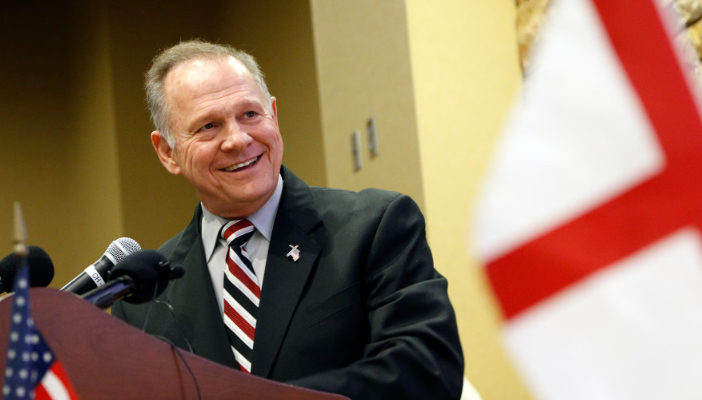
Roy Moore indicated that the appellate court is expected to release the mandate around June 15. Justice Clarence Thomas, who is responsible for addressing emergency appeals stemming from the 11th Circuit, has yet to prompt the PAC to respond to Moore’s recent filing.
Pingback: Breaking:US Supreme Court Rejects Trumps Birthright Citizenship Ban In 6-3 Rulling - internationalmediawire.com