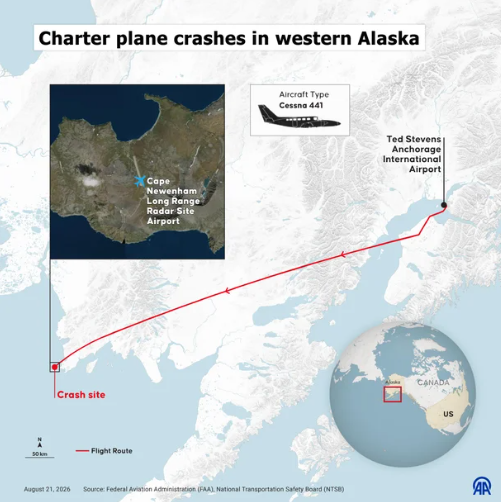
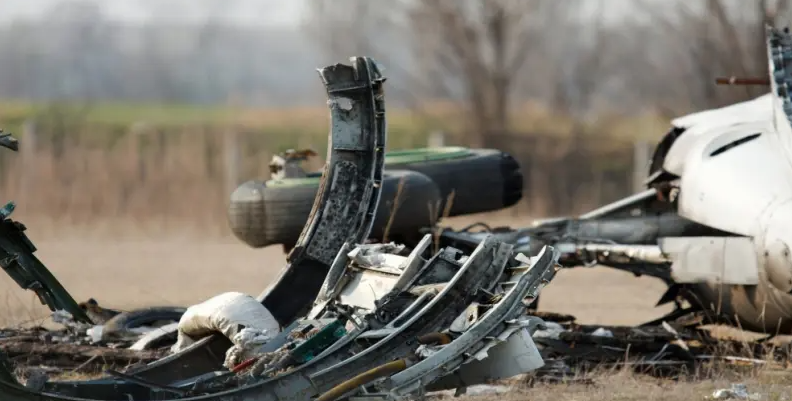
Alaska Plane Crash Near Remote Military Radar A tragic plane crash occurred near Cape Newenham, Alaska, resulting in the deaths of all eight people aboard. The incident took place shortly after midday local time on a Thursday, involving a civilian-contracted twin-engine Cessna 441 aircraft operated by the U.S. Army Corps of Engineers (USACE). The plane was en route to a remote military radar site, specifically the Cape Newenham Long Range Radar Site Airport, located approximately 450 miles west of Anchorage, after departing from Ted Stevens Anchorage International Airport.
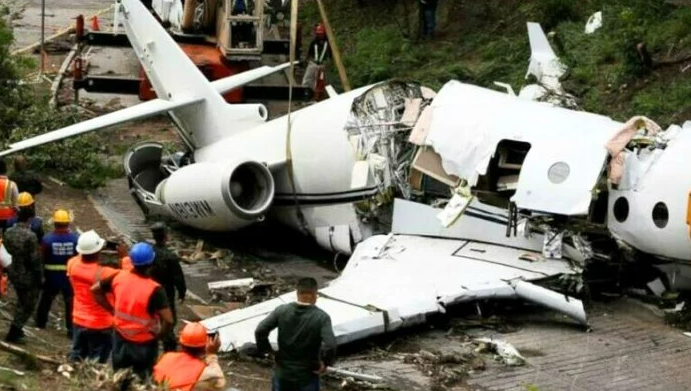
The U.S. Air Force Alaskan Command chief remarked that the passengers were “dedicated professionals carrying out a vital mission in a demanding environment.” While it is confirmed that two of the individuals on board were employees of the USACE, further details regarding the remaining passengers and the cause of the crash remain unclear as the investigation progresses.
Clint Johnson, the chief of the National Transportation Safety Board’s Alaska region, confirmed that a plane was carrying two pilots and six passengers when it crashed. Among the casualties were two employees of the U.S. Army Corps of Engineers. U.S. Air Force Lt. Gen. Robert Davis, the commander of Alaskan Command, expressed that this incident represents a profound loss for both the military community and the regions they serve.
He emphasized the importance of offering steadfast support to the families, friends, and teammates affected by this tragedy. Lt. Gen. Davis also extended gratitude to the search and recovery teams for their rapid and dedicated response efforts. The aircraft, which took off from Anchorage International Airport, was en route to Cape Newenham, located 450 miles (725 km) to the west. This statement reflects the serious impact of the incident on local and military communities, underscoring a need for collective mourning and support during this challenging time.
The National Transportation Safety Board (NTSB) and the Federal Aviation Administration (FAA) are currently investigating a plane crash that occurred in foggy weather conditions, as reported by the nonprofit Flight Safety Foundation. The aircraft, a Cessna 441, had attempted one landing but missed, and was likely preparing for another approach when contact was lost.
The crash took place in a remote and rugged area, which will complicate access for the NTSB team tasked with the investigation. Rescuers managing the situation confirmed that there were no survivors among the passengers. The identities of the deceased will be released only after notifying their next of kin, and the investigation is ongoing to determine the circumstances surrounding the accident.
Five investigators from the National Transportation Safety Board (NTSB) are en route to the accident site, according to spokesman Peter Knudson. The wreckage of the plane will be documented thoroughly and subsequently transported to a secure facility for a comprehensive examination. Key areas under investigation include the weather conditions at the time of the incident and communications with the pilots, along with other relevant factors, as stated by Clint Johnson, the chief for the NTSB’s Alaska region.
The accident occurred at a private military airport, which is tied to a network of remote radar sites managed by the Pacific Air Forces Regional Support Center. This network is responsible for monitoring aircraft operating within Alaska’s airspace and along its borders, as confirmed by a statement from Alaskan Command.
The aircraft was chartered by the U.S. Army Corps of Engineers (USACE), which has identified that two of its employees were aboard the flight. It’s important to note that the majority of personnel working for the USACE are civilians, rather than active military members. Reports indicate that the flight carried a total of two pilots and six passengers.
On Friday, the U.S. Army Corps of Engineers announced the tragic loss of two employees who were part of a project delivery team supporting the U.S. Air Force. Lt. Gen. William Graham, commanding general of the Corps, expressed mourning for the “selfless teammates,” highlighting their dedication as public servants and professionals committed to national security.
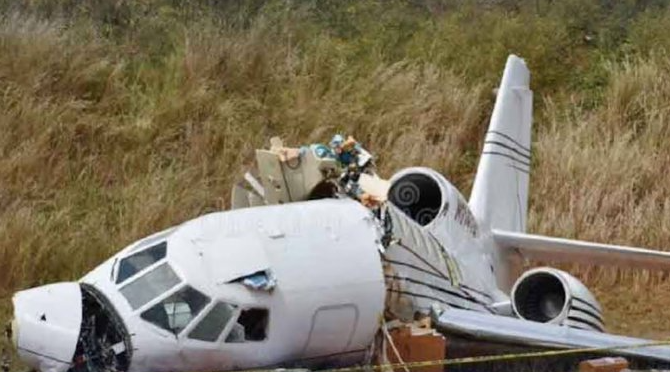
The statement from the Alaskan Command did not elaborate on the specific tasks the individuals were engaged in. The aircraft involved in the incident, a Cessna, was operated by Security Aviation, an Anchorage-based air charter service, as confirmed by the National Transportation Safety Board (NTSB).
Alaska’s senator, Lisa Murkowski, offered her condolences and shared her experiences with Security Aviation’s pilots, acknowledging the vital role they play in Alaska’s aviation landscape. In her statement, she commended the rapid response efforts by the U.S. Coast Guard, NTSB, Alaska State Troopers, and the Rescue Coordination Center, emphasizing the community’s support for the families and friends of those lost in the crash.
Davis, presumably a representative from Security Aviation, described the individuals on board as dedicated professionals on a critical mission in a challenging environment, affirming the company’s commitment to supporting their families during this difficult time.
In 1950, Cape Newenham was the site of a continental defense radar station established as part of the Distant Early Warning Line, aimed at detecting a potential Soviet attack during the Cold War. This initiative was reported by Coastview, a nonprofit organization focused on enhancing awareness of the Alaska coastline. Currently, little remains of the former radar station.
Pingback: A66 Horror: Two Police Officers Among Seven Killed in Deadly Crash - internationalmediawire.com
Pingback: Greek F-4 Fighter Jet Crashes During Air Show Near Athens, Killing Two Pilots - internationalmediawire.com