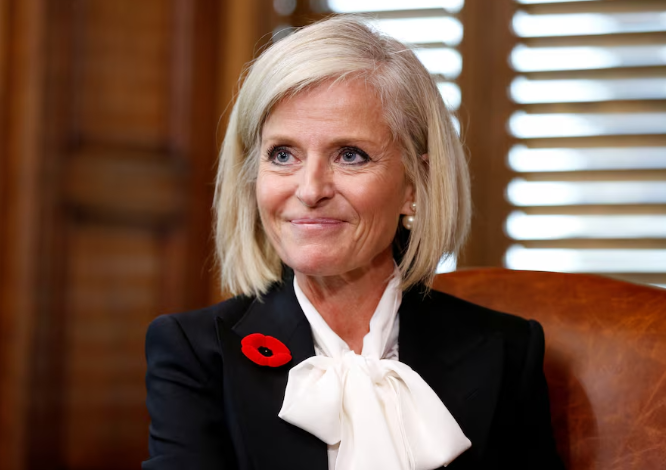
Canada NATO summit Canada is set to announce approximately 10 founding nations for a global Defence, Security and Resilience Bank (DSRB) at the upcoming NATO summit in Turkiye. Isabelle Hudon, the chief negotiator for Canada and CEO of the Business Development Bank of Canada, confirmed the plan in a recent interview with Reuters. The initiative, promoted by Canadian Prime Minister Mark Carney, is part of a strategic vision aimed at creating an alliance among “middle powers.”

This vision arises from concerns regarding the weakening of the traditional U.S.-led international order. The announcement at the NATO summit represents a crucial deadline for Canada in establishing this multilateral defence initiative, which aims to bolster international cooperation in security and resilience efforts.
Isabelle Hudon, the top negotiator for Canada and CEO of the Business Development Bank of Canada, indicated that the upcoming NATO summit serves as a deadline for announcing the initial list of founding members of a new multilateral financial initiative. The initiative aims to strengthen the defense of allied nations by securing up to £100 billion (approximately $133 billion) in affordable financing.
According to Hudon, the founding members will likely be predominantly European countries, with Canada included. However, she refrained from revealing specific nations and emphasized that the announcement is not guaranteed, as it is contingent on final negotiations concerning capital commitments from the involved allies.
Despite this positive outlook, the project success is still uncertain without the support of key nations necessary for it to achieve a triple-A credit rating. Hudon highlighted the prime minister perspective on the new initiative, emphasizing that aiming for perfection shouldn’t delay its launch. The strategy involves rallying nations willing to be founding members while keeping membership open for future participants. However, the project success hinges on obtaining support from key nations necessary for achieving a triple-A credit rating, which remains uncertain.
Discussions with South Korea have proven fruitful, with emphasis placed on a 50-50 chance of the country joining the project later. Currently, no other G7 nations are nearing agreement, and South Korea Finance Ministry is still reviewing the proposal, though they couldn’t be immediately contacted.
John Fragos, spokesperson for Canada finance minister, mentioned the aim to align discussions with the upcoming NATO summit, indicating that the value of the bank is broadly recognized. Despite the positive momentum, Hudon cautioned that the preliminary list of countries will likely consist mostly of European nations and Canada, stressing that the finalization of agreements and capital commitments is critical for the project advancement, as an official announcement remains unconfirmed.
John Fragos, press secretary for Canada finance minister, indicated that preparations for the NATO summit are underway, although there are many factors at play. He expressed confidence that the benefits of the bank being discussed are well-recognized among stakeholders.
Potential hurdles
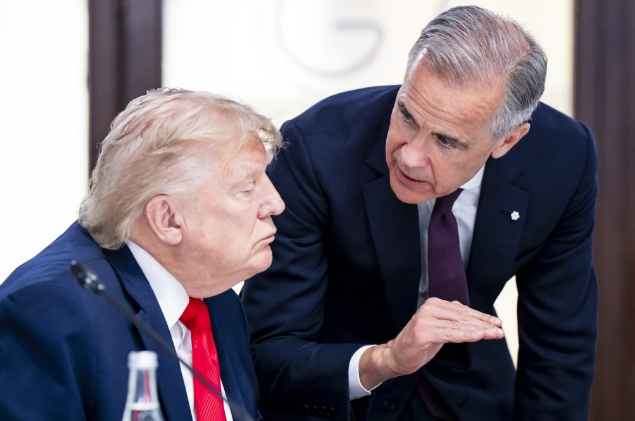
Canada and Luxembourg are currently the only publicly announced countries joining a new bank, with Luxembourg set to serve as its European base. Canadian official Carney indicated that a “critical mass” of additional countries intends to join but did not specify which ones. Analyst Linus Terhorst from the Royal United Services Institute noted that the upcoming Ankara meeting will be crucial in determining whether there is sufficient momentum to make this initiative viable. The bank faces significant challenges in Europe, particularly as it contends with competing defense initiatives like the EU SAFE program.
The document discusses the challenges faced by the Defence and Security Review Board (DSRB) in Europe as it competes with existing defense initiatives, notably the European Union SAFE programme. A key focus is on the financial contributions expected from the anchor nations to support these initiatives, which are proposed to be proportional to the size of their economies. According to Hudon, a representative of the DSRB, determining the capital required is the most complex aspect of this decision-making process.
Estimates suggest that Canada might be required to contribute as much as €1.5 billion (approximately $1.7 billion), while smaller nations could be expected to pay between €500 million and €750 million. This financial model aims to ensure equitable contributions based on each nation economic capacity.
In the mix
Britain has opted not to join the Defence Supply Reserve Bank (DSRB) and instead is focusing on its own defence financing initiative known as the MDM, collaborating with the Netherlands and Finland. Despite this, there have been discussions regarding the potential alignment or merger of MDM with DSRB, according to two sources. On Friday, Carney expressed anticipation for future discussions about the bank with the next British Prime Minister, with former Manchester Mayor Andy Burnham being the leading candidate to succeed Keir Starmer. However, Burnham was unavailable for immediate comment.
Hudon mentioned ongoing conversations with various stakeholders in London, reflecting the dynamic state of negotiations. Germany had previously distanced itself from the DSRB but has recently joined the discussions as an observer and is currently evaluating the outcomes.
Several G7 nations, including Italy, as well as Spain, Turkey, Belgium, and Ukraine, have reviewed the proposals related to DSRB. However, they requested anonymity while discussing sensitive information. While Turkey Foreign Ministry has not commented on its involvement, sources indicate a level of interest from the nation. Conversely, the Netherlands announced its non-participation, emphasizing its dedication to the MDM initiative alongside the UK and Finland.
Competing initiatives
In 2024, a coalition of former NATO security advisers, senior ex-military personnel, and bankers proposed the Defense Security Research Board (DSRB) to address escalating defense demands arising from the ongoing war in Ukraine, increased tensions with Russia, and concerns over China military expansion. In June 2025, NATO leaders collectively committed to allocate 5% of their GDP towards defense and security investments by the year 2035.
Currently, discussions are underway regarding the selection of a host city for the DSRB in Canada. According to Hudon, it is improbable that an announcement will be made soon, with five cities—Toronto, Montreal, Ottawa, Halifax, and Vancouver competing for the role. Additionally, several leading banks, including JPMorgan, Deutsche Bank, Commerzbank, ING, and Canada prominent banks, such as RBC, BMO, CIBC, National Bank of Canada, Scotiabank, and TD Bank, have all joined the project, indicating strong financial backing and commitment to the initiative. The financial exchange rates are provided for context: $1 equates to 0.7516 pounds and 0.8773 euros.
Pingback: Report: Are banks open today? What's open and closed this July 3, 2026, across Tampa Bay - internationalmediawire.com
Pingback: How AI is Changing US Military Intelligence in 2026 - internationalmediawire.com
Pingback: Canada Strikes Back With Tariffs as Carney Warns U.S Trade War Will Come at a Cost - internationalmediawire.com