Rebel Creamery a brand known for its keto ice cream sold in major retailers such as Walmart, Kroger, and Target, is facing significant financial distress, culminating in a Chapter 11 bankruptcy filing in Utah. This decision follows a judge’s ruling in favor of Van Leeuwen Ice Cream, which awarded $23.785 million to the rival in a trade-dress dispute. Rebel Creamery reported liabilities totaling approximately $23.85 million against assets of about $13.78 million.
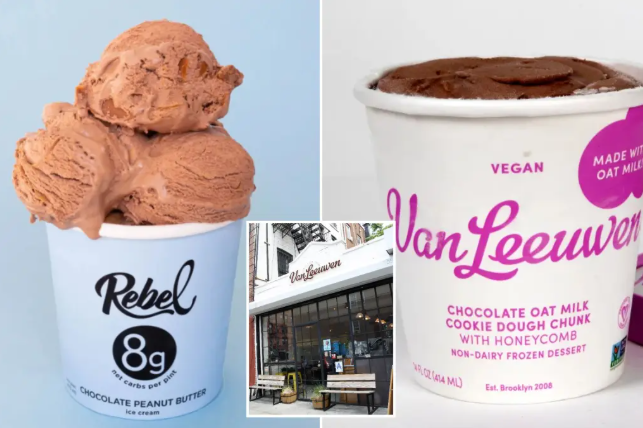
The ruling centered around allegations that Rebel Creamery had improperly copied Van Leeuwen packaging, a misstep that has now resulted in nearly $24 million in financial repercussions. The bankruptcy comes amid a growing ice cream industry, which has seen a 5.8% increase over the past five years, highlighting the stark contrast between the industry’s growth and Rebel’s financial downfall.
Rebel Creamery trademark rights violation ruling
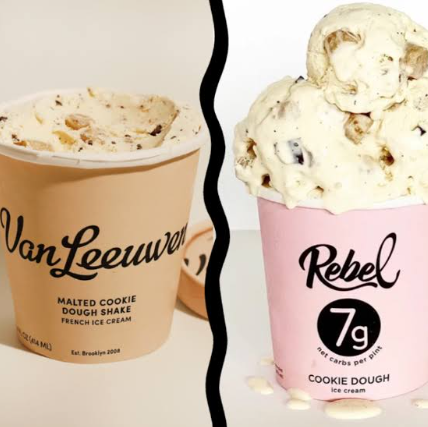
In a ruling concerning trademark rights, Judge Komitee determined that Rebel Creamery deliberately copied the branding of Van Leeuwen Ice Cream. The court mandated Rebel Creamery to redesign its ice cream packaging, which currently features monochromatic cardboard pints and lids, a pastel color palette, exaggerated black script lettering, and a minimalistic aesthetic. Evidence presented at trial indicated actual confusion among consumers regarding the two brands, supporting the claim of infringement. Rebel Creamery
Komitee stated, “The evidence at trial left no doubt that Rebel infringed and diluted Van Leeuwen trade dress and did so intentionally.” Consequently, Rebel Creamery has been prohibited from selling the infringing products and must redesign its packaging to prevent future violations. Additionally, Rebel will be required to forfeit profits gained from the sale of these infringing ice cream pints.
What the judge found
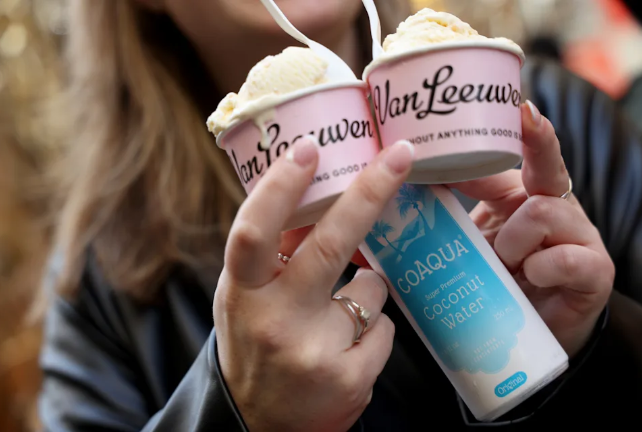
On July 16, U.S. District Judge Eric Komitee ruled that Rebel had willfully infringed and diluted the trade dress of Van Leeuwen. The judge emphasized that the evidence presented in the trial left no ambiguity regarding Rebel’s actions. Trade dress, which refers to the overall appearance of a product rather than its name or logo, was specified in the ruling to encapsulate four distinct elements associated with Van Leeuwen branding: a simple cardboard pint container in a uniform color accompanied by a matching lid, the use of soft pastel shades, distinctive black script lettering highlighted by a prominent first letter, and minimal additional content on the packaging. Rebel Creamery
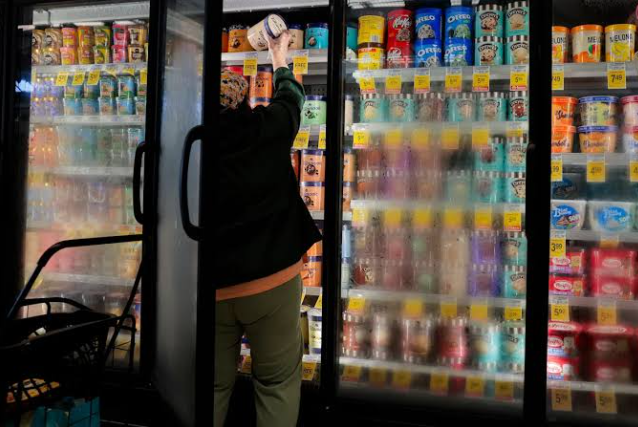
This detailed identification of the trade dress components underpins the judge’s conclusion of intentional infringement by Rebel.The court determined that the combination of branding was distinctive enough to be attributed to Van Leeuwen. It also noted that the pints from Rebel were similar enough to create confusion among consumers. Evidence presented during the trial indicated that store employees contributed to this confusion by mistakenly placing Rebel price tags on Van Leeuwen pints and displaying the two brands on the same shelf.
The files that decided the case
The case involved the design firm Pentagram, which was hired by Van Leeuwen in 2016 to create packaging for its ice cream as it sought to sell in grocery stores nationwide. Pentagram explored competing brands and presented seven potential designs, of which one was selected by the founders. Notably, the firm retained all project materials, including briefs, presentations, and other design concepts that were ultimately not chosen. According to Natasha Jen, the Pentagram partner overseeing the project, the firm maintains possession of all these documents.
In contrast, the design for Rebel’s packaging was executed by Austin and Courtney Archibald using Adobe Illustrator between December 2017 and early 2018, despite their lack of formal training in graphic design. During the trial, they revealed that they did not save intermediate versions of their work, only the final file. Rebel Creamery

Furthermore, both Archibalds testified they had never seen Van Leeuwen ice cream product when developing their design, with Austin claiming he only encountered it for the first time in July 2018 during a meeting with a Wegmans buyer. The judge ultimately found the Archibalds’ claims unconvincing, noting the lack of documentation outlining the process behind Rebel’s design, which raised doubts about its originality and the circumstances of its creation. Rebel Creamery
How both companies got here
Austin Archibald developed a keto diet, leading him to explore online forums that revealed a growing community eager for keto-friendly ice cream. Already crafting his own keto ice cream, the Archibalds launched their company, Rebel, through a successful Kickstarter campaign that notably featured no packaging. By August 2018, Rebel’s products were available in a Los Angeles health food store, and within 18 months, they reached major retailers such as Publix, Kroger, Walmart, HEB, Fred Meyer, Safeway, and 7-Eleven.
In late 2018 or early 2019, the founders of Van Leeuwen ice cream became aware of Rebel when an employee noticed their branding on social media. Ben Van Leeuwen expressed their dismay upon discovering that Rebel’s packaging closely resembled theirs. Although they considered legal action, they initially refrained due to Rebel’s financial constraints and their inexperience with lawsuits. The situation escalated to a lawsuit filed in 2021.
Why the number came down
Van Leeuwen requested $36.4 million, but Komitee assessed Rebel’s sales data and reduced the request by approximately one-third. This adjustment was based on the finding that certain sales were driven by the popularity of keto ice cream rather than the carton design. Rebel contended that its liability should be capped at $5 million; however, Komitee noted a lack of supporting evidence in the records to justify this lower amount.
What happens now
Rebel has initiated an appeal against a recent ruling and subsequently filed for bankruptcy just two days later. In the bankruptcy documentation, the company has stated that it disputes a debt amounting to $23.785 million. The financial disclosures indicate that Rebel possesses approximately $13.78 million in assets juxtaposed with $23.85 million in liabilities. This balance sheet reveals roughly $5.22 million in cash reserves, $2.59 million in accounts receivable, and $5.65 million in inventory.
Under Chapter 11 bankruptcy, Rebel is afforded protection from creditor actions while it undertakes the process of reorganization, effectively providing the company additional time to pursue its appeal. Furthermore, the ruling stipulated by Komitee requires Rebel to redesign its pint packaging. The objective of this redesign is to ensure that the new packaging offers consumers “a substantially different commercial impression” from the previous version. Should the appeal not reverse the ruling, the company will be mandated to alter its packaging accordingly.