Amazon Cargo Plane: Federal investigators are currently examining the circumstances surrounding the crash of an Amazon cargo jet, which occurred at Miami International Airport and resulted in the deaths of five individuals and injuries to five others. The aircraft involved was Amazon Air flight 7598, a Boeing 767-33 Alpha, operated by 21 Air, a dedicated cargo airline. Following the incident, the National Transportation Safety Board (NTSB) initiated a preliminary investigation to uncover the cause of the accident.
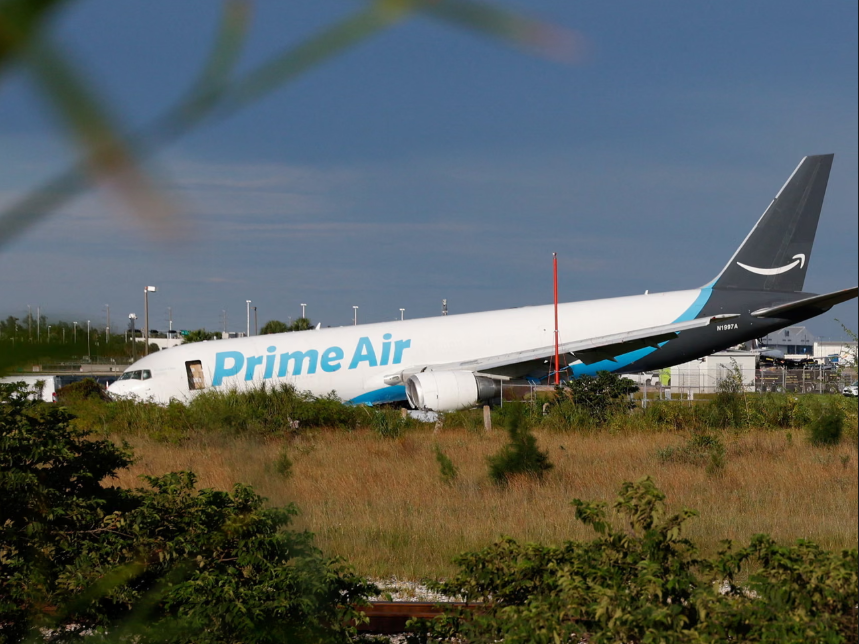
Key points of focus during this investigation include whether the aircraft may have touched down too late in its glide path, potentially preventing a safe stop on the tarmac. The NTSB, chaired by Jennifer Homendy, announced that evidence collection is underway, which includes the retrieval of the flight data recorder. This data will be essential in determining the factors leading to this tragic event.
Amazon Cargo Plane On the recent incident involving an aircraft, it has been confirmed by Homendy that the flight was arriving from San Juan, Puerto Rico, with two crew members aboard. This marked the aircraft third flight, having traveled from Cincinnati to Miami, then to San Juan, and back again to Miami the previous day. Upon landing, the aircraft overran runway 30, colliding with navigational aids and equipment before striking a 2012 white Ford Econoline van.
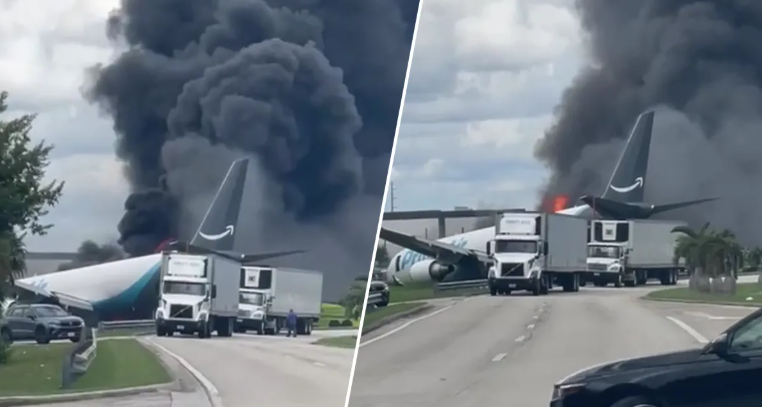
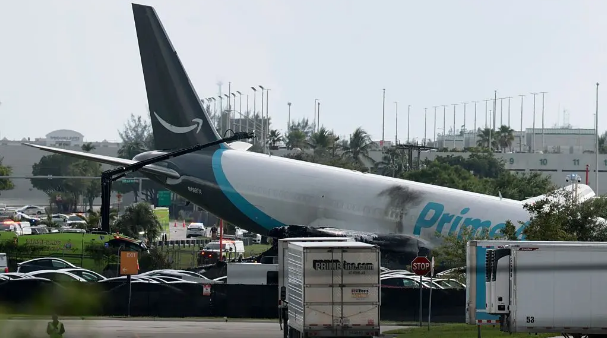
This van belonged to Professional Ocean Service Corporation, a cleaning contractor for the airline, and was occupied by seven individuals at the time of the incident.The incident involved an aircraft that breached a perimeter fence and collided with a Toyota Corolla Cross LE, which was traveling on Northwest 67th Avenue. After the initial impact, the aircraft traveled approximately 1,300 feet into a grassy area, ultimately striking another fence line that separated a space occupied by Tesla robotaxis.
Amazon Cargo Plane NTSB Chair Jennifer Homendy provided a vivid description of the aftermath, stating that the Ford Econoline van involved in the incident was “torn apart.” She also noted the visibility of airbags and components from both the passenger vehicles and the aircraft at the scene. This highlights the catastrophic nature of the collision and the significant debris resulting from the impacts.
Federal investigators are set to examine various aspects concerning the recent incident involving a Boeing 767 jet. Key areas of investigation will include operational protocols and human performance metrics, assessing the flight crew experience, and evaluating the policies and contracts between 21 Air and Amazon. Additionally, investigators will look into air traffic services, radar data, aircraft performance and structural integrity, as well as meteorological conditions at the time of the incident.
Amazon Cargo Plane A significant point of focus will be the absence of an engineered materials arresting system (EMAS), designed to safely stop aircraft at the end of runways using a crushable, lightweight material. NTSB Chair Jennifer Homendy indicated that while the National Transportation Safety Board (NTSB) will remain on the scene for approximately a week, their immediate emphasis will not be on determining the probable cause of the incident; rather, they will concentrate on documenting the scene and gathering evidence that may be quickly lost.
Video evidence from the incident depicts the aircraft wobbling slightly while approaching fast and landing long on the runway. Following its overshoot, the jet came to a halt in a parking lot, with its nose angled downward, and subsequently caught fire, releasing thick, dark smoke into the atmosphere.
The incident involved a Boeing 767-33A operated by Amazon Prime Air, which crashed after landing at an unusually high speed. The plane, managed by contractor 21 Air, overshot the runway, which led to multiple injuries as it collided with several vehicles, trapping both the pilot and copilot in the cockpit and necessitating the rescue of individuals trapped under a vehicle, as described by Miami-Dade rescue fire chief Ray Jadallah. He characterized the situation as “very complex.”
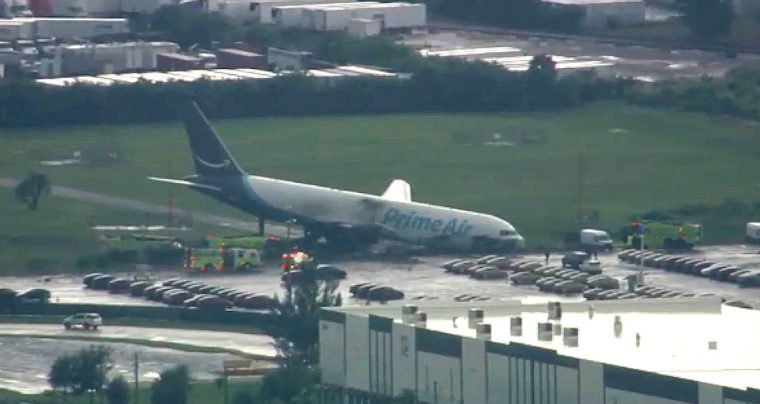
Amazon Cargo Plane Video footage showed the aircraft touching down far along the runway, with one landing gear wheel still elevated, indicating that the plane was moving abnormally fast. Aviation safety expert Steve Arroyo noted that typically, landing should occur within the first 3,000 feet of a runway. If the plane had landed beyond that point, it should have aborted the landing and attempted another approach, which did not happen here.
Mary Schiavo, a pilot and former inspector general of the U.S. Transportation Department, remarked that the videos indicated the aircraft was floating above the runway for an extended period and did not execute the necessary nose-up maneuver to bring the main landing gear down promptly. Additionally, storm clouds were visible in the area, accompanied by reports of strong winds. Amazon Cargo Plane
Amazon Cargo Plane Schiavo highlighted that if there was a tailwind affecting the plane, this could further complicate the landing approach, exacerbating the situation due to the aircraft delayed contact with the runway. Such conditions likely contributed to the crash, resulting in a dire and complex rescue operation.
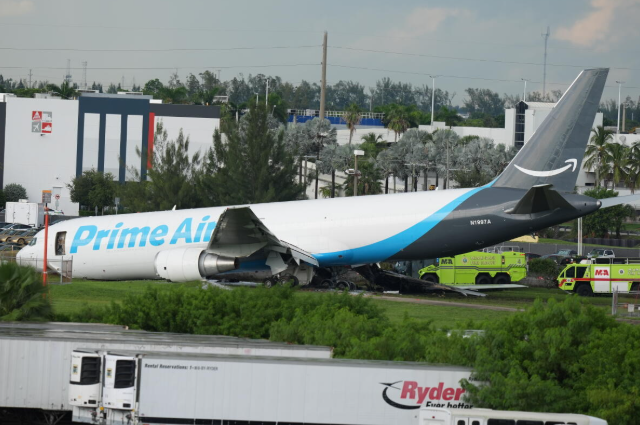
Amazon Cargo Plane Miami International Airport lacks “arresting beds,” a safety feature composed of lightweight, crushable materials, installed at over 120 airports across the nation to assist in safely stopping planes that overshoot runways, according to the Federal Aviation Authority (FAA). Following an incident involving a Boeing 767 operated by cargo carrier 21 Air, approximately 200 emergency personnel were deployed to manage a significant engine compartment fire, which resulted in heavy flames and smoke. Amazon Cargo Plane
Amazon Cargo Plane The aircraft, originally designed for passenger transport, has been in operation for over 30 years and transitioned to cargo use in 2015, as noted by flight-tracking site Flightradar24. The situation led to widespread disruptions, with more than 160 flights canceled and nearly 325 delayed by late Sunday, based on data from FlightAware. Although flight operations resumed subsequently, two runways at the airport were still non-operational on Monday morning.