The Trump administration has approved a significant arms deal involving the sale of stealth F-35 fighter jets to Saudi Arabia, estimated at $24.3 billion. This deal, which includes nearly 50 F-35 Lightning II Joint Strike Fighter Aircraft and related equipment, is poised to enhance Saudi Arabia military capabilities. However, it raises regional security concerns and could potentially alter the balance of power in the Middle East.
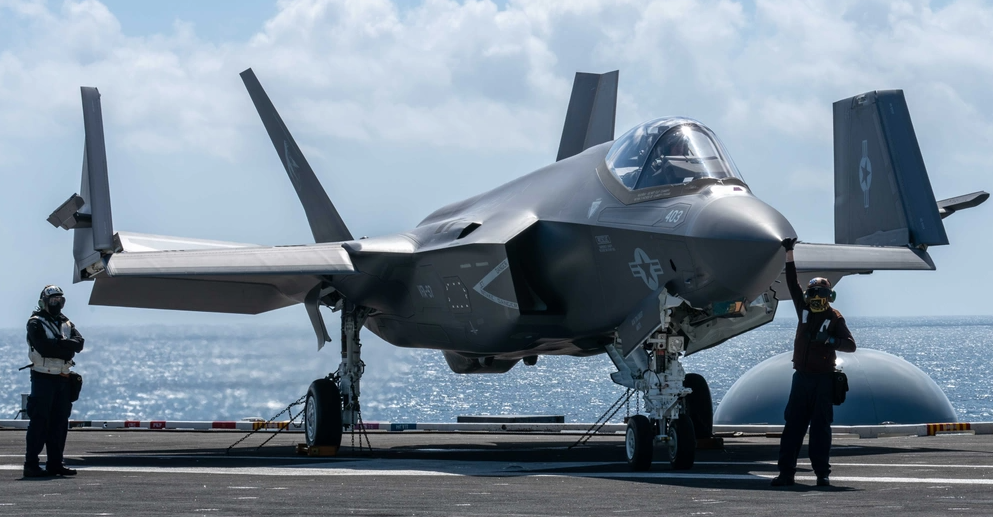
The US State Department announcement marks a shift in US-Saudi military cooperation, as the kingdom has been seeking entry into the F-35 program for years. Historically, the US has been hesitant to sell these advanced jets due to its commitment to ensuring Israel maintains military superiority in the region. Under US law, Israel is entitled to receive the most sophisticated American military technology, which complicates arms sales to neighboring countries like Saudi Arabia.
Congress Reviews Saudi F-35 Deal as Israel Military Edge Faces New Questions
Despite this approval, the sale is subject to congressional review, where members express apprehension over the deepening ties with Saudi Arabia, especially in light of the kingdom connections with China. Congress has a 30-day window to scrutinize or block the deal. Even if the agreement is ratified, the actual delivery of the F-35 fighter jets will not occur for several years. This potential arms sale underscores the intricate dynamics of US foreign policy in the Gulf region and the ongoing debate over military exports in the context of regional security and international relations.
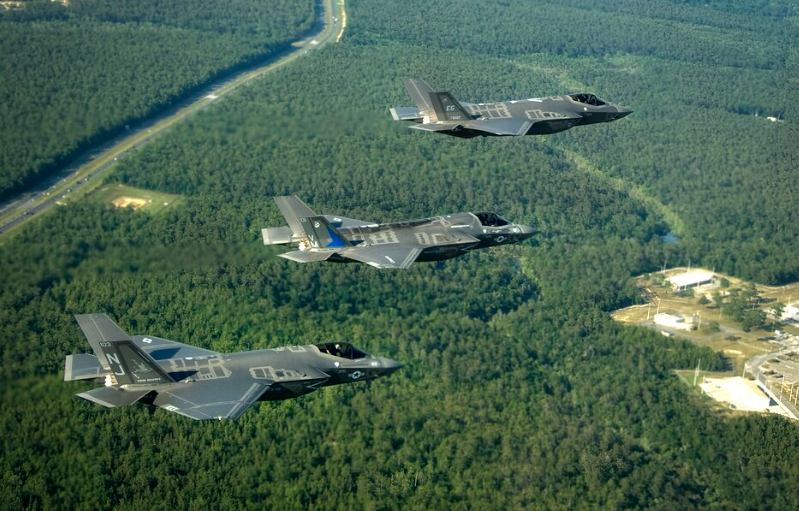
The proposed sale of advanced stealth fighters to Saudi Arabia represents a significant shift in military capabilities within the Middle East, positioning Saudi Arabia as only the second nation in the region to operate such aircraft, alongside Israel. This move is anticipated to enhance the Saudi air force and may have implications for the regional military balance.
Under US legislation, Washington is obligated to ensure that Israel maintains a “qualitative military edge,” which involves providing Israel with more advanced military equipment compared to other Arab nations. Previously, Israeli Prime Minister Benjamin Netanyahu expressed strong opposition to the idea of selling F-35 jets to Turkey, asserting that it would upset the existing power dynamics in the region. Despite this, following the State Department announcement regarding the potential sale to Saudi Arabia, Israeli officials refrained from making immediate public statements.
China Ties and Houthi Conflict Intensify Debate Over Saudi F-35 Sale
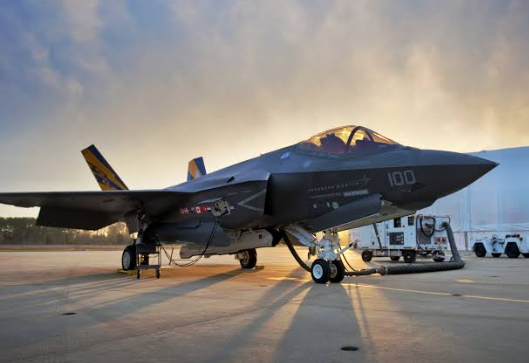
In November, President Donald Trump indicated his intention to proceed with the sale, prompting an Israeli security source to express significant concern over the prospect of Saudi Arabia acquiring the fifth-generation fighter jets. The source underscored the seriousness of the situation, emphasizing that it would not be favorable for Israel.In contrast to Israeli apprehensions, the US government downplayed the concerns, with the State Department stating that the proposed sale and associated support would not disrupt the military balance in the Middle East.
The proposed sale of arms to Saudi Arabia, originally linked to the normalization of relations with Israel, has seen a shift in focus under Trump administration. Despite expectations that normalization would provide both countries with direct communication lines and serve as a diplomatic win for Trump, he appears to have sidelined this requirement, prioritizing the sale of billions in military equipment instead. The State Department confirmed Saudi Arabia request for 48 conventional takeoff and landing fighter jets, accompanied by 49 Pratt & Whitney F135-PW-100 engines.
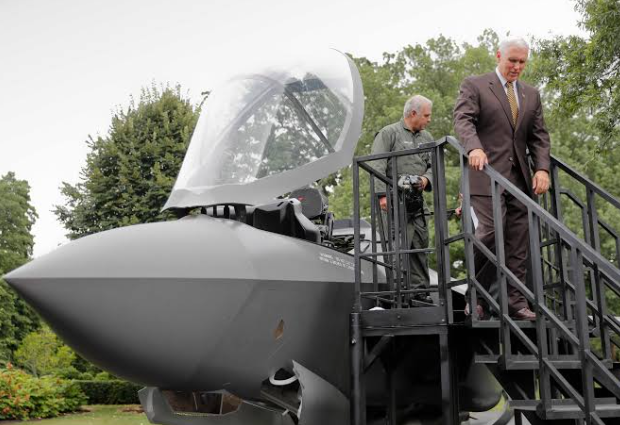
This arms deal is framed as a support for the United States’ foreign policy and national security goals, enhancing the security of a significant non-NATO ally that contributes to political stability and economic development in the Gulf region.In comparison, the Trump administration had previously made arrangements for a sale of F-35 jets to the United Arab Emirates, a plan that unraveled during the Biden administration due to apprehensions regarding military collaborations between the UAE and China. Analysts note that similar concerns apply to the current situation with Saudi Arabia, yet the Trump administration continues to pursue the arms sale regardless of these issues.
The recent escalation in the Saudi-Houthi conflict saw attacks on Saudi oil facilities and military bases by Iran-backed Houthis in Yemen. This situation exacerbates concerns regarding the stability of the region and the potential widening of existing conflicts. The renewed clashes, which intensified in July, have utilized Houthi drones and missiles targeting critical Saudi oil complexes, thereby disrupting operations and threatening key supply routes amidst rising oil price concerns. In response, the Saudi-led coalition, involved in Yemen ongoing civil war, has declared its intent to “resolutely confront” the Houthis’ aggressive actions.
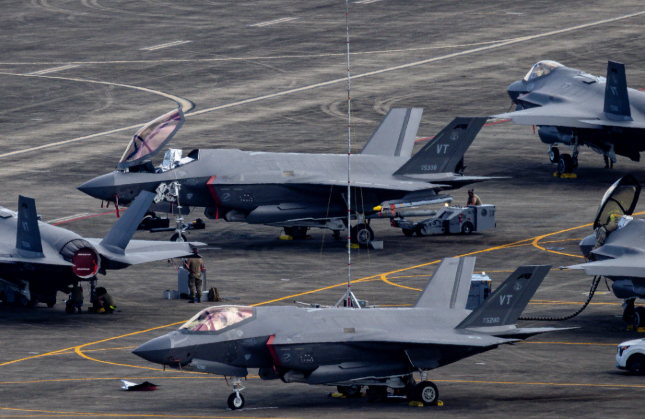
F-35 Deal Aims to Strengthen Saudi Defenses Amid Rising Gulf Security Threats
Saudi diplomats have also been actively seeking support from Washington to bolster their position against the Houthis. Recently, the Houthis made significant advances on vital coastal assets along the Red Sea, essential for shipping, prompting Yemeni generals to urgently request aerial backup from Saudi Arabia. However, reports indicate that support from Saudi forces has been notably absent, undermining the efficacy of the Yemeni military defensive efforts.Iran control over critical maritime chokepoints such as the Strait of Hormuz and Bab al-Mandeb Strait is intensifying concerns about rising oil prices, particularly in the context of the upcoming midterm elections in the United States.
The U.S. State Department has announced that a proposed arms sale to Saudi Arabia aims to bolster the kingdom capabilities to thwart existing and future threats, specifically enhancing its air-to-air and air-to-ground defense capabilities. Historically, Saudi Arabia has expressed a strong interest in acquiring Lockheed Martin fighter jets, having made a direct appeal to then-President Trump in early 2025. In that year, the U.S. approved an unprecedented defense package worth nearly $142 billion for Saudi Arabia, which was characterized by the White House as the largest defense cooperation agreement in U.S. history, as reported by Reuters.
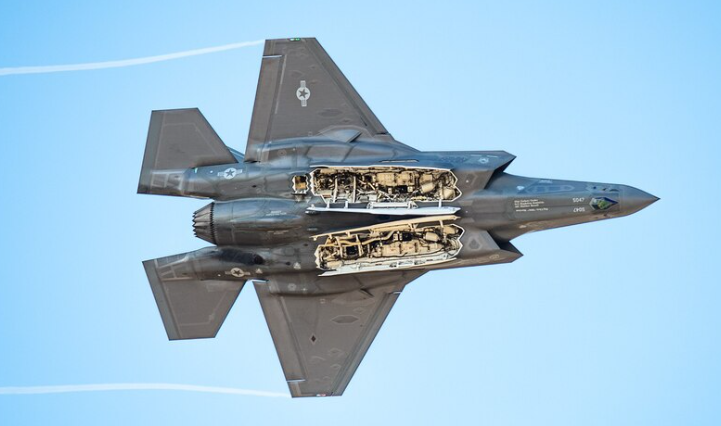
The F-35 Lightning II stealth fighter, developed by Lockheed Martin at the request of the US military, is recognized as the world most advanced fighter jet due to its superior capabilities against potential adversaries. Notably, it holds the distinction of being the most expensive weapons program in US history, reflecting significant investments in technology and development to maintain military superiority.
Lockheed Martin F-35 Lightning II
The Lockheed Martin F-35 Lightning II is a family of single-seat, single-engine, supersonic stealth strike fighters, designed for a variety of roles including air superiority and strike missions, as well as electronic warfare and intelligence, surveillance, and reconnaissance (ISR) tasks. Lockheed Martin serves as the prime contractor alongside partners Northrop Grumman and BAE Systems. The F-35 encompasses three main variants: the F-35A, which is designed for conventional takeoff and landing; the F-35B, optimized for short takeoff and vertical landing; and the F-35C, which uses catapult-assisted take-off and arrested recovery methods.
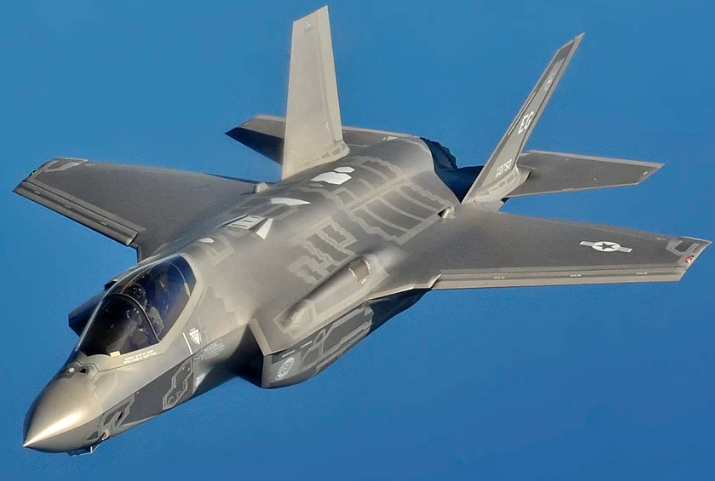
As of 2025, there are 883 F-35 aircraft currently in service, making it the fourth-most-numerous military aircraft and the most prevalent stealth aircraft globally.The aircraft lineage traces back to the Lockheed Martin X-35, which was selected in 2001 to replace legacy fighter jets including the F-16 Fighting Falcon and the F/A-18 Hornet. The development of the F-35 has been primarily funded by the United States, with additional contributions from select NATO allies and Australia; Turkey involvement ceased in 2019. By April 2026, the U.S. was operationally utilizing all three major variants, while allies like Italy and Japan operated both the F-35A and F-35B variants.
Other countries such as Australia, Belgium, Denmark, the Netherlands, Norway, Poland, and South Korea had also adopted the F-35A, while the United Kingdom employed the F-35B. Israel has its own F-35I variant, with additional orders from several NATO members, Switzerland, and Singapore.Despite its advanced capabilities, the F-35 program has faced substantial criticism due to its scale, complexity, escalating costs, and delivery delays, with low-rate initial production contributing to these issues. Projected costs are estimated to reach approximately $2 trillion through 2088, half of which is attributed to inflation.
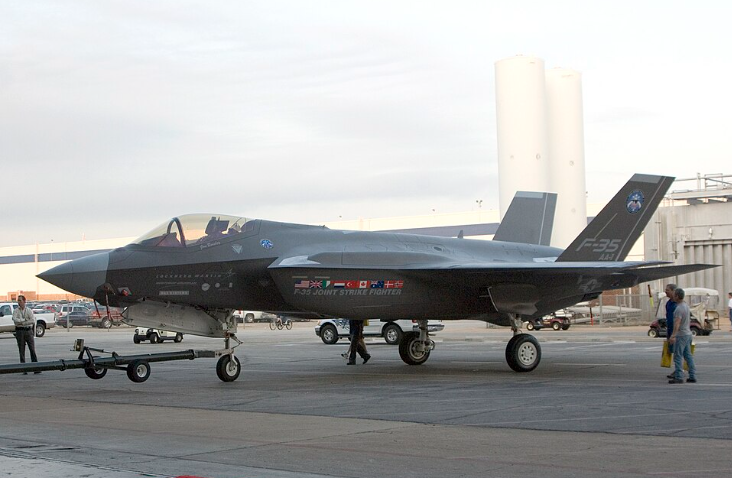
For the aircraft in production lots 18-19 starting in 2026, unit flyaway costs are set at $92 million for the F-35A, $121.4 million for the F-35B, and $110.8 million for the F-35C, including all associated production costs.The F-35 had its inaugural flight in 2006, with its U.S. service introduction occurring in stages from 2015 to 2019. The fighter saw its first combat in 2018 during Israeli strikes in Syria, followed by U.S. operations in various conflict zones. Notably, the F-35s have been utilized in military actions across Iraq, Iran, Venezuela, and Syria, among others.
Certain variants, like the F-35A, are capable of delivering nuclear payloads, with plans for several countries to acquire nuclear-capable versions. The U.S. intends to procure a total of 2,456 F-35s by 2044, positioning the aircraft as a cornerstone of NATO and U.S. allies’ air power for decades to come, with operational longevity anticipated until 2088.