Massive flash floods occurring on Wednesday in a border region between Nepal and China have resulted in at least 98 fatalities, with hundreds of individuals, including tourists and workers, reported missing. The Nepalese Prime Minister’s office has confirmed that 95 deaths were recorded on the Nepalese side, while China’s state broadcaster CCTV reported three fatalities due to a mudslide in Gyirong County, Tibet, alongside 265 individuals still unaccounted for.
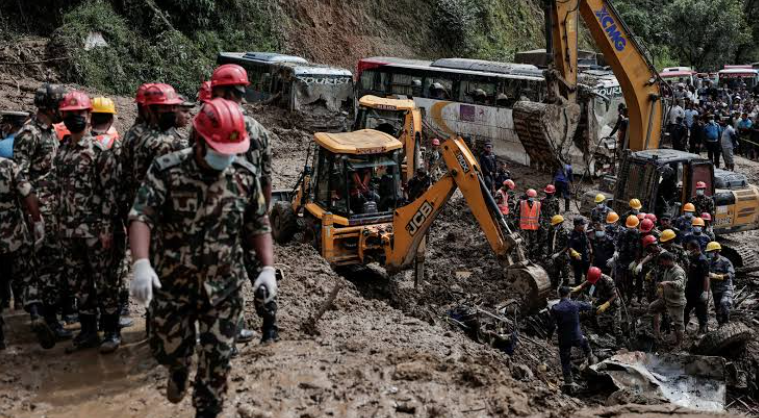
In this calamitous event, several villages in northeastern Nepal have been severely impacted, with initial estimates placing the death toll above 50, in addition to significant damage to roads, bridges, and energy infrastructure near the Tibetan border. Officials from Hungary have indicated that a Hungarian pilgrim was present in the affected area, and consular representatives are closely monitoring the situation and maintaining communication with local authorities.
Officials in Nepal have reported that 403 individuals are currently missing, including 341 foreign nationals. Among these, 133 are pilgrims from India visiting the sacred site of Mount Kailash in Tibet. The missing individuals also include 47 from the United States, 34 from Australia, 33 from Britain, and 24 from Canada. Additionally, 62 Nepali citizens are among the hundreds trekking near Gosaikunda Lake in Rasuwa during the local Janai Purnima festival.
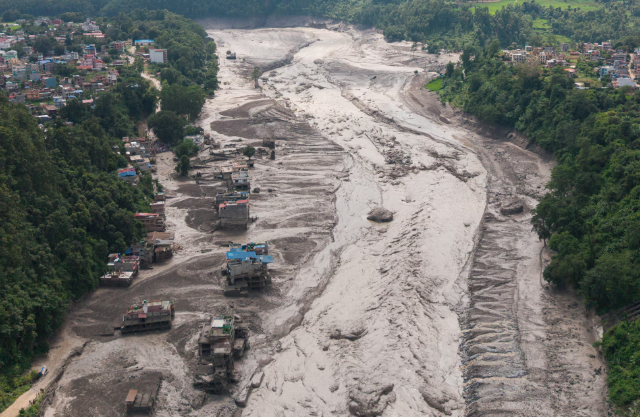
Nepal police spokesperson Abi Narayan Kafle has indicated that at least 28 police officials are also unaccounted for. Amid ongoing rescue efforts, officials have warned residents in various districts to avoid the banks of the Bhotekoshi, Trishuli, and Narayani rivers due to severe flooding. The Bhotekoshi river flooded early Wednesday, resulting in significant destruction to villages, roads, and hydropower projects.
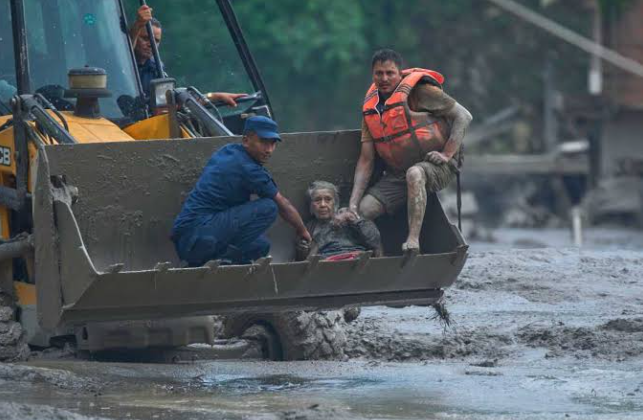
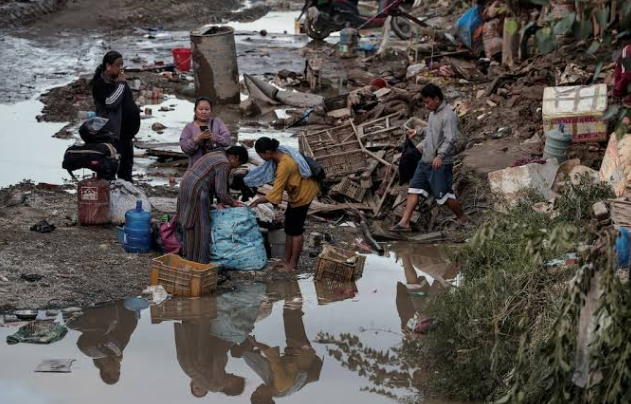
Government spokesperson Sasmit Pokharel reported that Nepal has reached out to both India and China for assistance in the rescue operations. The steep valleys of Nepal, which serve as economic lifelines and travel routes, have been severely impacted by the recent disaster. Images from the affected areas, particularly Nuwakot district, depict buildings covered in mud, debris entangled in trees and power lines, and vehicles buried under sediment, while shocked survivors were seen caked in mud.
On the same day, the US Geological Survey registered a 4.4 magnitude earthquake about 100 kilometers (60 miles) north of Kathmandu, near the border with the Tibetan region of China. Despite the risk of trekking during the current monsoon season, this period is typically important for trekking to Kailash in Tibet, which entices pilgrims along the route in Rasuwa district bordering Tibet’s Gyirong region.
Death toll in Nepal-China border flash floods climbs to 97, dozens missing
The death toll from devastating flash floods along the Nepal-China border has risen to 97, with at least 384 individuals, including tourists, soldiers, and police, reported missing. Rescuers managed to recover 97 bodies and rescued 54 people from the affected areas. Nepalese Foreign Minister Sishir Khanal informed parliament about the tragic circumstances, indicating that officials, soldiers, and police were among those missing after floods swept away their barracks in Rasuwa district. The Nepal Tourism Board reported 384 missing persons, highlighting the scope of the disaster.
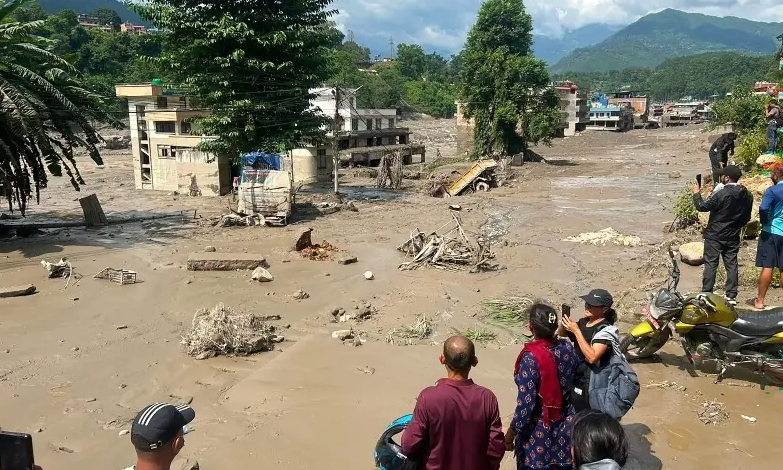
Authorities are focused on verifying the whereabouts and safety of those impacted by the floods, particularly tourists. Khanal noted that the flooding has severely affected infrastructure, washing away 19 bridges and damaging approximately 40 kilometers (25 miles) of roads along with 13 hydropower projects. The floods were exacerbated by a magnitude 4.4 earthquake that struck the Kodari village area, triggering avalanches that led to the collapse of glacial lakes in the Tibet region of China. The consequences of the floods have been profound, erasing critical government infrastructure and road facilities, complicating rescue and recovery efforts.
Countries express alarm over missing citizens
Countries are expressing concern over their missing citizens following severe flooding in Nepal. South Korea reported that nine of its nationals, employed at a hydropower plant project in the country, are among those unaccounted for. Malaysia confirmed that its embassy in Kathmandu received notifications from travel agencies regarding 11 Malaysians who have lost contact in the flood-affected Rasuwa district. In response to the crisis, China has initiated extensive search and rescue operations in Gyirong, near the Tibetan border, with President Xi Jinping directing officials to intensify their efforts.
Indian Prime Minister Narendra Modi has offered assistance to Nepal, stating that India is ready to provide various forms of humanitarian aid and that coordination on rescue efforts is ongoing. Additionally, a joint statement from Australia, Britain, the European Union, Finland, France, Norway, and Switzerland manifested support for the people affected, urging them to heed local authorities’ guidance as the situation develops.
The same region saw flash floods last year
In August of the previous year, the same regions experienced severe flash floods when a glacial lake in Tibet overflowed due to high temperatures, resulting in nine fatalities and significant damage to infrastructure, including a bridge between Nepal and China. Recently, on Wednesday, a flash flood was likely caused by an avalanche from a glacier, as stated by climate experts from the Kathmandu-based International Centre for Integrated Mountain Development.
The Lhende Khola River, a tributary of the Bhotekoshi, experienced severe flooding, attributed to an ice rock avalanche on the Nepal side that obstructed the river and triggered a sudden surge downstream. Disaster risk reduction specialist Saswata Sanyal emphasized the critical need for early warning systems in a warming Himalaya.
The Himalayan region, which includes parts of India, faces heightened risks of heavy rains, floods, and landslides due to faster warming compared to the global average, resulting from human-induced climate change. Recent research highlights that extreme weather events such as heatwaves, intense rains, and accelerated glacier melting have become increasingly common.
A study conducted earlier this year in Kathmandu indicated that glaciers in the Hindu Kush Himalaya are melting at an alarming rate, with ice loss rates having doubled since 2000, primarily driven by rising global temperatures and the broader impacts of climate change.
Pingback: Nepal Floods: More Than 800 Missing, Including 65 Americans, as Death Toll Rises - internationalmediawire.com
Pingback: Grand Canyon Flash Flood Sparks Urgent Search for More Than 20 Missing People - internationalmediawire.com