Gloria Steinem, a monumental figure in American feminism and co-founder of Ms. Magazine, passed away at the age of 92. Renowned for her impactful voice and activism over six decades, Steinem became an iconic symbol of the U.S. women movement. Her approach to advocacy was deeply personal, emphasizing the necessity of physical presence in fostering empathy and connection, as she once remarked in a 2015 interview, “You can’t do it on the phone or on the web… you have to be there with all five senses.”
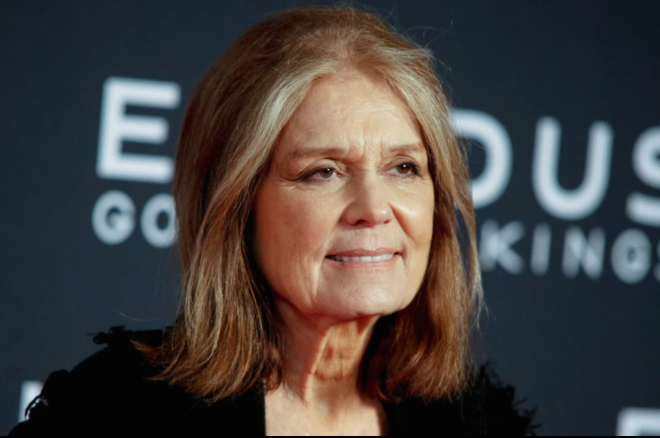
Despite her health declining in recent years, Steinem remained engaged in her work and had recently finished a memoir set for release in the fall. Her death was announced via a post on her social media from her home in New York City, marking the end of a significant chapter in the ongoing fight for gender equality. Steinem distinctive appearance, characterized by her streaked hair and large aviator glasses, ensured she was a recognizable figure at numerous speaking engagements across the country, where her powerful messages resonated with countless individuals.
Gloria Steinem
Gloria Marie Steinem (March 25, 1934 – September 2, 2026) was a pivotal figure in American journalism and feminism, emerging as a leading activist in the second-wave feminist movement during the late 1960s and early 1970s. Notably recognized for her influential work as a columnist for New York magazine, she co-founded Ms. magazine, which became a significant platform for feminist thought and advocacy.
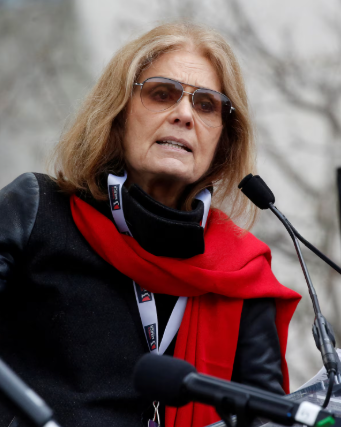
Gloria Steinem garnered nationwide attention with her 1969 article, “After Black Power, Women Liberation,” which solidified her status as a feminist leader.In 1971, she played a crucial role in the establishment of the National Women Political Caucus, aimed at providing training for women aspiring to political roles. That same year, she co-founded the Women Action Alliance, which supported feminist activists and pushed for legislative changes until its closure in 1997. Throughout the 1990s, Steinem was instrumental in initiating Take Our Daughters to Work Day, a program designed to inspire career aspirations in young girls.
Gloria Steinem activism extended beyond U.S. borders; she traveled internationally as an organizer and lecturer, advocating for equality on a global scale. In 2005, she, along with Jane Fonda and Robin Morgan, founded the Women Media Center, an organization committed to amplifying women voices and representation in media. In 2015, she participated in a historic journey across the Korean Demilitarized Zone, along with fellow peace activists, underscoring her lifelong commitment to advocacy and social justice.
“Gloria greatest gift was her ability to listen and make others feel validated and acknowledged,” as reflected in a poignant post. Her words, actions, and presence encouraged individuals to embrace their authentic selves. Despite her recent physical frailty, Steinem sharp wit and humor remained sharply intact.
Abigail Disney, a close friend and fellow activist, shared that during a visit to Steinem Manhattan home, just over a week prior to the statement, Steinem exhibited her usual humor and intelligence. Disney emphasized that “everything Gloria did was grounded in kindness,” which was evident in her political activism and the way she interacted with others.
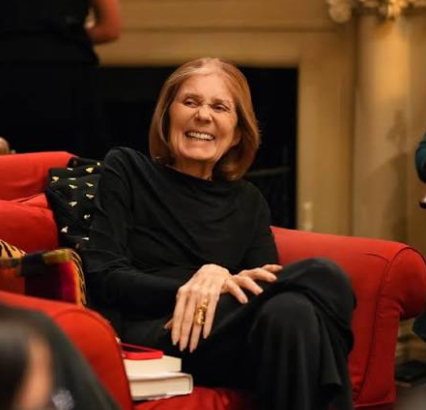
Gloria Steinem changed her career path after a start as a journalist
Gloria Steinem career transformation began from her initial role as a journalist, famously reporting in 1963 on the troubling conditions within Hugh Hefner Playboy enterprise, a decision she later regretted. A pivotal moment in her journey occurred six years later during a meeting where women expressed support for abortion rights, marking a significant shift towards activism for her. Reflecting on this experience in 2022 amid discussions surrounding the reversal of Roe v. Wade, Steinem emphasized the importance of bodily autonomy, asserting that true democracy necessitates equal control over one body, irrespective of gender or race.
Despite her eventual prominence as an activist, those who followed her journey might not have known that Steinem had to confront a profound fear of public speaking. Initially, she preferred writing but felt stifled as editors exhibited little interest in her coverage of the women movement. Consequently, she was compelled to speak publicly, an endeavor she found daunting.
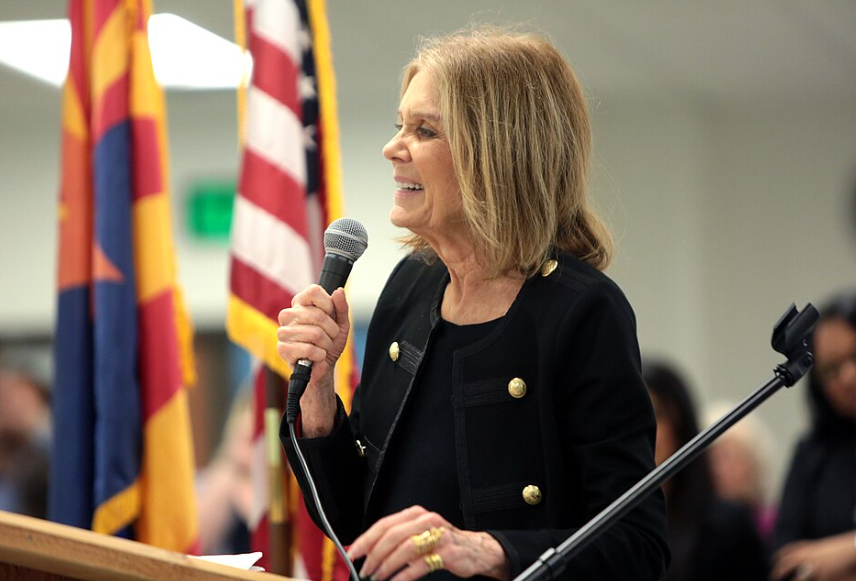
In a 2015 interview, Steinem described this fear, acknowledging that she remained scared but expressed gratitude for the growth it spurred in her activism. This evolution showcases not only her personal challenges but also her commitment to advocating for women rights and equality throughout her career.
Gloria Steinem visibility endured throughout her life
Gloria Steinem prominence and activism persisted throughout her life, marked by her dedication to a wide array of global issues, with a primary focus on women equality. Despite being in her 80s, she actively traveled and spoke out about critical topics, including genital mutilation and Korean reconciliation, emphasizing her belief that feminism should be viewed as a holistic perspective rather than a labeled identity.
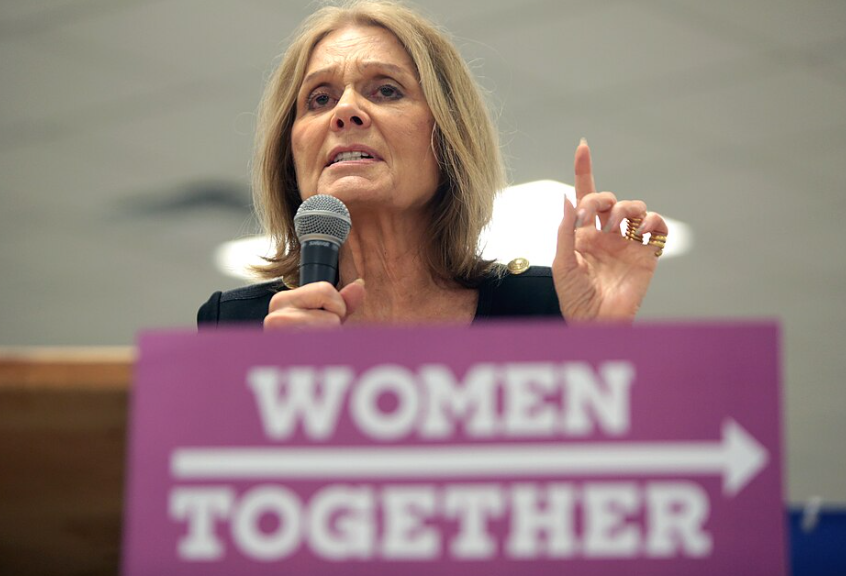
A poignant moment occurred shortly after her 85th birthday when she led a women “talking circle” at a play celebrating her life, where many women expressed their gratitude and shared personal stories of discrimination, illustrating her profound impact on others.
In 2020, Steinem legacy was honored with a feature film titled “The Glorias: A Life on The Road,” highlighting significant milestones in her journey. At the age of 91, she continued her mission by collaborating with Nobel laureate and peace activist Leymah Gbowee on a picture book geared towards inspiring youth. This book, titled “Rise, Girl, Rise: Our Sister-Friend Journey. Together for All,” was published in February, further solidifying her commitment to empowering the next generation to effect change in the world.
Gloria Steinem enduring visibility in the public eye came with significant challenges, particularly concerning how she was perceived despite her achievements. Throughout her later life, she voiced her frustration over being often referred to as beautiful or glamorous, illustrating a societal tendency to prioritize superficial traits over substantial accomplishments. In a 1992 Vanity Fair profile, her “spectacular racehorse legs” were noted, emphasizing this superficial focus.

During a 2011 interview with AP, Steinem reflected on her experiences, stating that she was not labeled as beautiful until she became a public feminist in her mid-30s. She articulated the emotional toll of receiving such labels, expressing her pain that people acknowledgment of her hard work was overshadowed by comments on her appearance, conveying a sentiment that true merit should not be conflated with physical attributes.
Gloria Steinem often responded to hostility with humor
Gloria Steinem frequently countered hostility with humor, a strategy that proved effective even when she faced unexpected criticism. During a 1990 appearance on Larry King CNN talk show, a female caller greeted her warmly before shocking Steinem by exclaiming, “rot in hell,” accusing her of ruining “the beautiful American family.”
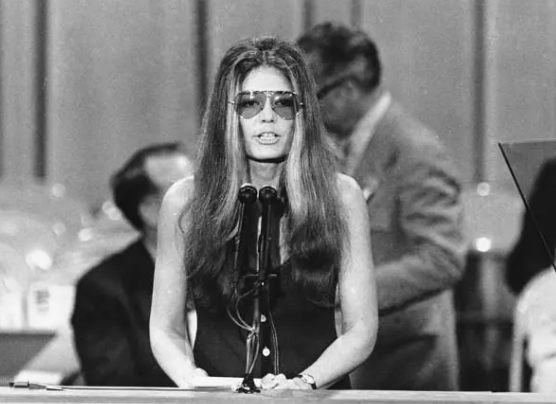
This kind of backlash existed despite a growing acknowledgment of feminists, a stark contrast to the dismissive attitudes of 1972, when she co-founded Ms. Magazine. At that time, many, especially male commentators, dismissed the publication as trivial and predicted its swift failure. Among her notable critics was President Richard Nixon, who, in a recorded Oval Office conversation, mocked both Steinem and the “Ms.” title.
Gloria Steinem adeptly fired back, labeling Nixon “the most sexually insecure chief of state since Napoleon” during a 1972 speech at the National Press Club. Her signature wit was evident in her remarks about being single; before marrying at age 66, she would quip, “I can’t mate in captivity,” emphasizing her belief that laughter represented the only truly uncontrollable emotion. Through these encounters, Steinem demonstrated her resilience and ability to navigate a landscape filled with challenges and ridicule.
Gloria Steinem had an unconventional childhood
Gloria Marie Steinem, born on March 25, 1934, in Toledo, Ohio, experienced an unconventional childhood as she traveled with her parents, a mobile antique salesman and a mother who later became a struggling journalist.
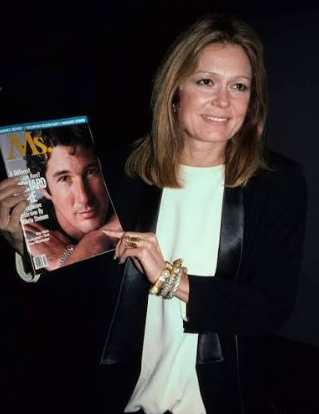
After her parents’ divorce in 1944, Steinem took on responsibilities at a young age to care for her mother, who faced difficulties balancing work and home life, ultimately leading to a nervous breakdown. Although she was a talented tap dancer, a career in that field did not unfold, and she pursued higher education at Smith College during the 1950s, a period when women education focused largely on preparing for traditional roles as wives and mothers.
Despite being engaged to a man she described as “very nice,” Steinem had no intentions of marrying. Instead, she seized a fellowship opportunity to travel to India and later moved to Manhattan, where she faced challenges accessing housing as a single woman, often met with discrimination based on societal assumptions about her independence. Initially seeking a career in political writing, Steinem was often assigned topics related to food and fashion by editors, and her frustration peaked during an incident of sexual harassment by an editor, highlighting the absence of a term for such experiences at the time.
In 1963, Steinem undertook an assignment with Show magazine, posing as a Playboy Bunny to conduct a controversial exposé. Contrary to her expectations, she was selected and had to endure the uncomfortable realities of the role for about a month. Reflecting on this experience in 2011, she regarded it as a significant mistake that had lasting negative repercussions on her career, making it harder to secure writing assignments and becoming a source of ridicule in later years.
Gloria Steinem writing became more political in her 30s
Gloria Steinem writing took on a more political tone during her 30s, particularly after she joined the editorial board of New York magazine. This shift became evident in 1969 when she covered an abortion rights hearing, a pivotal moment that led her to publicly acknowledge her own illegal abortion in London at age 22. This experience catalyzed her activism for women rights. In 1971, she co-founded the National Women Political Caucus alongside notable figures such as Betty Friedan, Shirley Chisholm, and Bella Abzug.
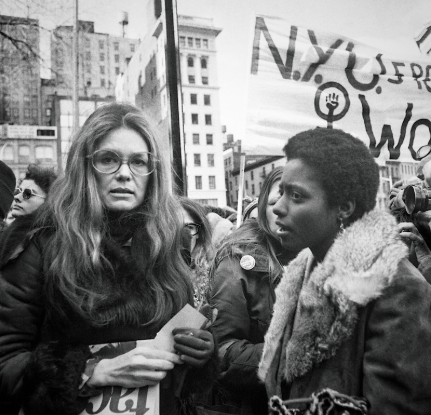
Despite her increasing prominence, Steinem initially struggled with public speaking. However, her partnership with Dorothy Pitman Hughes, a Black feminist and advocate for child welfare, proved transformative. Together, they challenged the perception of feminism as primarily a white, middle-class movement, symbolized by their iconic Black Power salute photograph.
As her fame grew, so did media scrutiny, particularly regarding her glamorous lifestyle in Manhattan. When asked about her distinctive style, which included streaked hair and aviator glasses, Steinem attributed her hair to the character Holly Golightly from “Breakfast at Tiffany,” noting that the glasses were a means of hiding.
Although she attempted to rationalize hostile reactions as better than ridicule, some critiques stung most notably a harsh profile in Esquire during the early 1970s, which deeply affected her to the point that colleagues organized a news conference in support of her. This period marked an essential evolution in both her personal and professional life, solidifying her role as a leading advocate for women rights.
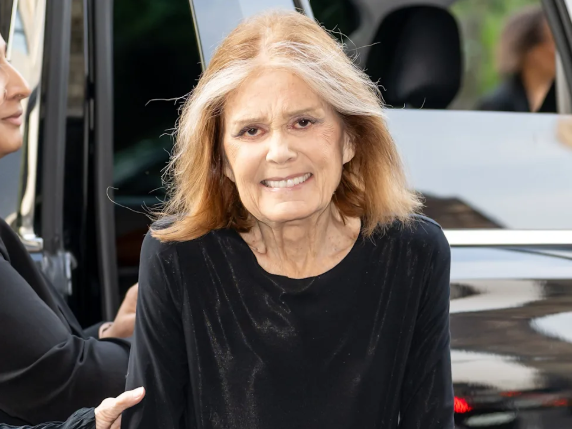
Gloria Steinem co-founded Ms. Magazine and stayed with it as an adviser
Gloria Steinem co-founded Ms. Magazine in 1972, driven by the fear that its failure would reflect poorly on the women movement. Despite criticism, including an apology from TV newsman Harry Reasoner, she remained with the magazine until its acquisition by the Feminist Majority Foundation in 2001, serving as an adviser thereafter. Although she did not have children, Steinem expressed no regrets, emphasizing the importance of choice in motherhood.
In 2000, Gloria Steinem married British activist David Bale at the age of 66, a decision she had not originally envisioned. Their union, conducted in a Cherokee ceremony in Oklahoma, was partly motivated by Bale needing a green card. Steinem cared for him until his death from brain lymphoma in 2003, reflecting on the transformative nature of marriage.
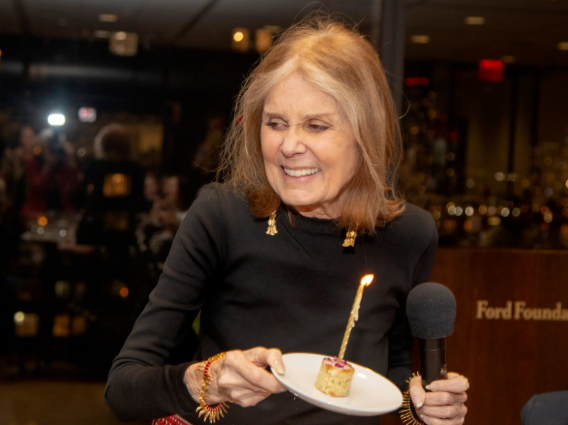
Overall, she acknowledged few regrets, expressing sorrow only for missing the opportunity to be present when her father died in a car accident, and lamenting her distance from her mother out of fear of becoming like her. These reflections were captured in an HBO documentary titled “Gloria: In Her Own Words.”
Gloria Steinem wrote about life on the road though she never learned to drive
Gloria Steinem, a prominent feminist activist and author, reflected on her life experiences, notably in her 2015 road memoir, “A Life on the Road.” Interestingly, Gloria Steinem mentioned she never learned to drive, believing it allowed her richer interactions with those driving her, including taxi drivers and event hosts.
Her impactful presence was evident during the Women March on January 21, 2017, where her keynote speech resonated deeply with the hundreds of thousands of attendees, many donning pink “pussy hats.” She emphasized the theme of interconnectedness among women, proclaiming, “We are linked,” and proclaimed the day as transformative due to their collective presence.
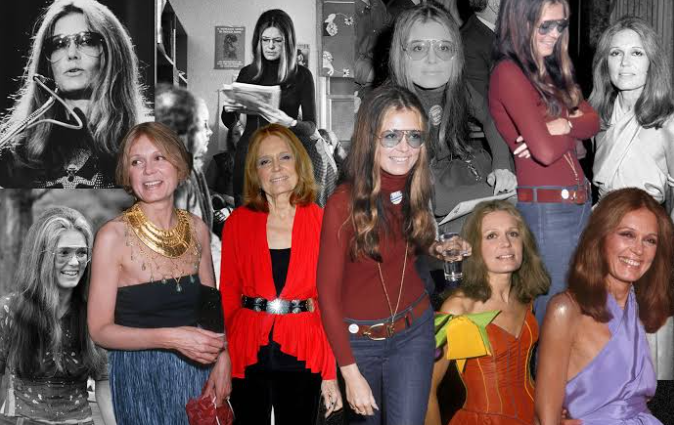
Despite her significance as an icon of change, Gloria Steinem modestly asserted that had she not been present, someone else would have emerged to champion the same causes. She consistently encouraged younger generations, stressing that their focus should be on self-awareness rather than her legacy, stating, “The primary thing is not that they know who I am, but that they know who THEY are.” This philosophy underscores her belief in the power of individual voices within the collective movement for gender equality.