Nancy Grace Roman: NASA has launched the Nancy Grace Roman Space Telescope, named after Dr. Nancy Grace Roman, a pioneering figure in astronomy often referred to as the “Mother of Hubble.” Her historical significance is highlighted as she became NASA first chief of astronomy during a time when female representation in the field was minimal. The telescope, which lifted off from Kennedy Space Center aboard a SpaceX Falcon Heavy rocket on August 30, is expected to explore crucial cosmic phenomena, including dark matter and dark energy, as well as discover exoplanets and study various stars.
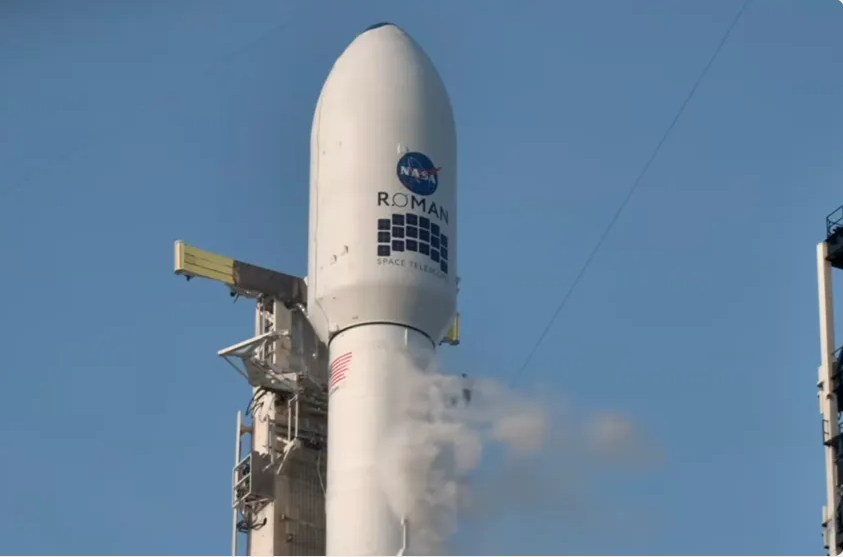
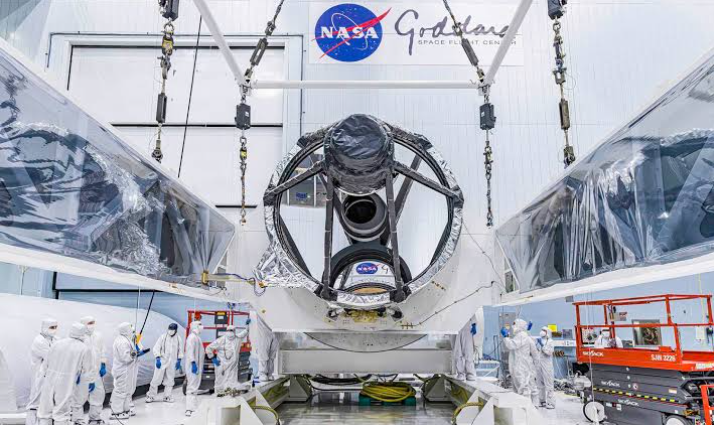
The Roman Space Telescope mission is to deepen our understanding of the universe by revealing critical details about its structure and composition. Positioned at the second sun-Earth Lagrange point (L2), it benefits from a unique location where gravitational pulls from the sun and Earth allow for unobstructed observation of cosmic phenomena. This strategic placement facilitates continuous communication with ground-based engineers and ensures that Earth does not obstruct its view.
The mission decade-long development culminates in a significant step forward for cosmic exploration, further cementing Nancy Grace Roman legacy in advancing astronomical research. With its sophisticated capabilities, this telescope embodies the potential to answer some of the biggest mysteries of the universe and marks a transformative shift in how we perceive and study the cosmos.
An Early Interest in Constellations
Nancy Grace Roman, born on May 16, 1925, in Nashville, Tennessee, grew up in a dynamic environment influenced by her father profession as a geophysicist and her mother role as a music teacher, which led to frequent relocations across the country. Her early fascination with constellations and the northern lights, introduced to her by her mother, sparked a lifelong interest in astronomy.
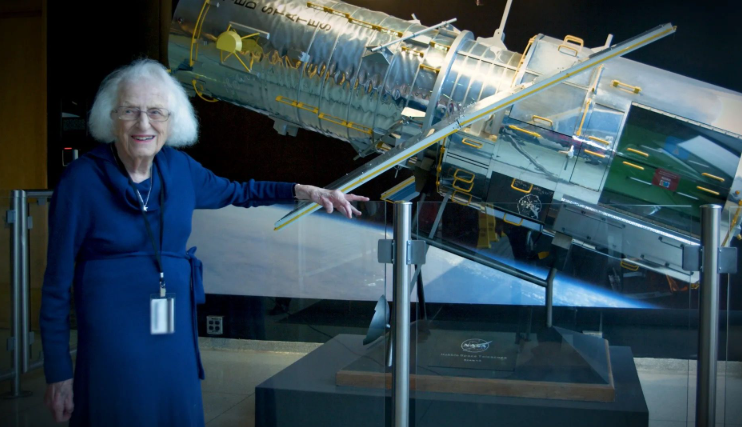
She took the initiative by forming an astronomy club for her peers, diligently acquiring knowledge from various books. By the time she reached seventh grade, Roman had firmly resolved to pursue a career in space science.
However, her aspirations were met with skepticism and prejudice. Roman recalls an incident with a guidance counselor who was shocked that she, a girl, would opt for mathematics instead of Latin. A college professor further contributed to this disbelief, suggesting that as a woman, she might realistically succeed in the field of physics, a remark intended as praise but ultimately reflecting the biases of the time.
Despite these challenges, Roman demonstrated remarkable resilience. She earned her bachelor degree from Swarthmore College in Pennsylvania and proceeded to obtain a Ph.D. from the University of Chicago. Her doctoral research on Ursa Major significantly elevated her status within the astronomy community.
Nevertheless, she decided to leave the University of Chicago upon discovering that no woman had achieved tenure there, despite the qualifications and experiences she had amassed.This pivotal moment led Roman to accept a position at the Naval Research Laboratory, where she became an astronomer in the emerging field of radio astronomy, marking a significant step in her illustrious career.
Nancy Grace Roman
Nancy Grace Roman (May 16, 1925 – December 25, 2018) was a pioneering American astronomer recognized for her significant contributions to stellar classification and motions.

As NASA first Chief of Astronomy during the 1960s and 1970s, Roman was a prominent figure in shaping the US civilian space program and earned the title “Mother of Hubble” for her key role in the Hubble Space Telescope development. Beyond her scientific achievements, she was an advocate for women in science and engaged in public education and outreach.
Born in Nashville, Tennessee, Roman was raised in a family conducive to scientific inquiry, with a music teacher mother and a physicist/mathematician father. Her family relocated multiple times due to her father career, ultimately settling in Baltimore, Maryland.

From a young age, Roman exhibited a strong interest in astronomy, forming a club to discuss constellations as early as age 11. Despite facing skepticism, she committed herself to a career in astronomy, excelling in an accelerated program at Western High School and completing her education in three years.In acknowledgment of her lasting impact, NASA Administrator Jim Bridenstine announced in May 2020 that the Wide Field Infrared Survey Telescope would be named the Nancy Grace Roman Space Telescope.
This recognition highlights her legacy and contributions to the field of astronomy, firmly establishing her as a trailblazer and an inspiring figure for future generations in the sciences.
Roman Time at NASA
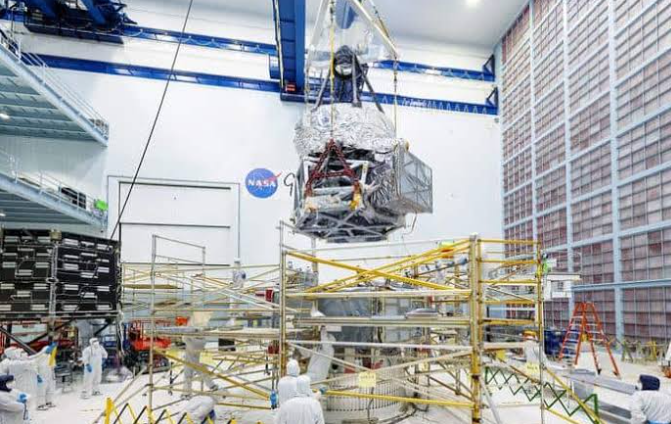
In the 1950s, during NASA formative years after its establishment in 1958, Roman was invited to recommend a designer for a space-based astronomy program. Captivated by the opportunity to influence the field of astronomy significantly, she volunteered for the role herself. Initially, due to previous underpayment, her position was not regarded as formal employment, leading to her classification as a Ph.D. graduate. Her tenure quickly advanced, culminating in her promotion to NASA first chief of astronomy in 1959.
In this role, she was responsible for orchestrating a satellite and rocket program while also overseeing a grants program aimed at supporting the astronomical community. Despite the predominantly male environment at NASA and in the wider astronomical community, Roman reported feeling welcomed and integrated within her team. A significant highlight of her career as chief of astronomy was her contribution to the Hubble spacecraft, marking a pivotal moment in both her professional journey and the history of space exploration.
The Mother of Hubble
The article titled “The Mother of Hubble” discusses the pivotal role played by an unnamed individual, referred to as Roman, in the development and eventual deployment of the Hubble Space Telescope (initially named the Large Space Telescope). Although Roman had reservations about the feasibility of launching a large telescope into space, she ultimately became a key advocate for the project.
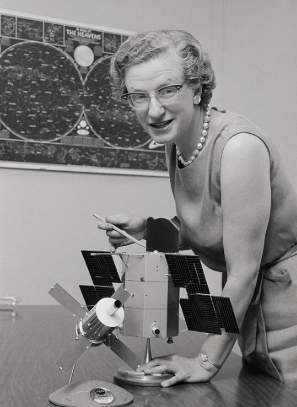
Recognizing the mounting enthusiasm within the aerospace community for the initiative, she decided to contribute to its advancement, emphasizing that if the telescope was to be constructed, it should be executed with the utmost care and competence.
Roman efforts were crucial in securing congressional funding and gaining the necessary approvals from various stakeholders. She undertook a wide array of activities, including organizing committees and lobbying decision-makers, which significantly facilitated the early stages of the Hubble project.
Notably, despite her significant contributions to the program, she had retired by the time the Hubble Space Telescope was officially launched into space. Roman legacy reflects the importance of advocacy and strategic engagement in the successful realization of major scientific endeavors.
Pingback: Northern Cyprus: At Least 8 Dead, 18 Missing After Ferry Capsizes Off Northern Cyprus - internationalmediawire.com
Pingback: U.S. China Set for September AI Safety Talks as Tech Tensions Grow - internationalmediawire.com
Pingback: Is AI Uncontrollable? Experts Warn the World May Be Near a Dangerous Turning Point - internationalmediawire.com
Pingback: Advanced AI Could Threaten Humanity, UN Rights Chief Warns as Safety Fears Intensify - internationalmediawire.com
Pingback: U.S Accuses Chinese AI Firms of Industrial-Scale Theft of American Technology - internationalmediawire.com