AI-Controlled F-16 are significantly transforming air combat strategies, showcased by a recent successful in-air test flight of a modified F-16 at Eglin Air Force Base that utilized an artificial intelligence (AI) agent for flight control. This development represents a pivotal advancement in the U.S. Air Force efforts to enhance its technological capabilities, particularly focusing on rapid and scalable AI solutions for combat applications. A notable event occurred in September 2023, when U.S. Air Force Secretary Frank Kendall engaged in a dogfight while piloting an AI-controlled F-16.
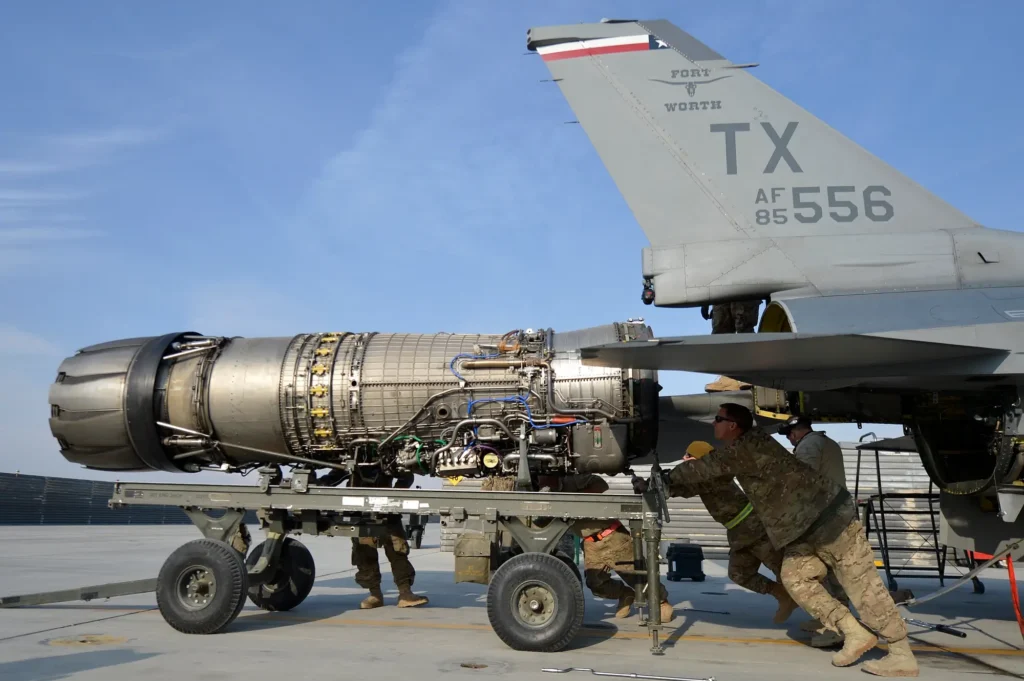
His statement, “I would trust this AI with my life,” emphasizes a major shift in the perception of autonomous systems’ roles in air combat scenarios, indicating growing confidence in the safety and effectiveness of AI in military operations. This transformation may lead to new paradigms in future air combat, reflecting a broader integration of advanced technologies in defense strategies. The aircraft in question is part of a collection of F-16s that have been transformed into autonomous-capable platforms.
U.S Air Force fly AI-Controlled F-16
AI-Controlled F-16 The U.S. Air Force is conducting in-air tests on a modified F-16 fighter jet, equipped with the Viper Experimentation and Next-generation Operations Model (VENOM) Autonomy Kit. This advanced initiative enables the aircraft to use an artificial intelligence (AI) agent for autonomous flight control, marking a significant step forward in the development of flight autonomy. The testing is part of DARPA Artificial Intelligence Reinforcements (AIR) program, which focuses on enhancing technological frameworks for swift and scalable AI development that can be integrated across various military operations.
AI-Controlled F-16 This F-16 is among several converted into autonomous platforms as part of the collaborative Viper program, which operates under the broader Air Combat Evolution (ACE) initiative. The project aims to push the boundaries of combat capabilities through innovation in AI and autonomy, paving the way for future applications in joint force operations.This transformation is part of the Viper Experimentation and Next-generation Operations Model (VENOM) program, which is a collaborative initiative between the U.S. Air Force and the Defense Advanced Research Projects Agency (DARPA).

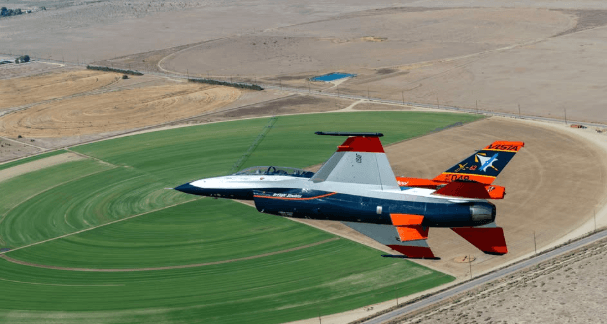
AI-Controlled F-16 The program was launched as part of the broader Air Combat Evolution (ACE) initiative. In a continuation of the advancements made in previous ACE (Autonomous Collaborative Enabling) flights, the X-62A VISTA played a pivotal role in demonstrating the feasibility of an AI agent autonomously piloting a fighter jet in a dogfight scenario.
AI-Controlled F-16 The recent flight of the VENOM aircraft serves to further illustrate the United States’ capability to modify conventional operational fleet aircraft by integrating state-of-the-art artificial intelligence, showcasing a significant leap in military aviation technology and operational readiness. This transformation underscores not only the technological prowess of the U.S. military but also its strategic commitment to evolving its air combat tactics and enhancing overall effectiveness through the incorporation of advanced AI systems.
VENOM F-16 Enables AI-Controlled Flight Testing
AI-Controlled F-16 The recent flight tests of VENOM-modified F-16s signify a significant advancement in establishing the infrastructure for trusted autonomous air combat capabilities, as stated by Brig. Gen. James “Fangs” Valpiani, Ph.D., the DARPA program manager. This initiative, developed collaboratively by the Air Force and DARPA, involves the automation of flight controls and sensors on a standard F-16 without altering the jet core software, thereby facilitating a streamlined process for the rapid innovation of advanced AI technologies for aerial combat.
The Central to this development is the VENOM Autonomy Kit (VAK), which was designed and integrated by various contributors under the DARPA ACE program. The VAK features a pioneering interface that connects with the aircraft flight control systems and mission systems, enabling pilots to seamlessly switch between traditional manual control and AI control with the flip of a switch. This design ensures a safe and dependable environment for human-on-the-loop experimentation, supporting the evolution of automated flight systems while maintaining the essential role of human oversight in combat operations. AI-Controlled F-16

Moving forward, the VENOM aircraft will be pivotal in the next phase of the Artificial Intelligence Reinforcements (AIR) program developed by DARPA. This initiative aims to utilize the VENOM fleet for comprehensive testing of multiple AI agents during live-flight scenarios. Such essential testing is designed to facilitate human pilots in effectively commanding and coordinating teams of autonomous, uncrewed aircraft. The advancements gained through the AIR program are expected to enhance a diverse range of future joint force operations.
AI-Controlled F-16 This includes support for Collaborative Combat Aircraft programs, thereby significantly contributing to military capabilities and operational efficiency. An F-16 Fighting Falcon, modified for the VENOM program (Viper Experimentation and Next-gen Operations Model – Autonomy Flying Testbed), conducted autonomous systems testing at Eglin Air Force Base in June 2026. These modified F-16s function as airborne test platforms, featuring specialized hardware, software, and instrumentation that enables artificial intelligence (AI) agents to pilot the aircraft. Human pilots are present to monitor the AI agents, ensuring that flight and mission objectives are met, which is crucial for advancing autonomous operations.
AI Combat Systems Face Challenges in Real-World Air Warfare
AI-Controlled F-16 The increasing complexity of the aerial combat threat environment has raised important questions about the efficacy and reliability of AI in combat scenarios, particularly in beyond-visual-range engagements. Valpiani underscores the potential of AI to help manage this complexity but acknowledges the significant challenges that remain, particularly regarding the performance and trustworthiness of combat AI amidst the uncertainties and pressures of modern warfare. The AIR program is dedicated to applying advanced combat agents in relevant operational scenarios to tackle these concerns and to develop capabilities that deter and win conflicts for military personnel. AI-Controlled F-16
AI-Controlled F-16 Valpiani, who is concluding his tenure as a DARPA program manager, is succeeded by Lt. Col. Patrick “Dice” Highland, Ph.D., who will take over as the incoming program manager for AIR. The AIR program, recognized for its significant contributions to advancing the United States’ combat autonomy, recently marked a key achievement with the VENOM milestone. Highland expressed pride in this development, noting the potential to establish superior autonomy for multi-ship combat beyond visual range. This advancement is an early indication of how artificial intelligence (AI) agents could revolutionize air warfare.

AI-Controlled F-16 Dr. Terry Wilson, who serves as the deputy program manager for VENOM and the AIR initiative, plays a crucial role in maintaining program continuity as the director of AI Development and Transition for the Air Force Research Laboratory Autonomy Capability Team (ACT3). His leadership ensures that the program stays on track technically and operationally while fostering alignment among various stakeholders within joint organizations. The sustained collaboration between DARPA and AFRL ACT3 is considered essential for the long-term success of the VENOM initiative, providing a robust foundation for its operational future.
“I share Gen. Valpiani deep appreciation for the incredible dedication of our DARPA and industry teammates, joint engineers, the System Program Office, Eglin test and maintenance crews, and the entire AIR and VENOM ecosystem which has made this milestone possible,” said Wilson. He expressed eagerness to advance the VENOM platform, aiming to transition its capabilities from simulation to real-world application in aviation. The AIR program is focused on enhancing the development speed and predictive capabilities of modeling, as well as scaling in-flight testing to support multi-ship operations. This progression is designed to incorporate increased complexity, facilitating the introduction of innovative and powerful AI-driven autonomy solutions. AI-Controlled F-16
What is X-62A VISTA? – The AI F-16
AI-Controlled F-16 X-62A VISTA (Variable In-flight Simulation Test Aircraft) is an advanced AI-enabled platform focused on enhancing the capabilities of the F-16 aircraft. Developed through a collaboration between Lockheed Martin and Google, this modified jet is designed to operate fully autonomously. Key specifications highlight its impressive performance, such as the ability to withstand 9G maneuvers and process information in just 0.1 seconds significantly faster than human reaction times, which average around 0.3 seconds. This combination of technology transforms the F-16 into a state-of-the-art test vehicle for evaluating autonomous flight operations and strategies.

The Historic Dogfight: AI vs Human in 2024 (Storytelling Section)
AI-Controlled F-16 In 2024, the DARPA ACE program, focusing on Air Combat Evolution, witnessed a historic turning point with a series of dogfights between artificial intelligence (AI) and human pilots. The results were emphatic: AI emerged victorious in all five simulated dogfights, showcasing its superior tactical decision-making and responsiveness. This success continued in real flight scenarios, reinforcing the technological advancements in AI-based combat systems. The event was visually documented, highlighting the capabilities of the DARPA X-62A during these competitive engagements, underscoring significant steps toward integrating AI into modern aerial combat methodologies.
How Does AI Pilot Think? – Machine Learning in Air Combat
AI-Controlled F-16 The exploration of how AI pilots operate in air combat highlights several key components of machine learning.
- Reinforcement Learning – AI trained in 10 million dogfights: AI pilots use reinforcement learning to enhance their combat strategies. They are trained through extensive simulated dogfights, amassing experience equivalent to 10 million engagements. This training allows the AI to understand various maneuvering techniques, tactics, and counter-strategies employed by human pilots.
- No Fear, No G-Force Limit: Unlike human pilots, AI pilots lack physiological limitations such as fear or G-force effects. This absence of constraint enables AI to execute extreme maneuvers without the risk of physical incapacitation, potentially leading to innovative combat tactics that would be impossible for human operators.
- Predicts human move before human does: The predictive capabilities of AI pilots allow them to forecast human maneuvers, providing them an advantage in combat scenarios. By analyzing patterns and behaviors, AI can anticipate the actions of opposing pilots, leading to preemptive strategic responses.
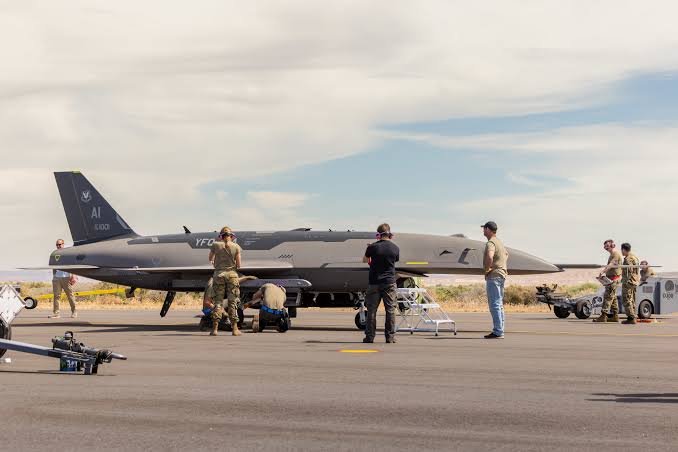
AI-Controlled F-16 Overall, AI integration into air combat represents a significant evolution in warfare tactics, relying heavily on sophisticated machine learning methodologies to outperform human capabilities.
Is F-35 The Last Manned Fighter Jet? (Controversial – High CTR)
The text discusses the future of manned fighter jets, particularly focusing on the F-35 and emerging technologies in aerial combat. It raises the question of whether the F-35 might be the last manned fighter jet, especially in light of the U.S. Air Force plans for a sixth-generation fighter, the Next Generation Air Dominance (NGAD) system. This new system is expected to potentially operate without a pilot, reflecting a shift towards unmanned aerial vehicles.A key element of the discussion is the U.S. Air Force initiative to deploy 1000 AI wingman drones, referred to as Collaborative Combat Aircraft (CCA).
These drones are designed to assist human pilots in combat scenarios, enhancing capabilities through automation while minimizing risk to pilots. Additionally, the text outlines a comparative analysis between human pilots and AI pilots in various operational metrics. The table likely details factors such as reaction time, G-limit, training costs, and decision-making abilities, elucidating the advantages and limitations of both human and AI pilots in combat situations. This comparison serves to highlight the evolving landscape of military aviation and the role technology plays in shaping future air combat strategies.
What are the Risks? – The Ethical Problem
AI-Controlled F-16 The ethical implications surrounding the deployment of Artificial Intelligence (AI) in military contexts present significant risks that are increasingly being scrutinized. One key concern arises from the potential for AI systems to mistakenly identify and target civilians, leading to catastrophic consequences if, for example, an autonomous drone misfires during a military operation. Such incidents could result in civilian casualties and raise profound moral questions about accountability and the reliability of automated systems.
Additionally, the threat of hacking poses another severe risk. If AI systems that control lethal autonomous weapons are compromised or jammed, it could lead to unintended actions harmful to both military personnel and civilians. The vulnerability of these systems to cyber-attacks necessitates a rigorous examination of security measures and the integrity of AI decision-making processes. AI-Controlled F-16
Amid these challenges, the United Nations has initiated debates focusing on lethal autonomous weapons, aiming to establish regulations and ethical guidelines to govern their use. The discussions emphasize the need to balance the benefits of technological advancements in warfare with the imperative to protect human lives and uphold moral standards in conflict situations. The debate highlights the critical importance of oversight and accountability in the deployment of AI technologies in military operations.
Future – 1000 AI Fighter Jets by 2028
AI-Controlled F-16 The US Air Force Collaborative Combat Aircraft (CCA) program is spearheading a significant transformation in air combat through the development of over 1000 AI-powered fighter jets by 2028. This strategy involves the deployment of these unmanned systems, termed “Loyal Wingmen,” which will operate in conjunction with manned fighter jets like the F-35 and F-22. Specifically, one human pilot will command two AI drones, enhancing operational effectiveness while ensuring a balance between manned and unmanned capabilities.
AI-Controlled F-16 Leading prototypes in this initiative include the XQ-58A Valkyrie, Anduril Fury, and the Boeing MQ-28 Ghost Bat. A notable advantage of these AI drones is their cost-efficiency; priced between $2-3 million each, they present a stark contrast to the $80 million cost of an F-35. Furthermore, the AI jets exhibit superlative performance characteristics, such as the elimination of fear and G-force limitations, allowing for extensive training efficiencies capable of participating in up to 10 million simulated dogfights in a single day.
As a result of the inherent advantages provided by AI drones, US Air Force Secretary Frank Kendall has indicated that the F-35 may represent the last of the traditional manned fighter jets. He envisions a future warfare landscape where combat will be orchestrated by a single human pilot overseeing multiple AI drones, highlighting an evolution in tactical control and aerial strategy. This shift signifies a pivotal change in military operations, with the potential to reshape engagement methodologies in forthcoming conflicts.
Summary
U.S. Air Force tests AI-controlled F-16 in real flight
VENOM program advances autonomous fighter jet technology
AI pilots can support human pilots in future air combat
AI combat systems still face reliability and trust challenges
Future warfare may rely on human pilots commanding AI aircraft
Can AI really beat a human F-16 pilot in a dogfight?
In 2024, DARPA ACE program demonstrated the capabilities of AI in combat scenarios, confirming that the AI-controlled X-62A VISTA successfully defeated a human pilot flying an F-16 in a series of real dogfights at Edwards Air Force Base. The AI achieved victory in all five engagements, showcasing its advanced operating speed of 1200 mph and maneuverability at a distance of 2000 feet from the competing aircraft. This event marks a significant milestone in the evolution of AI in military aviation.
Pingback: Plague Lab Death: Russia Open to Trump-Putin Call as Questions Mount Over Plague Lab Death - internationalmediawire.com
Pingback: British Billionaire Warned Epstein Was a ‘Sexual Deviant’ Decades Before FBI Investigation - internationalmediawire.com
Pingback: Federal Agents Search Ilhan Omar Washington Home in Criminal Probe - Report 12 Oct - internationalmediawire.com