Drone Swarm Warfare in 2026 is characterized by significant advancements in drone technology and strategic implementation, particularly by China and the United States. China 96-Drone Atlas System exemplifies a sophisticated approach to drone swarm strategies, potentially overwhelming adversarial defenses and aircraft through sheer numbers and coordinated attacks. This system reflects China growing focus on integrating artificial intelligence (AI) into military applications, demonstrating its commitment to transforming traditional warfare paradigms.
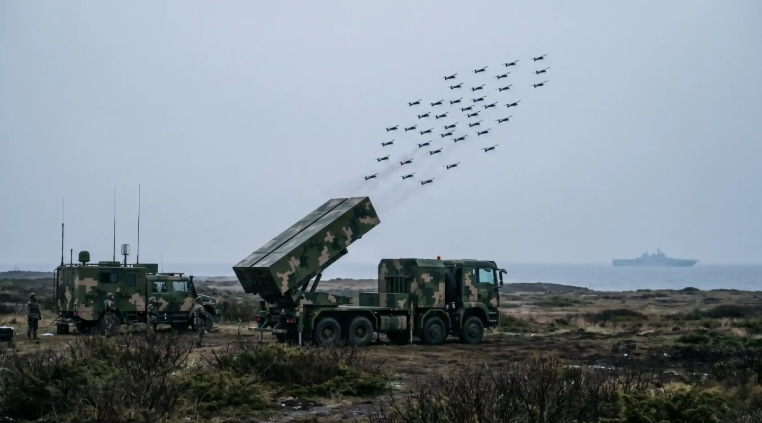
Meanwhile, the U.S. is actively developing its AI defense mechanisms, aiming to counter such swarm tactics. This includes investments in autonomous systems and enhanced radar capabilities to detect and neutralize drone swarms before they can inflict damage. The interplay between these technologies not only alters the dynamics of battlefield engagements but also escalates the arms race in unmanned aerial combat capabilities.
Overall, the evolution of drone swarm warfare highlights a paradigm shift in military strategy, with cheaper, less sophisticated drones having the potential to challenge and outmaneuver costly and technologically advanced warships, fundamentally altering military doctrines around the globe. As nations like China and the U.S. continue to refine their strategies and technologies, the implications for future conflicts are profound, demanding new considerations in defense planning and international relations.
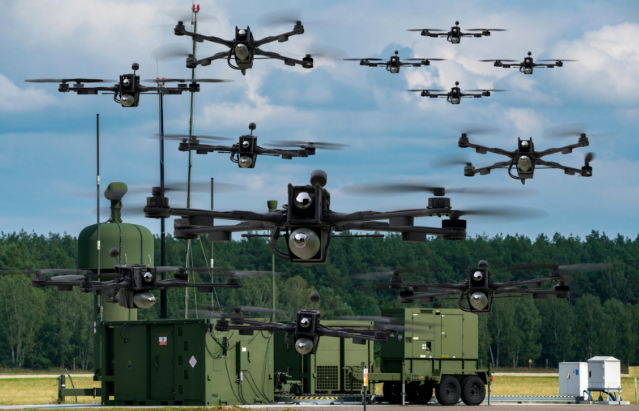
U.S Army Tests AI and Electronic Warfare to Counter 100-Drone Swarms
In 2026, the U.S. Army undertook significant advancements in counter-drone technologies through a critical test known as Scarlet Dragon 26-3, conducted on September 16 at Fort Bragg, North Carolina. This exercise was a strategic response to the evolving nature of drone warfare, where the emphasis is shifting towards quantity rather than cost, as exemplified by the new capability of deploying drone swarms consisting of up to 100 unmanned aerial vehicles (UAVs).
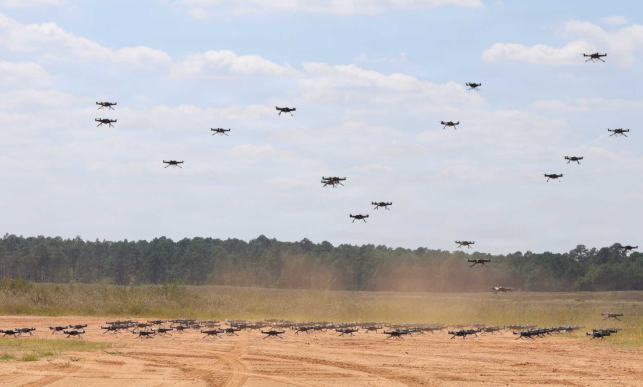
The test focused on evaluating the efficacy of artificial intelligence (AI) and electronic warfare systems in defending against these saturation drone attacks, aiming to assess whether U.S. forces could detect, track, and neutralize an overwhelming number of drones before they could compromise battlefield defenses.
This assessment involved multiple sensors and AI-enabled tools, highlighting the importance of a layered defense approach against mass drone incursions.Notably, this exercise coincided with the U.S. Navy operational demonstration in the Atlantic, where a small contingent of four UAVs and one unmanned boat successfully sank the retired USS Simpson, further underscoring the shift towards integrating unmanned systems in military operations.The landscape of military conflict is rapidly changing due to advancements such as China 96-Drone Atlas System.
This technological evolution signifies a paradigm shift in military strategy, suggesting that nations may benefit more from sophisticated, AI-driven swarm technologies than from traditional, expensive manned aircraft. The results from this ongoing experimentation will likely inform future counter-unmanned aerial system (C-UAS) defenses, as armed forces must quickly adapt to the emerging threats posed by large numbers of unmanned systems targeting command posts and high-value assets.
In summary, Scarlet Dragon 26-3 represented a substantial endeavor by the U.S. Army to enhance counter-drone capabilities, indicating a transformative phase in military tactics aimed at addressing the challenges posed by drone swarms on modern battlefields. Held from September 11 to 17, 2026, the military exercise Scarlet Dragon integrated soldiers, military systems, artificial intelligence, resilient data pathways, and defense technology in a comprehensive field experiment.
According to a report by the XVIII Airborne Corps published by the U.S. Department of War on September 21, 2026, the exercise aimed to address the urgent need to protect command posts, logistics nodes, air-defense positions, and maneuver forces from swarms of small unmanned aircraft. Scarlet Dragon was notable for its scale, as it shifted the focus from isolated counter-drone engagements to the complexities faced by major operational formations in high-intensity conflict scenarios.
Instead of evaluating counter-UAS technologies individually, the exercise explored how various sensors and effectors could act as a connected defensive network. Col. Rob Kenny, chief of fires for the XVIII Airborne Corps, highlighted that no single sensor could resolve the drone threat; thus, it became essential to integrate radar, acoustic detection, autonomous technologies, and multiple sensing methods into command-and-control systems capable of rapidly distributing targeting information.
This layered approach is designed to prevent drone swarms from overwhelming any single detection system and to mitigate vulnerabilities posed by factors such as terrain, low-altitude flight, electronic interference, and the sheer volume of incoming aircraft. The role of artificial intelligence is critical, particularly when numerous unmanned aircraft may appear concurrently. The challenge lies not only in detecting these targets but also in processing extensive sensor data, correlating tracks, identifying threats, and rapidly conveying actionable information to operators to facilitate timely engagements.

AI-assisted processing can alleviate the workload on operational crews by supporting the classification of contacts and prioritization of targets. Additionally, resilient command-and-control links are necessary for the swift transmission of information among sensors, electronic warfare teams, and defensive systems, ensuring that hostile drones are intercepted before they can achieve their objectives. Electronic warfare is crucial in modern defense strategies, specifically against unmanned aircraft, which rely on radio-frequency connections, satellite navigation, or datalinks.
Electronic attacks can serve as a cost-effective initial defense layer, while kinetic weapons are still necessary for countering drones with autonomous navigation or hardened communication systems. A sole reliance on missiles or interceptors against persistent drone assaults could lead to unfavorable cost dynamics and quickly deplete limited ammunition resources.
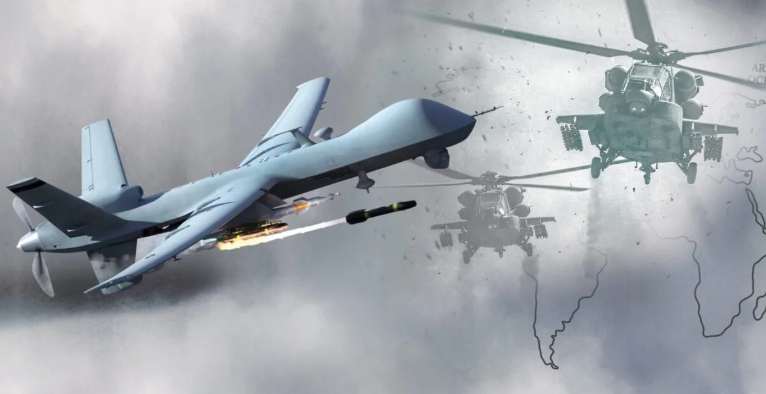
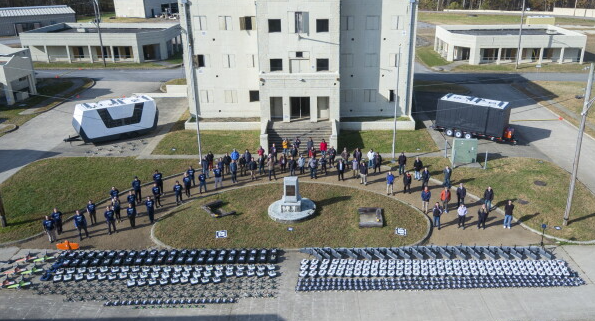
The exercise highlighted the importance of integrating Army air-defense sensors into a cohesive network. Imagery from the U.S. Department of War dated September 15, 2026, illustrated an AH-64 Apache helicopter executing low-altitude maneuvers near a Sentinel radar, emphasizing the need for efficient detection and tracking amidst complex aerial threats. While Sentinel radars are crucial for providing low-altitude surveillance, the Scarlet Dragon exercise underscored that radar data must be disseminated swiftly across the network, rather than remaining siloed at individual sensors.
Complementary passive systems, such as acoustic sensors, enhance detection capabilities while mitigating reliance on continuously active emitters, which could be targeted by enemy electronic warfare. The operational implications of testing a swarm of up to 100 unmanned aircraft were significant, as such mass attacks can overwhelm defensive networks. This saturation effect can complicate radar coverage, consume communication bandwidth, overload command-and-control processes, and necessitate rapid decision-making from commanders regarding which threats to engage or neutralize.
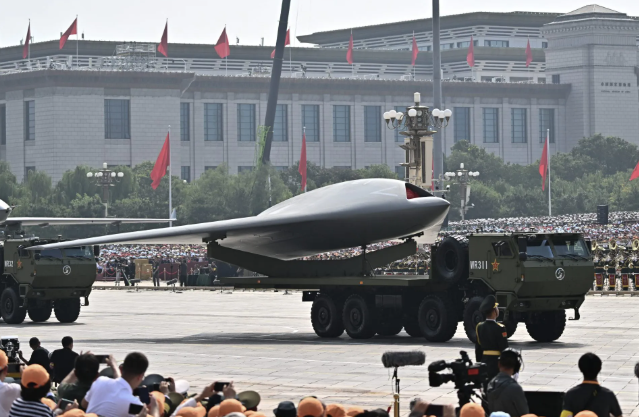
The complexity of these conditions surpasses individual counter-unmanned aerial system (C-UAS) demonstrations and simulates potential challenges faced against adversaries capable of launching coordinated drone waves with minimal cost. For the XVIII Airborne Corps, this issue directly impacts the survivability and operational freedom of its command structure and subordinate formations, including command posts, artillery positions, aviation facilities, logistics hubs, and air-defense units, which are all high-value targets increasingly vulnerable to inexpensive unmanned systems. Consequently, constructing a multi-layered defense that integrates AI-driven sensing, electronic warfare tactics, autonomous systems, and defensive firepower is essential.
Such a strategy not only ensures local protection but also preserves the command structure, sustainment resources, and firepower necessary for sustaining large formations under persistent aerial threats. The XVIII Airborne Corps employs the Scarlet Dragon program to facilitate rapid interaction between soldiers and defense contractors, allowing for the exposure of new technologies to real operational conditions. This initiative is critical as drone threats are evolving at a pace that surpasses traditional procurement processes, necessitating quick adjustments to countermeasures in response to advancements in commercial components, communication methods, and autonomous navigation techniques.
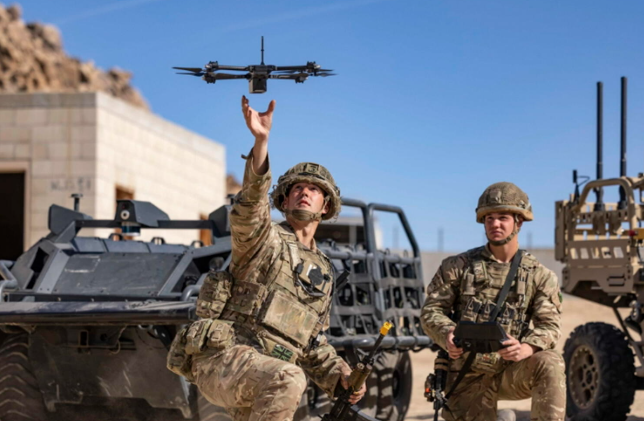
Looking ahead, the Corps plans to further assess these technologies during the Scarlet Dragon 27-1 exercise scheduled for April 2027, prior to the larger Summit Strike exercise at Fort Drum, New York, in September 2027. This ongoing validation represents a strategic shift for the Army, as it transitions from simply evaluating the effectiveness of individual counter-drone systems to a comprehensive examination of how various technologies including sensors, AI-enabled processing, electronic warfare, autonomous systems, and defensive fire can work in concert. The objective is to determine their capacity to protect a significant U.S. Army formation from sustained mass-drone assaults.
What is Drone Swarm Warfare?
Drone Swarm Warfare represents a significant evolution in aerial combat tactics, distinguishing itself from traditional drone operations, which involve a single operator controlling an individual drone. In swarm warfare, groups of 50 to 1,000 drones are managed collectively by a singular AI system, allowing for a more resilient and adaptive combat strategy akin to the collective behavior of bees. Key features of this technology include:
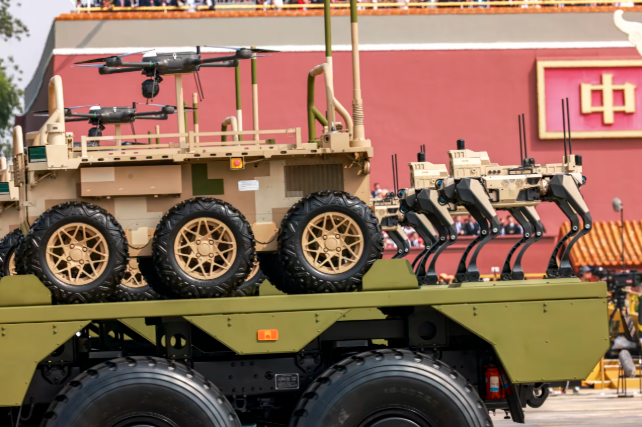
- Decentralized AI: Each drone is equipped with its own Edge AI chip that enables rapid decision-making within 0.01 seconds, allowing for efficient processing and execution of complex tasks in real-time.
- Mesh Network: Drones form a unique WiFi network while airborne, facilitating seamless communication and coordination among them. This mesh allows the swarm to function cohesively, enhancing operational effectiveness.
- Autonomous Targeting: The swarm has the capability to autonomously identify and distinguish targets. For instance, it can correctly identify a tank among three identical decoys, as evidenced by recent tests conducted by China.
This advanced coordination eliminates the reliance on a single leader, thereby enhancing the swarm resilience against electronic warfare tactics, such as jamming. If one drone becomes incapacitated, others can quickly redistribute its tasks, demonstrating a highly adaptive and decentralized robotic warfare system. Drone swarm warfare represents a transformative approach to modern military strategies, leveraging cutting-edge technologies for enhanced operational effectiveness and tactical versatility.
Who is Winning? China vs USA The Real Race
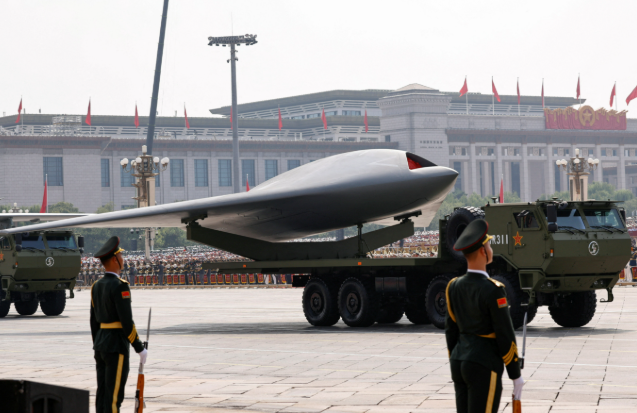
The comparison between China and the USA regarding swarm drone technology highlights the capabilities and resources invested in this rapidly advancing area of military technology. China leads with its Atlas System, featuring a swarm size of 96 drones, all operated by a single controller. This system can launch a drone every three seconds and achieves impressive speeds of up to 400 km/h, with costs ranging from $2,000 to $5,000 per drone.
| Country | Project Name | Swarm Size | Key Feature | Cost Per Drone |
| China | Atlas System | 96 drones controlled by 1 operator, 48 drones per truck | Launches 1 drone every 3 seconds, 400 km/h speed | $2,000 – $5,000 |
| USA | Replicator Initiative + Scarlet Dragon | Tested against 100-drone swarms | AI + Electronic Warfare + Radar layered defense | $10,000 |
| UK/Israel | Project PANOPTES / Skapion | Building laser + drone curtain to stop swarms | $36M funding for Iron Dome for swarms |
On the other hand, the USA is developing the Replicator Initiative alongside the Scarlet Dragon project, which is designed to perform optimally against swarms of up to 100 drones. This initiative includes advanced features such as artificial intelligence, electronic warfare mechanisms, and a layered radar defense system, indicating a more sophisticated approach to counter-swarm tactics, though each drone costs significantly more, approximately $10,000.
Additionally, the UK/Israeli collaboration on Project PANOPTES, which aims to create a laser and drone curtain to neutralize incoming swarms, highlights the international competitive landscape in drone technology. Notably, there is substantial funding with $36 million allocated for the Iron Dome specifically intended to defend against such drone swarms. This ongoing technological contest reveals stark contrasts in strategy and expenditure, with China currently being ahead in terms of sheer operational capacity and cost-effectiveness.
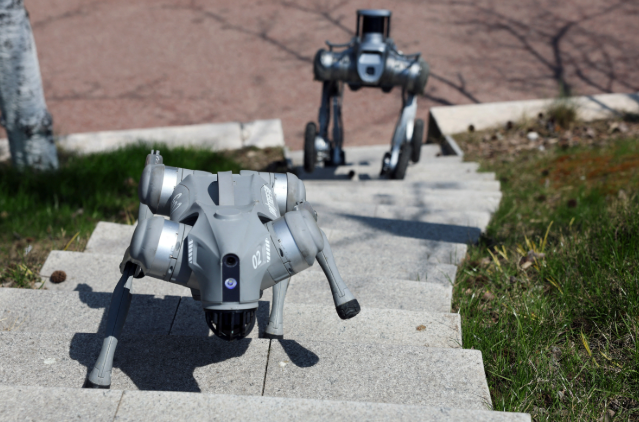
China Atlas represents a formidable offensive capability, exemplified by its Swarm-2 truck, which can deploy 48 fixed-wing drones. Furthermore, the command vehicle associated with this system has the capacity to manage up to 96 drones simultaneously, facilitating operations in jamming, surveillance, and targeted strikes. In contrast, the United States is prioritizing defense mechanisms. Notably, AFRICOM has developed a new initiative named CURTAIN CALL, designed to launch a defensive network of drones in response to threats detected by sensors. This juxtaposition highlights differing strategic focuses in military drone deployment between China and the USA.
Why Air Defense Systems Like Iron Dome Will Fail?
Air defense systems such as the Iron Dome may prove inadequate against modern threats, particularly swarm drones. The financial disparity is stark; while a single Iron Dome missile costs approximately $50,000, a swarm drone can be produced for just $500. This significant economic imbalance has already manifested in conflicts like the one in Ukraine, where conventional air defense metrics falter.
In response, the UK is advancing Project PANOPTES, a novel initiative deploying autonomous vehicle-mounted lasers aimed at neutralizing swarms more efficiently, bypassing costly missile systems. Furthermore, US Northern Command has acknowledged a critical shortcoming, noting that American military bases currently lack the necessary sensors to detect swarm attacks originating from within the United States itself, highlighting a gap in national defense capabilities against evolving aerial threats.
What Does It Mean for Pakistan and India?
For India, the emergence of China Atlas system along the Line of Actual Control (LAC) presents significant military challenges, as it has the capability to disrupt communications and conduct strikes up to 500 kilometers away. This situation is alarming, necessitating strategic adaptations on India part. Conversely, Pakistan views the threat from India on the Line of Control (LOC) differently, focusing on the potential of Indian drone swarms. In response, Pakistan has introduced its own drone capabilities, including the Bayraktar TB2 and Shahpar-2. However, it is imperative for Pakistan to develop a low-cost swarm technology and effective high-power microwave defense systems to counteract these evolving threats effectively.
Summary
Drone swarm warfare is significantly reshaping military strategies in 2026, particularly involving China and the United States, which are advancing technologies for deploying and countering numerous unmanned aerial vehicles (UAVs). China 96-drone Atlas system exemplifies the trend toward coordinated drone swarms, whereas the U.S. Army is conducting the Scarlet Dragon exercise to evaluate artificial intelligence (AI), electronic warfare, and layered defenses against swarms comprising up to 100 drones.This transition to deploying many low-cost drones presents serious challenges to conventional air-defense systems. Traditional interceptors, which are often expensive, may struggle with constraints on cost and ammunition efficiency when faced with such swarms.
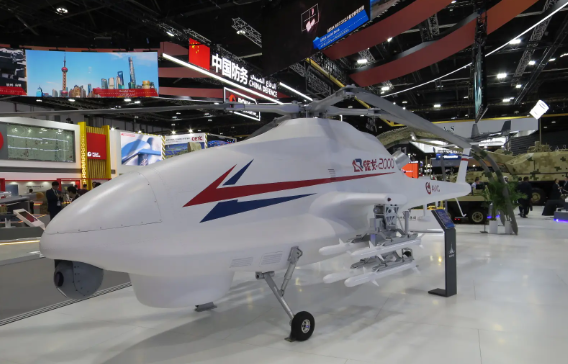
Therefore, AI-driven detection methods, electronic warfare tactics, autonomous systems, and integrated radar and sensor networks are becoming essential for developing effective counter-drone strategies.The advancements in drone swarm technologies also have notable ramifications for South Asia. The growing capabilities of China in drone swarm warfare may affect military strategies along the India-China border. In response, both Pakistan and India must enhance their offensive drone capabilities and develop affordable counter-drone defenses to adapt to the evolving landscape of swarm warfare.
China 96-drone Atlas system highlights the rise of coordinated drone swarms.
U.S. Army tests AI and electronic warfare against 100-drone swarms.
Low-cost drone swarms challenge traditional air-defense systems.
AI, radar and electronic warfare are becoming key counter-drone tools.
China advances could reshape drone warfare strategies in South Asia.
What is Drone Swarm Warfare?
Drone swarm warfare is an advanced military tactic that utilizes a collective formation of 50 to 1000 AI-controlled drones, which operate in unison akin to the behavior of bees in a hive. This strategic approach is designed to effectively overwhelm and bypass enemy air defenses. Notably, the entire swarm can be operated by a single individual through the integration of artificial intelligence, allowing for coordinated attacks and enhanced operational efficiency.
Can a Drone Swarm be Stopped?
Yes, drone swarms can be stopped, but conventional missiles are ineffective. A layered defense approach is required, incorporating AI radar, electronic jamming, high-power microwaves, and laser weapons. Examples of such systems include the US Leonidas and the UK Project PANOPTES.
Which Country has the Best Drone Swarm Technology?
As of 2026, China is at the forefront of offensive drone swarm technology, boasting the 96-drone Atlas system. Meanwhile, the USA is leading in defensive technology, having tested AI systems designed to neutralize 100-drone swarms as part of its Scarlet Dragon 26-3 initiative.
How much does a Drone Swarm Cost?
A single swarm drone is priced between $500 and $5,000, in stark contrast to the cost of an air defense missile, which ranges from $50,000 to $2 million. This cost disparity highlights the potential of drone swarms to revolutionize future warfare.
Pingback: Saudi Plans Assault on Houthis to Reopen Red Sea Shipping Route - internationalmediawire.com
Pingback: Report Iran Says Strait of Hormuz Will Remain Closed Until US Conditions Are Met - internationalmediawire.com
Pingback: Spanish PM Early Election Called After Housing Protests - Report - internationalmediawire.com
Pingback: Plague Lab Death: Russia Open to Trump-Putin Call as Questions Mount Over Plague Lab Death - internationalmediawire.com
Pingback: British Billionaire Warned Epstein Was a ‘Sexual Deviant’ Decades Before FBI Investigation - internationalmediawire.com