Red Sea: Saudi Arabia is preparing to launch a military offensive against the Houthi militants, backed by Iran, in Yemen. The primary objective of this operation is to secure the Red Sea shipping route, which has been under threat due to Houthi activities. Plans include a possible coastal assault aimed at re-establishing control over this critical maritime corridor or conducting operations from multiple fronts. The offensive is expected to be spearheaded by Yemeni ground forces under the supervision of Riyadh, with significant support from Saudi air strikes. This initiative reflects a strategic move by Saudi Arabia, responding to the persistent challenges posed by the Houthis in the region.

Red Sea While the United States is currently supplying intelligence to assist Riyadh military operations in Yemen, and some regional and European countries are offering primarily defensive military support to Saudi Arabia, it is anticipated that these allies will not engage directly in combat activities. Saudi Arabia has been involved in Yemen civil conflict since 2015, leading an Arab coalition aimed at reinstating the internationally recognized government, which had been ousted by the Houthi movement from the capital, Sanaa.
Saudi Arabia Weighs Limited Offensive to Regain Bab el-Mandeb Control
A ceasefire, established between the conflicting factions in 2022, remained largely effective until the recent attacks by the Houthis, which included missile and drone strikes targeting Saudi maritime and oil infrastructure, reflecting the broader implications of regional tensions stemming from the conflict with Iran. A key objective of the planned Saudi offensive is to counter the significant advances made by the Houthis, who recently captured the strategic Bab el-Mandeb strait. This information comes from various officials, including those from Gulf states and Yemen, as well as Western diplomats. Red Sea

Red Sea The Saudis are contemplating two potential strategies for this offensive: one that targets the Bab el-Mandeb area specifically, and another broader approach that would involve simultaneous attacks on multiple fronts throughout Yemen, including the governorates of Al-Bayda, Marib, Taiz, and Al-Jawf. The mobilization could involve over 100,000 Yemeni troops, contingent upon the scale of the operation. As of now, there has been no response from the Saudi or Yemeni governments, the Houthi group, or the US military regarding these plans.
Red Sea Bab el-Mandeb serves as the southern exit of the Red Sea and is a crucial shipping route connecting the Mediterranean with Asia. Its significance has intensified this year as it has emerged as a key alternative to the Strait of Hormuz, particularly in light of the ongoing conflict involving Iran, which has effectively obstructed navigation through that strait. According to Western diplomats and Gulf officials, Riyadh has recognized that it cannot engage in fresh peace negotiations concerning Yemen with the Houthis while these militants retain control over Bab el-Mandeb. This control enables the Houthis to wield considerable leverage on a global scale, highlighting the strategic implications of the passage in the context of regional instability.
Red Sea Informed sources regarding Saudi preparations for an upcoming offensive have indicated uncertainty about the timing, with estimates varying widely from as soon as one week to potentially after the US midterm elections scheduled for early November. Michael Ratney, a former US ambassador to Saudi Arabia, adds that he anticipates this offensive will be targeted and considerably more limited in scale compared to the extensive Saudi-led initiative of 2015, which aimed to eliminate militant groups. Ratney insights imply a strategic shift towards a more focused approach in dealing with current challenges.

In the context of ongoing regional conflicts, the Houthis have emerged as a significant ally for Iran, especially following the weakening of Hezbollah due to Israel actions in Lebanon over the last three years. The speaker suggests that despite ambitions to completely defeat the Houthis, there is also a pressing need to revert to the pre-Houthi status quo, particularly concerning territorial control around Bab el-Mandeb.
Red Sea This would ideally involve a constrained military operation aimed at reestablishing control over coastal areas, thereby restoring normal maritime traffic. The potential for a Saudi-led offensive against the Houthis represents a critical escalation in a region already ignited by tensions following the Hamas attacks on Israel on October 7, 2023, which prompted a subsequent US-Israeli military response targeting Iran.
Trump Turkey and Pakistan
Red Sea In the context of the conflicts in Yemen, the United States, under the Trump administration, is playing a supportive role to Saudi Arabia, which is considered its most significant ally in the region. According to reports from Western diplomats, the U.S. is providing military advisers and intelligence support, particularly targeting information, to assist Saudi air operations in Yemen. However, this support appears to be somewhat constrained, as previous reports indicate that President Trump has declined requests from Mohammed bin Salman, the de facto leader of Saudi Arabia, for more direct military engagement, such as conducting airstrikes.
This strategic posture reflects a careful balancing act by the U.S. in response to the complex geopolitical dynamics in the Middle East, especially regarding its relationships with both Saudi Arabia and regional adversaries. Turkey and Pakistan have recently solidified a joint defense agreement with Saudi Arabia, which has enabled the Kingdom to utilize military equipment supplied by these nations in its ongoing conflict in Yemen. Reports indicate that Pakistan has dispatched four cargo planes to Aden, delivering critical military assets including air defense systems, light artillery, drones, and anti-drone systems.
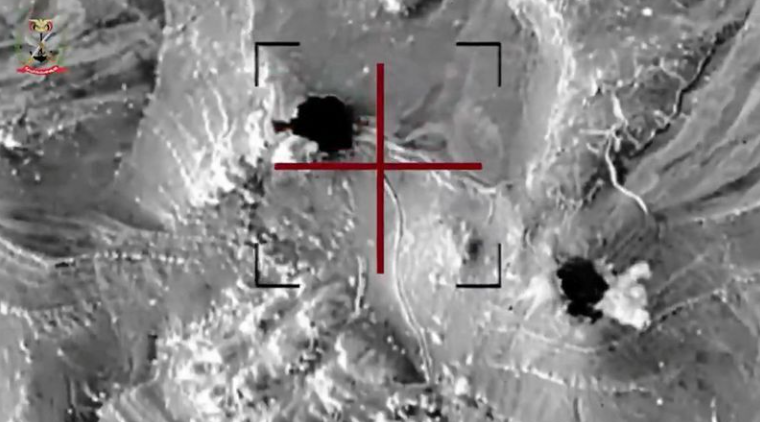
Additionally, Pakistani military advisers are on the ground, collaborating with Saudi counterparts to bolster the capabilities of Yemeni forces. Saudi Arabia is particularly focused on safeguarding its oil facilities and infrastructure from potential Houthi drone and missile assaults, prompting the Kingdom to seek assistance from allies for enhanced defensive measures. In alignment with its support, Pakistan has contributed between 30,000 and 40,000 troops to Saudi Arabia to strengthen its land borders and enhance defensive operations, especially against drone and missile threats. These troop deployments have occurred in waves starting last year, intensifying in response to escalated tensions.
Red Sea Turkish drones, purchased by Saudi Arabia prior to the outbreak of the current war, are also actively being utilized to conduct operations in Yemen. However, it is noted that Pakistan has not made any commitments to engage its troops in Yemen in a combat role. While the defense ministries of Pakistan and Turkey have not provided comments regarding their military contributions, France has stepped up to announce plans to send additional defensive systems and troops to Saudi Arabia to aid in protecting the strategically significant Red Sea port city of Yanbu.
Fractured Yemeni Forces

The conflict in Yemen is marked by a fractured coalition of Yemeni fighting factions, initially armed and trained by Saudi Arabia and the United Arab Emirates during earlier phases of the civil war. As the situation has evolved into a bloody stalemate, many anti-Houthi factions remain poorly organized and ill-prepared for a sustained offensive against the entrenched Houthi military. Analyst Mohammed Albasha emphasizes that these forces are currently under significant pressure from the Houthis, who are attacking on multiple fronts. Red Sea
Further complicating matters, tensions escalated last winter when southern fighters, supported by the UAE, attempted to seize territory in the east and declared secession plans. This led to a defeat for them at the hands of fighters loyal to Saudi Arabia, illustrating the deep divisions and ongoing struggles within the Yemeni factions. The overall landscape continues to be one of disarray, undermining the potential for a coordinated response against the Houthi insurgency.
Red Sea Ali Shihabi, a seasoned Saudi political analyst aligned with government perspectives, expressed that the success of any military offensive by Saudi forces against the Houthis is contingent upon the effectiveness of ground operations. He highlighted that the current focus has been on defending strategic positions and stabilizing the front lines; however, an imminent shift towards an offensive strategy is anticipated. Shihabi emphasized that the overall success of this offensive will heavily rely on the capabilities and performance of local forces involved in the operations.
Pingback: Report Iran Says Strait of Hormuz Will Remain Closed Until US Conditions Are Met - internationalmediawire.com