Missile test showcases sensitive Chinese submarine capabilities key to nuclear deterrent. China recent submarine-fired ballistic missile test in the southern Pacific, conducted on July 10, serves as a significant examination of its evolving nuclear deterrent capabilities. Analysts and diplomats highlight that the complexities involved in commanding, controlling, and communicating with nuclear-armed submarines without detection present immense challenges, particularly for the leadership of the Chinese Communist Party, where military loyalty is crucial.

The successful test suggests that China is making strides towards achieving an operational strike capability, indicating that while hitting the continental U.S. may be difficult, they could effectively target locations like Guam and Hawaii.
This exercise was not merely routine; it was a pivotal moment for China, validating critical aspects of its nuclear deterrent strategy, particularly its capacity to manage and potentially deploy nuclear-armed submarines discreetly.
China Tests Ballistic Missile From Strategic Nuclear-Powered Submarine
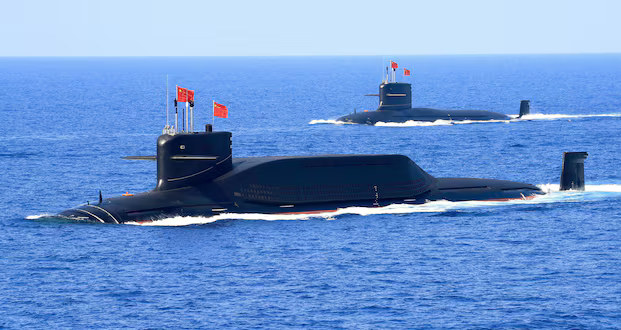
The test conducted on Monday involved a ballistic missile launched from a strategic nuclear-powered submarine, which has garnered significant attention from regional governments and defense analysts. While Chinese officials classified it as a standard military drill compliant with international law, experts interpret it as an indication of China ongoing effort to enhance its nuclear capabilities.
According to Collin Koh, a security scholar from Singapore’s S. Rajaratnam School of International Studies, this test is a reflection of the meticulous evaluations surrounding the missile and submarine’s technical capabilities.
Koh notes that while challenges remain, China appears to be nearing an operational strike capability with the potential to target regions such as Guam and Hawaii, even if hitting the continental U.S. is not feasible. The U.S. condemned the missile launch, identifying it as an intercontinental ballistic missile that fell into the southern Pacific Ocean.
In contrast, Chinese state media characterized the event as a “routine” exercise not aimed at any specific target or nation.
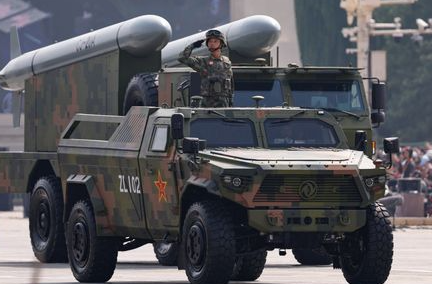
This submarine-launched ballistic missile test provided the Chinese military leadership a chance to explore some of the most intricate and delicate operations associated with their evolving nuclear deterrence strategy.
Analysts and diplomats highlight the extensive challenges in command, control, and communication with nuclear-armed submarines aiming to maintain operational secrecy, particularly for a Chinese Communist Party leadership that prioritizes military loyalty.
This test underscores the complexities embedded in China nuclear strategy as it seeks to establish a credible and survivable nuclear force.
Why submarine missile tests matter
China recent missile test, conducted from a Type-094 nuclear-powered submarine, highlights the strategic role of its submarine fleet in the country’s nuclear framework.
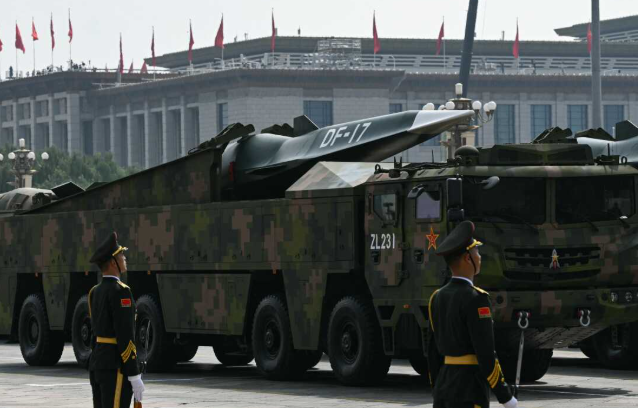
Known for carrying nuclear-armed intercontinental ballistic missiles, these submarines are pivotal for China deterrent strategy, reflecting a focus on achieving a reliable second-strike capability. Located in Hainan, China SSBN operations are under intense scrutiny, as they are integral to countering potential adversaries.
For Beijing, the ability to operate these submarines undetected is crucial, particularly with an official stance that the nation would not initiate the use of nuclear weapons.
The U.S. and its allies actively monitor these submarines through naval assets, underwater sensors, and aircraft like the P-8 Poseidon, with surveillance efforts likely intensifying as China submarine capabilities expand.
A Pentagon 2022 report indicated that China initiated near-continuous deterrence patrols for its SSBNs, aligning it with practices established by other nuclear powers such as the U.S., Russia, France, and the UK. India’s own development of SSBNs further emphasizes the global strategic landscape.
A recent study by the Bulletin of the Atomic Scientists raised questions around the arming of these submarines. While no official U.S. confirmation exists, private commentary from officials suggests a possibility that nuclear weapons are involved in these patrols.
However, internal political dynamics, including President Xi Jinping’s dismissals within the military, cast doubt on whether such weapons would be readily available to the military.
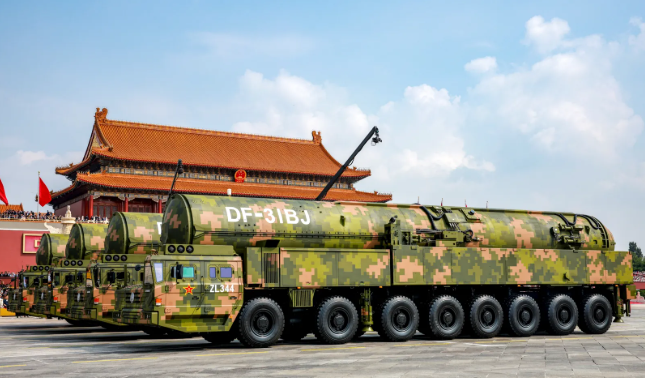
Submarine-launched ballistic missiles (SLBMs) differ fundamentally from land-based missile systems, as they guarantee retaliation capability, essential for nuclear deterrence.
Beyond testing missile performance, the recent launch also served to evaluate command-and-control systems vital for maintaining secure communications while submarines remain undetected—a challenging but necessary component of nuclear operations.
Analysts, like Collin Koh from Singapore’s S. Rajaratnam School of International Studies, assert that the exercise was multifaceted, aimed at assessing both operational readiness and communication protocols alongside missile efficacy.
China nuclear triad
China nuclear triad is currently under scrutiny, particularly following a recent submarine missile launch that has yet to be precisely located or confirmed. Analysts emphasize the importance of the ability of China ballistic missile submarines (SSBNs) to operate undetected beyond its shores.
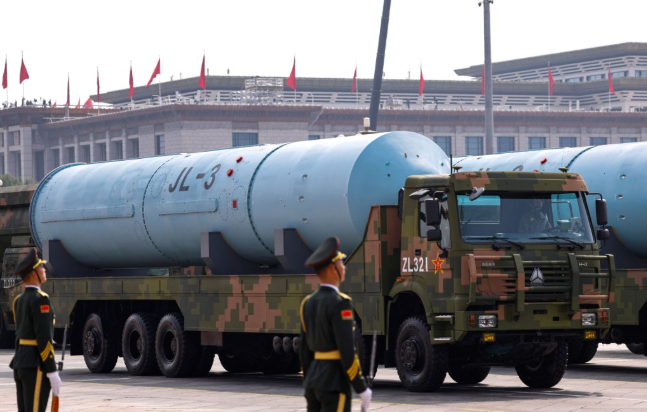
The existing Type-094 submarine is set to be replaced by a more advanced and quieter model, indicating ongoing enhancements in their naval capabilities.
To effectively target the continental United States, a submarine utilizing the advanced JL-3 missile must navigate from the South China Sea into the western Pacific ocean, a move that entails potential exposure to competing naval forces.
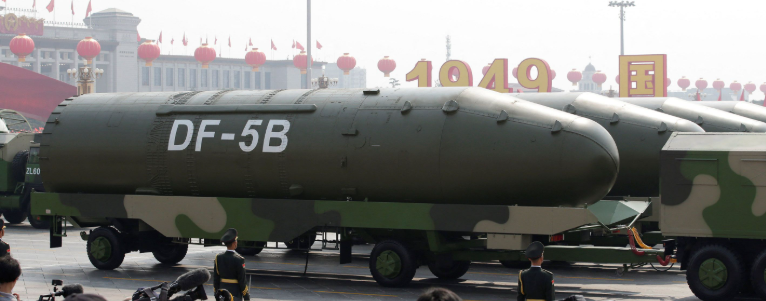
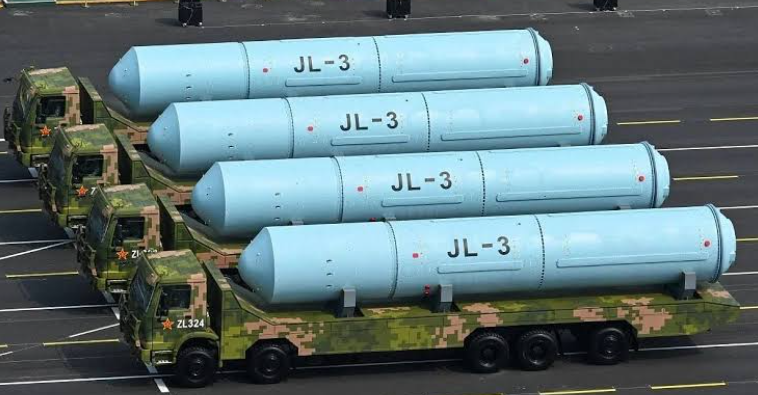
The JL-3 missile, believed to carry multiple warheads and showcased in a 2025 military parade, boasts an impressive range of 10,000 kilometers (approximately 6,214 miles).
Despite uncertainties surrounding the launch details, the Global Times newspaper has asserted that this event reflects China commitment to fortifying its nuclear triad.
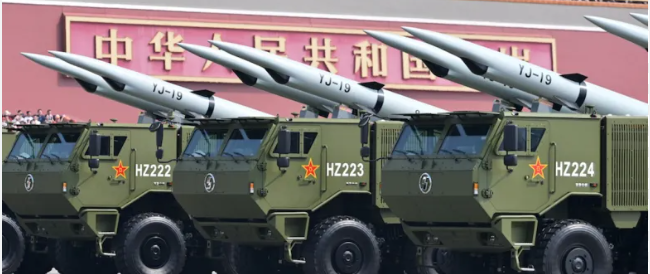
This triad encompasses the capability to launch nuclear weapons from land, sea, and air, further enhancing China strategic posture. The editorial from Global Times suggests that such advancements are designed to dissuade external powers from pursuing military pressures or pre-emptive strikes aimed at China, thus significantly diminishing the likelihood of large-scale conflict in the region.
A key part of China nuclear modernization
China nuclear modernization has been marked by the advancement of its missile capabilities, specifically involving the Type-094 nuclear-powered ballistic missile submarines (SSBNs).
Although the exact vessel has not been confirmed by Beijing, regional defense experts suggest that recent missile launches were executed from these submarines.
Over the past decade, China has developed a comprehensive nuclear triad, enabling it to launch nuclear weapons from land, sea, and air.
The significance of the submarine component lies in its provision of a survivable retaliatory force, which is crucial if China land-based missile sites face destruction during any potential conflict. Recent U.S. defense assessments indicate that China has initiated near-continuous deterrence patrols with its SSBNs.
This action positions China alongside the United States, Russia, Britain, and France, all of which maintain at-sea nuclear capabilities, further emphasizing the evolving dynamics of global nuclear deterrence.
Challenges remain
Despite advancements, China submarine force encounters considerable operational challenges. To effectively utilize its advanced JL-3 submarine-launched missile against the continental United States, Chinese submarines would likely need to venture beyond the protective confines of the South China Sea into the broader Pacific Ocean.
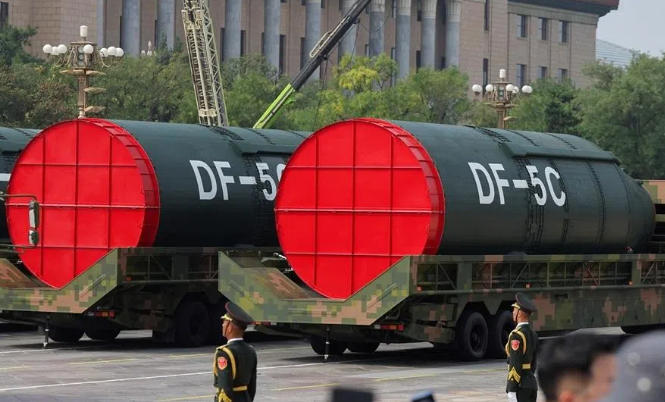
This transition increases their vulnerability to detection by U.S. and allied anti-submarine operations. Military analysts indicate that American and allied navies actively monitor Chinese submarine movements through various means, including surveillance aircraft, underwater sensor networks, and naval patrols.
Moreover, China is in the process of developing a next-generation ballistic missile submarine designed to operate more quietly, potentially enhancing its capacity to evade detection.
Regional reaction
Regional reactions to the recent launch were marked by significant criticism from multiple governments. The United States articulated its discontent, highlighting that China had provided only limited advance notice prior to the launch.
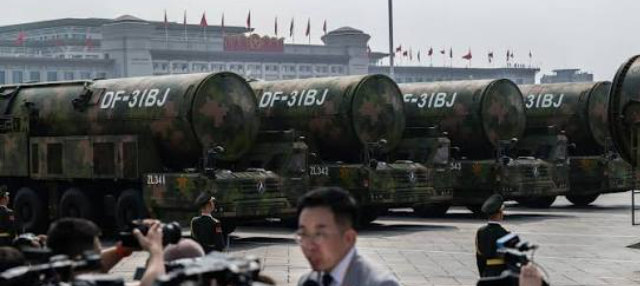
Concerns were also raised regarding the rapid expansion of China nuclear arsenal. Similarly, Japan, Australia, New Zealand, and Taiwan expressed their apprehensions about the implications of the test.
In response to these criticisms, China dismissed the concerns, asserting that the launch was conducted in accordance with international law and was aimed solely at ensuring national security and maintaining strategic stability.
Beijing emphasized that its nuclear modernization efforts are defensive in nature and reaffirmed its long-standing policy of not being the first to deploy nuclear weapons, positioning its actions as consistent with its commitment to prevent nuclear confrontation.
Analysis: A signal beyond the missile
China Missile Test Sends a Strategic Message Beyond Military Power
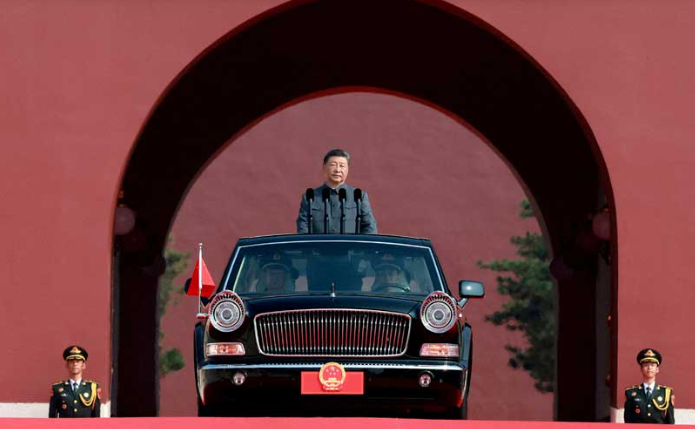
The recent ballistic missile test conducted by China signifies more than mere military technology advancement; it embodies Beijing’s growing confidence in its sea-based nuclear deterrent, a capability that has typically been the realm of the United States and Russia.
This launch aligns with President Xi Jinping’s broader military modernization strategy, focusing on establishing a robust nuclear force that is survivable and can effectively respond even following a first strike.
While there are operational hurdles, particularly regarding Chinese submarines’ ability to avoid advanced Western tracking systems, the successful test indicates progress towards a credible second-strike capacity.
Strategically, the missile launch conveys multiple messages. Domestically, it illustrates China ongoing investment in cutting-edge defense technology, reinforcing the government’s commitment to strengthening national security.
Regionally, it underscores Beijing’s resolve to safeguard its strategic interests in the increasingly tense Indo-Pacific area. Internationally, it emphasizes the advancements within China nuclear arsenal, which is becoming more sophisticated, mobile, and resilient.
This evolution is anticipated to attract significant scrutiny from the United States and its allies, who are vigilant regarding shifts in the balance of power within the region.
Furthermore, the missile test highlights a rising competition among the globe’s leading military nations. As strategic capabilities develop, there is an escalation in concerns surrounding regional stability, arms races, and long-term nuclear deterrence strategies.
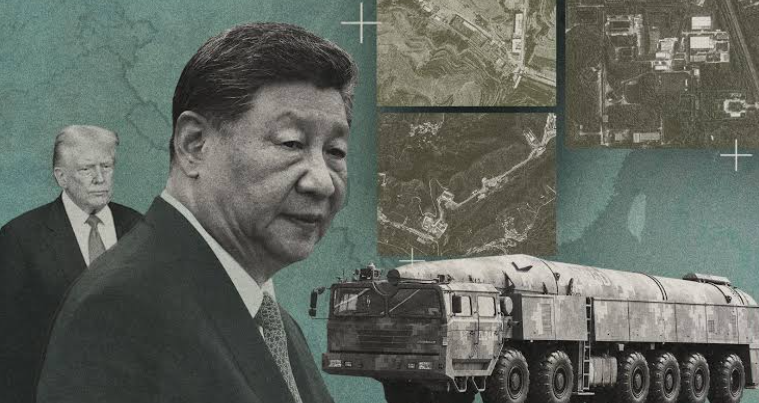
For policymakers and security analysts, this launch marks China military transformation entering a critical phase with profound global consequences, setting the stage for heightened vigilance and strategic consideration in the geopolitical landscape.
The document highlights the escalating rivalry among major military powers worldwide, particularly in terms of advancing strategic military capabilities.
It points out that each technological and strategic enhancement raises apprehensions about regional stability, intensifies arms competition, and impacts the future dynamics of nuclear deterrence.
The launch referenced serves as a significant marker, indicating that China military evolution is entering a new and pivotal stage, which suggests broader global consequences for international security policy and analysis.
Pingback: Breaking: The U.S. Is Reportedly Preparing to Launch a Nuclear Strike on Iran Pickaxe Mountain? 14 July - internationalmediawire.com
Pingback: U.S Warns Taiwan Conflict Could Have Disastrous Consequences for Global Economy - internationalmediawire.com