Spanish PM Early Election: Spanish Prime Minister Pedro Sanchez has announced an early election scheduled for 29 November, a decision that follows significant setbacks in his administration efforts to tackle Spain housing crisis. The call for a snap election has emerged against a backdrop of political turmoil, particularly after the rejection of two key decree laws aimed at safeguarding tenants within the rental market by the parliament. This legislative defeat has magnified existing tensions regarding housing in Spain, exacerbated by a recent incident involving the eviction of an elderly woman of 87 years, who was unable to cope with a substantial increase in her rent.
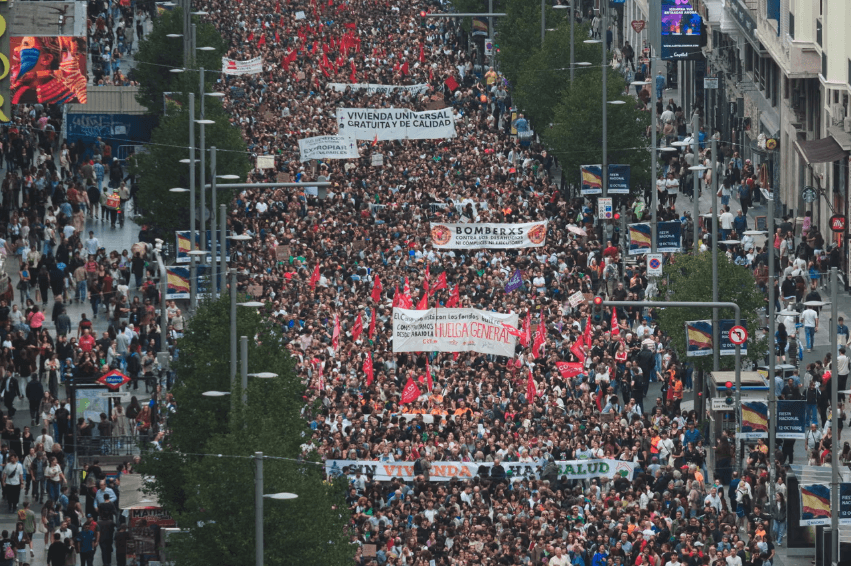
Spanish PM Early Election This event has ignited widespread protests across the nation and intensified the demand for comprehensive housing reforms. The situation reflects broader societal frustrations and growing public pressure on the government to take meaningful action in response to the housing crisis.In a recent televised address, Spanish Prime Minister Pedro Sanchez emphasized the need for “a broader progressive majority” to successfully implement reforms that could “overcome the resistance of the elites.” His leadership has faced significant challenges, particularly through a series of corruption scandals involving his party and growing pressures related to cost-of-living issues and immigration.
Sanchez Faces Political Pressure as Housing and Governance Issues Grow After Spanish PM Early Election
Spanish PM Early Election Acknowledging the shortcomings of his administration, Sanchez admitted that “we have made mistakes and have not achieved everything we had set out to do,” particularly in addressing persistent problems related to inequality, public services, and access to housing. This recognition highlights the ongoing struggles faced by his government in navigating complex social and economic landscapes while striving for meaningful reform.

Spanish PM Early Election Sanchez left-wing coalition government consists of his ruling Socialist party and its junior partner, the Sumar alliance. Notably, this coalition does not hold a majority in parliament, which could impact its legislative effectiveness. Initially, Spain was scheduled to hold a general election no later than the summer of 2027, potentially influencing the political landscape and the coalition operational dynamics as they navigate governance without a parliamentary majority. Sanchez has been the Prime Minister of Spain since June 2018, representing the Socialist party.
In the most recent election held in 2023, his party secured a second-place finish, while the conservative People Party (PP) won the highest number of seats but did not achieve a majority. To maintain his position, Sanchez has formed coalitions with left-wing parties and garnered support from several nationalist and pro-independence groups from Catalonia and the Basque Country. Current opinion polls indicate that in the upcoming election, the conservatives are projected to be the largest party, although it is anticipated that they will require the backing of the hard-right Vox party to successfully establish a government, given their likely shortfall of a majority.
Spanish PM Early Election This political landscape illustrates the complexities facing Sanchez and the future of governance in Spain as coalition dynamics continue to evolve. Speaking after Monday announcement, Alberto Nunez Feijoo, the leader of the People Party, expressed optimism regarding the upcoming elections, stating that Spaniards will finally have the opportunity to make a crucial decision. He emphasized that this election is not merely another political event, but a pivotal moment for voters to choose between opposing forces: decline versus change, lies versus change, incompetence versus change, division versus change, and corruption versus change.
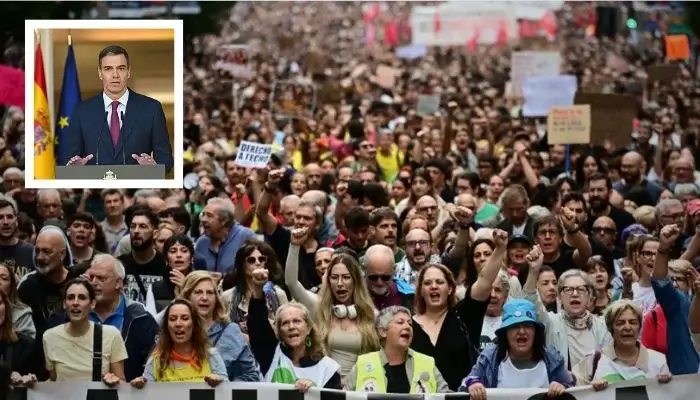
Housing Crisis Fuels Protests as Spain Moves to Protect Tenants
Spanish PM Early Election Feijoo comments underline the significance of this electoral moment as one that can redefine the political landscape in Spain. On Saturday, significant protests unfolded in cities across Spain, including Madrid, Valencia, and Barcelona, as tens of thousands rallied for enhanced tenant protections amid a burgeoning housing crisis. Central to this movement is the poignant case of Maricarmen Abascal, an 87-year-old woman who has become a symbolic figure of the crisis after being forcibly evicted from her home in Madrid on September 23.

This eviction stemmed from a legal loophole that enabled her landlord to increase her rent from €500 to €2,650. Although the rent was subsequently reduced to €1,650, it remained €300 above her monthly pension. Abascal eviction was particularly distressing, as she was removed from her residence of over 70 years on a stretcher and later required hospitalization due to the ordeal. In a recent incident drawing public ire, a lawyer representing affected tenants announced that one client would be allowed to return home, highlighting significant concerns over housing in the community.
Spanish PM Early Election In response to mounting protests, the left-wing coalition government initiated two decree laws aimed at alleviating tensions. The first decree introduces key measures including a suspension of evictions for vulnerable tenants until 2030 and a two-year extension for rental leases set to expire before 2028. Additionally, the government plans to implement tax increases for tourist apartments and impose restrictions on the acquisition of residential properties by entities colloquially referred to as “vulture funds.” These legislative actions reflect the government commitment to addressing the ongoing housing crisis and protecting the rights of vulnerable renters.

Spanish PM Early Election The second decree concerning rental contracts has stirred up significant controversy, primarily due to its provision for the automatic renewal of these contracts. This aspect aligns with a key demand from various leftist factions and the tenants’ organization, Sindicato de Inquilinas. In contrast, proponents of the political right have expressed strong opposition, arguing that the government intervention in the housing market might actually result in a decrease in rental availability and an escalation of housing prices.
Spanish PM Early Election Juan Bravo from the People Party criticized the decree, asserting that legislative measures do not effectively lower housing costs; instead, he emphasizes that increasing the supply of homes is the necessary approach to reducing prices.
Corruption Scandals and Migration Crisis Deepen Pressure on Sanchez Government
Spanish PM Early Election Sanchez leadership has faced significant challenges due to multiple corruption scandals over recent months. In April, his wife Begona Gomez was charged following a two-year criminal investigation, accused of leveraging her relationship to promote her private career a claim she refutes. Sanchez has characterized these allegations as a politically motivated assault by right-wing factions aimed at destabilizing his coalition.
Spanish PM Early Election Further complicating the situation, in May, police conducted a raid at the Socialist party Madrid headquarters as part of an inquiry into claims that an operative was compensated to execute a misinformation campaign, a charge the party has outright denied. These events collectively undermine the integrity of Sanchez administration and highlight the ongoing tensions surrounding his leadership.
In June, Jose Luis Abalos, the former transport minister under Prime Minister Sanchez, was sentenced to 24 years in prison after being convicted for his involvement in a corrupt network that accepted kickbacks related to the sale of face masks during the Covid-19 pandemic. Additionally, Prime Minister Sanchez faced criticism for his management of the migration crisis in Ceuta during the summer, which saw tens of thousands of individuals entering from Morocco without proper authorization. This situation raised further concerns regarding his government handling of immigration issues. Spanish PM Early Election
How Spain Parliament is Devided

Why did Spanish PM Sanchez call an early election?
In response to significant housing protests and mounting pressure from the opposition regarding a housing crisis, Spanish Prime Minister Pedro Sanchez announced an early election. The decision has been influenced by ongoing concerns related to corruption scandals and broader governance issues affecting his administration, making it necessary to address the growing unrest among the populace and political challengers alike.
Pingback: Report What Will Washington Do Next if US Bond Yields Keep Rising? - internationalmediawire.com