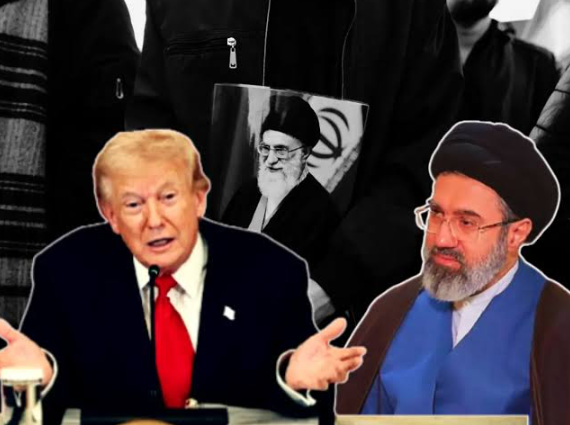
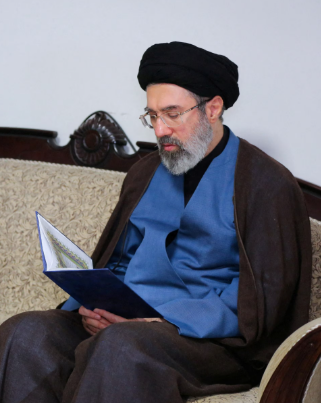
Iran Supreme Leader: Six months into the ongoing war, Iran supreme leader, Mojtaba Khamenei, remains entirely absent from the public eye, raising significant concerns regarding his health and capacity to lead. Following the airstrikes that initiated the conflict, Khamenei, who has been severely injured, has not communicated with the Iranian populace, creating a leadership void in a time of crisis.
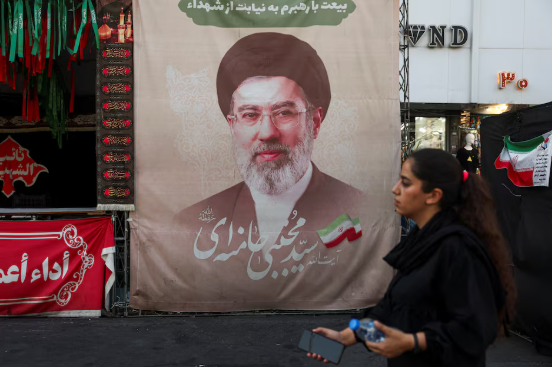
This silence is particularly alarming as Iran grapples with the repercussions of the war on its already weakened economy and faces critical decisions with potentially far-reaching implications for the Middle East. The absence of Khamenei, once perceived as the pivotal figure in Iranian governance, has led to mounting speculation and anxiety regarding the state of leadership in the country.
Iranian officials and senior sources indicate that Supreme Leader Khamenei continues to exert control over the country while remaining largely hidden due to security concerns related to his recovery from serious injuries. During this period, he has delegated significant daily decision-making power to a select group of top officials. The absence of any recent public appearances, including photographs, videos, or audio messages since his appointment at the onset of the current conflict, has led to increasing skepticism among the Iranian populace regarding his authority. Iran Supreme Leader
Observers, like Alex Vatanka from the Middle East Institute, have raised pressing questions about the operational status of Iran leadership, suggesting that the central issue has shifted from concerns about Khamenei health to doubts about the functionality of Iran supreme leadership as a whole. This evolving situation reflects a growing uncertainty within the Islamic Republic, where the leader visibility and communication are typically considered paramount for maintaining authority and public trust.
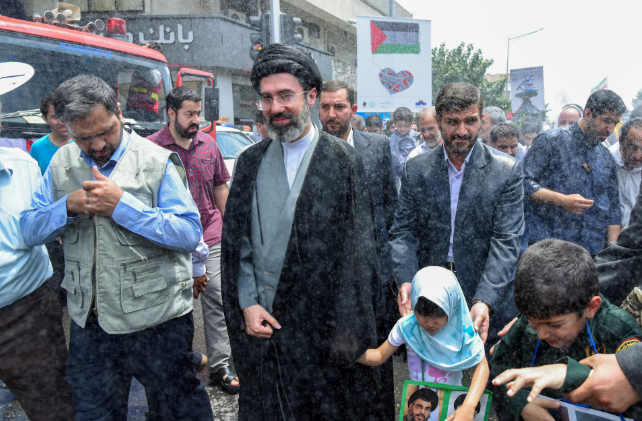
Khamenei communication with the Iranian populace has been limited primarily to a few written statements broadcast by the media, and he notably did not participate in the lavish funeral ceremonies for his late father last month. High-ranking officials and insiders speculate that his absence is due to concerns over potential assassination threats.
Summary
- Iranian officials and senior sources say Mojtaba Khamenei still has final say on major decisions
- No photograph, video or audio message has been released since his wartime appointment
- Many Iranians sceptical about condition and current role of leader
They report that Khamenei remains actively engaged in governance, meeting regularly with key figures, receiving crucial reports, and making final decisions on all significant matters. President Masoud Pezeshkian mentioned a lengthy seven-hour meeting he had with Khamenei on August 10. However, among even the staunchest supporters of the Islamic Republic, there is a growing sense of uncertainty. A member of the Basij militia in Qom expressed a desire for more visible leadership from Khamenei, stating the need to hear his voice or perceive his presence to instill greater confidence in the country direction. Iran Supreme Leader
In recent discussions surrounding the leadership of Iran, a Basij member, who preferred to remain anonymous due to the sensitivity of the topic, emphasized that Supreme Leader Ali Khamenei continues to be influential in key decision-making processes. However, the absence of even a single photograph of Mojtaba Khamenei has raised concerns about morale and is perceived as detrimental to the country interests. Among reform-minded Iranians skeptical of the current regime, there are sharper criticisms.
A pro-reform businessman in Tehran, also speaking anonymously, questioned the lack of evidence proving Mojtaba existence and involvement in governance, stating, “How do we know that Mojtaba has not been killed?” He argued that it is illogical to have no signs affirming his life or participation in critical decision-making. This sentiment reflects a broader frustration with the opacity of the ruling hierarchy and heightens tensions among those advocating for reform. Iran Supreme Leader
Revolutionary Guards Key To Power Structure (Iran Supreme Leader)
Iran has endured six months of conflict while retaining its political stability and military capabilities, a testament to the resilience of its clerical establishment. Despite suffering the loss of a supreme leader and senior military figures, the regime has managed to maintain a loyal political and military hierarchy aligned with its theocratic values.
However, the Iranian economy is under severe strain due to the war and ongoing oil export blockades, leading to a significant devaluation of the rial and the potential resurgence of mass protests, reminiscent of the violent suppressions faced in January. The ruling elite has since focused on three critical goals: safeguarding the state, restoring military deterrence, and mitigating economic turmoil.
The Revolutionary Guards, whose influence expanded with the onset of the war, play a crucial role in the strategic direction of this newly structured governing body, notably the Supreme National Security Council, highlighting their centrality to Iran power dynamics. Iran Supreme Leader
The upper echelon of Iranian leadership encompasses top Guards commanders and prominent political figures, including Pezeshkian and parliament speaker Mohammed Baqer Qalibaf. Reports from senior Iranian sources suggest that Supreme Leader Khamenei is actively participating in discussions with these key figures and has authoritative control over significant decisions.
A senior official indicated that only a select few retain personal contact with Khamenei, as confidentiality is maintained to protect against potential threats from the U.S. Meanwhile, his health is reportedly improving, with those close to him describing him as sharp and engaged in policymaking. Iran Supreme Leader
Despite the ongoing pressures, officials assert that government services have remained uninterrupted, and foreign policy is cohesive, reflecting Khamenei ability to lead effectively. Historically, Khamenei has preferred a discreet role, reminiscent of his father conservative approach, avoiding the limelight. Iran Supreme Leader
However, following a violent escalation marked by airstrikes on February 28, which resulted in significant personal injuries to him, the call for robust leadership during this critical period has intensified.Analysts like Vatanka note that any substantial agreement with Washington or strategies for enduring conflict require Khamenei explicit endorsement, which is complicated by his reduced visibility. Iran Supreme Leader
This absence has fostered a precarious environment where various factions might misinterpret Khamenei true intentions, leaving room for conflict and discord within governance structures. The current political atmosphere illustrates a moment of severe challenge for Iranian leadership, juxtaposed against the backdrop of its historical struggles since the 1979 revolution.
Mohammad Eslami, the head of the Atomic Energy Organization of Iran, stated that inspections of nuclear facilities that have been damaged by military attacks must comply with Iranian law and be approved by the Islamic Consultative Assembly. He emphasized that any current requests for inspections of these facilities are “not acceptable.” Iran Supreme Leader
Eslami further alleged that the United States and Israel are exerting pressure on the International Atomic Energy Agency (IAEA) to conduct these inspections. He pointed out that, at this moment, the IAEA does not have a protocol for such actions and is not taking an official stance. Eslami suggested that the U.S. and Israel motivations stem from a desire to ascertain the condition of the facilities post-military operations they conducted.
Pingback: U.S. Military Strikes Iranian Launchers on Larak Island as Tensions With Iran Escalate Again - internationalmediawire.com