Iran war has Cost $37.5bn so far, Defence Secretary Pete Hegseth tells lawmakers
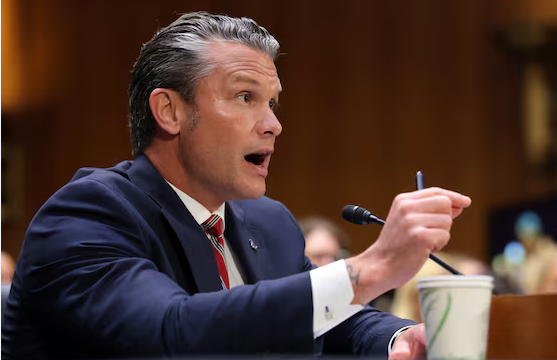
Iran War Cost The cost of the U.S. war in Iran has reached approximately $37.5 billion, according to U.S. Defense Secretary Pete Hegseth. This figure was presented during a committee update, wherein Hegseth outlined a request for an additional $87.6 billion in funding, intended to bolster U.S. military efforts under the banner of “reinforce peace through strength.”
This funding request has drawn skepticism from lawmakers, particularly from the senior Democrat on the committee, who expressed concerns regarding its rationale.
The briefing occurs amid escalating tensions in the region, particularly following the death of three U.S. soldiers and subsequent military orders from President Donald Trump for further strikes against Iran.
Hegseth addressed lawmakers regarding the critical need for increased military funding, stating that current military training could face significant reductions without immediate financial support.
This marks Hegseth’s first public engagement before the Senate Appropriations Committee since the U.S. military resumed its operations against Iran earlier this month. The situation escalated after a fragile ceasefire between the United States and Iran collapsed, leading to ongoing strikes from both parties.
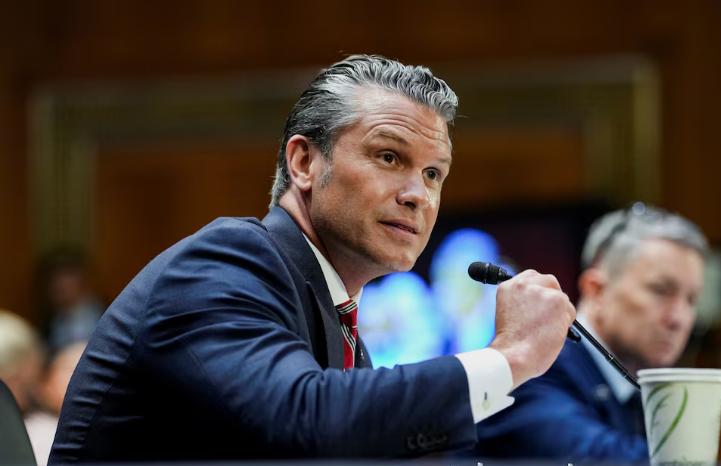
As of the latest reports, the number of U.S. troops fatalities in the conflict with Iran has risen to 17, with two confirmed deaths resulting from an Iranian attack on American personnel stationed in Jordan. Moreover, officials are currently investigating the remains of another soldier who has gone missing after a strike targeted a base in Jordan.
Iran War Cost Reports indicate that approximately 430 U.S. troops have sustained injuries since the conflict commenced in late February. The Pentagon noted that 100 service members had been injured since July 7, with 96% of those returning to active duty; however, there remains ambiguity regarding the overlap between these figures and the total number injured.
In a broader strategic context, President Trump has issued threats to broaden military operations in Iran. These threats include targeting energy plants and bridges and deploying ground forces to capture Iran’s Kharg Island oil hub, as well as bombing deep-underground nuclear facilities, notably a site referred to as Pickaxe Mountain.
The escalation in rhetoric and military action points to a precarious situation that necessitates urgent attention from congressional leaders.
Iran War Cost Protests disrupted Hegseth’s presentation, emphasizing the contentious atmosphere surrounding the discussion. Additionally, other military officials, including Air Force General Dan Caine, Chairman of the Joint Chiefs of Staff, appeared before the Senate Appropriations Committee to address these developments.

Summary
- US Defence Secretary Pete Hegseth says the latest estimate puts the cost of the Iran war to the Pentagon at about $37.5bn (£28bn) so far
- Hegseth is updating lawmakers who are overseeing a request from his department for $87.6bn in additional funding – watch liveabove
- The money will be used to “reinforce peace through strength”, Hegseth says
- The most senior Democrat on the committee says the request “does not make a lot of sense”
- The hearing comes after three US soldiers were killed in the Middle East and President Donald Trump ordered fresh strikes on Iran – what’s the latest with the conflict?
- As soon as Hegseth began to speak, he was quickly interrupted by protesters several times
- Other officials, including Chairman of the Joint Chiefs of Staff, Air Force General Dan Caine, are also facing the Senate Appropriations Committee
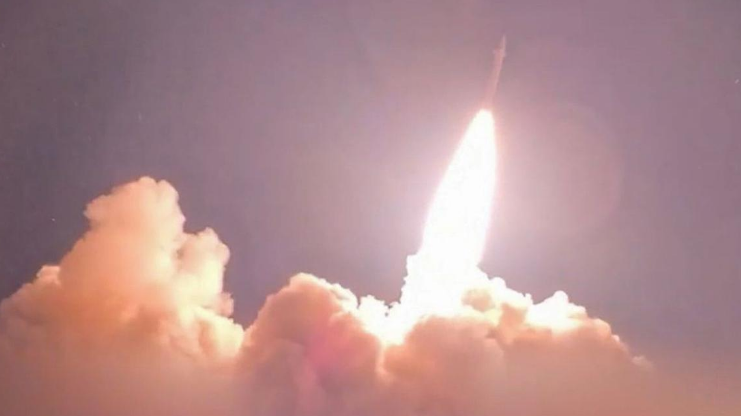
Hearing ends in a yelling match (Iran War Cost)
The hearing concluded with a heated exchange between Hegseth and Democratic Senator Gary Peters. Peters challenged the war’s objectives, labeling Hegseth a “failure” and criticizing the Trump administration for initiating another “forever war.”
Gillibrand accuses Hegseth of seeking ‘unlimited money for bombs’In response, Hegseth vehemently defended his stance, chastising Peters with “shame on you” for his remarks and accusing him of suffering from “Trump derangement syndrome.” The contentious dialogue marked a dramatic end to the hearing.
Democrats question Iran’s military capabilities
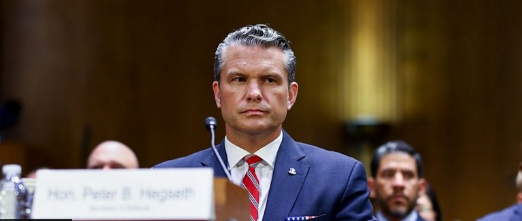
Democrats have been probing Hegseth regarding the United States’ success in achieving its objectives in Iran, particularly in light of previous assertions by both Hegseth and Trump about Iran’s military capabilities and claims that the war has been “won.”
Hegseth contends that Iran no longer possesses an “effective” military force, although he clarified that this does not imply Iran is entirely incapable of launching attacks. During his testimony, he emphasized that his earlier statements should not be interpreted as suggesting that Iran has “absolute zero” military capacity.
In a particularly pointed exchange with Democrat Jon Ossoff, Hegseth was confronted about a prior remark stating that the Iranian military had been “destroyed and made combat-ineffective” by Day 14 of the conflict.
Hegseth explained that he was referring to Iran’s ability to “lob missiles,” asserting that while the military’s effectiveness has diminished, it still retains some offensive capabilities. Ultimately, he did not acknowledge any inaccuracies in his statements, and Ossoff concluded the questioning by noting Hegseth’s refusal to provide straightforward answers.
Gillibrand accuses Hegseth of seeking ‘unlimited money for bombs’
Senator Kirsten Gillibrand of New York has leveled accusations against Pete Hegseth regarding funding for military efforts. She asserts that he is requesting a staggering $1.5 trillion for a war that President Trump claims has already been won, criticizing the Trump administration for prioritizing military spending in Iran over the essential needs of American citizens.
Gillibrand emphasized that while the government seeks “unlimited money for bombs,” many Americans struggle to afford basic necessities, such as feeding their families.
In defense, Hegseth countered that the administration is not asking for “unlimited bombs,” but rather for “the right bombs at the right time,” characterizing the financial request as a necessary “generational” upgrade to enhance the United States’ military capabilities.
Iran War Cost The exchange included Gillibrand raising her voice in questioning when the military engagement would conclude, to which Hegseth replied that the focus remains on key objectives, suggesting that Gillibrand’s remarks were aimed at political campaigning rather than genuine concern for military strategies and outcomes. The dialogue highlights a significant political divide regarding defense spending and priorities amidst domestic struggles.
US fighting war ‘differently’ to previous ‘stupid wars’ – Hegseth
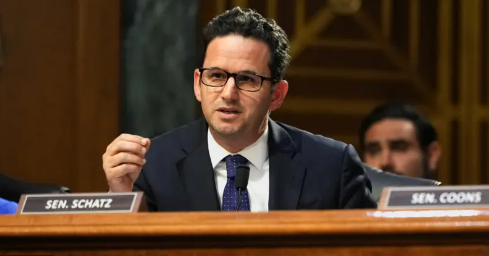
Brian Schatz, a Democratic representative from Hawaii, expresses condolences for Lt. Tyler James Feehan, a service member killed in an Iranian strike in Jordan.
He questions the effectiveness of the war, emphasizing that the original objectives—regime change, eliminating missile capabilities, preventing nuclear development, and ensuring the Strait of Hormuz’s openness—have not been fully realized. Schatz points out that the Strait was already open prior to the conflict and challenges Hegseth to justify the war’s apparent success.
Hegseth contrasts current military engagement with past wars in Iraq and Afghanistan, asserting that the Trump administration’s strategy focuses on avoiding “stupid wars.” He claims the U.S. approach is now centered on preventing Iran from acquiring a nuclear weapon without attempting to alter Iranian society, framing this strategy as a realistic, “America first” policy, and highlighting Trump’s campaign promise to fight wars differently and with greater effectiveness.
Caine says targets determined by ‘robust’ review process
Caine addressed concerns raised by Democrat Jeff Merkley regarding the targeting of civilian infrastructure in Iran, specifically a desalination plant. Caine stated he was “not aware” of any such facilities being targeted and reiterated that there is a “robust” review process for determining targets, emphasizing the legal oversight involved in these decisions.
When pressed by Merkley about the assurance that civilian infrastructure essential for survival won’t be attacked, Caine responded that the strikes conform to international law, noting the involvement of numerous legal experts in the process. He also committed to providing further information on whether the desalination plant had been under consideration as a target.
Hegseth says Iran would likely ‘try to impose their will’ on Strait of Hormuz if US withdraws
Republican Senator John Kennedy engaged in a conversation regarding the potential consequences of ending the blockade on Iranian ports and withdrawing U.S. troops.
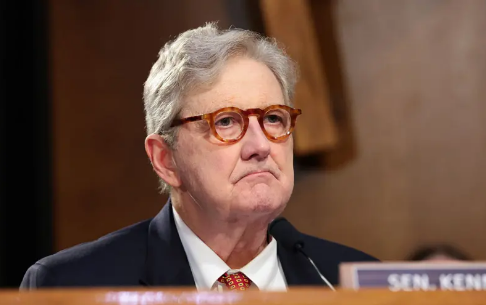
He questioned defense expert Caine about Iran’s possible actions under such circumstances, particularly concerning the Strait of Hormuz. Caine acknowledged that Iran would likely remain a significant challenge but refrained from speculating about specific actions, noting that Kennedy’s inquiries involved hypothetical scenarios.
Kennedy underscored the seriousness of the issue, emphasizing the potential dangers involved in a withdrawal and blockade cessation. Caine warned that Iran could still pose a threat, indicating that military options would need to remain on the table.
Defense Secretary Hegseth concluded that if the U.S. were to pull back, it would be likely that Iran would attempt to assert control over the Strait of Hormuz, which would lead to undesirable outcomes for the international community.
‘No realistic outcome in sight,’ Democrat says
In a recent congressional exchange, Democratic Senator Jack Reed critiqued remarks from Hegseth, who commended the U.S. military’s leadership for its efforts to prevent extremist groups from acquiring nuclear weapons.

Reed countered, questioning the merits of initiating military action without congressional authority and criticized the resulting global economic turmoil. He emphasized the absence of a “realistic outcome” following such military engagements.
The discussion transitioned to an inquiry directed at military official Caine regarding potential escalation to ground combat. Caine refrained from speculating on future scenarios, instead highlighting the military’s extensive development of strategic options.
Funding request ‘does not make a lot of sense’ – senior Democrat
In a recent funding request discussion, senior Democrat Patty Murray expressed skepticism, stating the proposal “does not make a lot of sense” and questioning the necessity of the requested funds.
Murray criticized the administration for presenting the request as an urgent need while attempting to evade the traditional appropriations process.
Specific allocations in the proposal include $800 million for the National Guard to patrol Washington DC, over $1 billion for the Army to patrol the southern border, and $900 million to support operations against illegal boat traffic in the Caribbean.
In response, Hegseth attributed the need for these funds to what he termed the “gross negligence” of the Biden administration, asserting that the military must “re-establish deterrence.”
Murray challenged Hegseth’s claims about Iran’s military capabilities, highlighting ongoing missile launches targeting US assets despite assertions that the US has significantly diminished Iran’s abilities.
Hegseth acknowledged some destruction of Iran’s military capabilities but pointed out that the regime likely retains hidden assets, consistent with actions typical of terror regimes.
Pingback: Report: Is the U.S. Planning an Operation Against Israel? Or Is There Another Reason Behind Reports About Arresting Its President? 22 July - internationalmediawire.com
Pingback: Report: The U.S. Has Signed a Nuclear Deal With Another Country. Is Another Muslim Country Becoming a Nuclear Power? 23 July - internationalmediawire.com