Trump slaps 50% tariffs on Canada and Carney vows to ‘intensify’ trade talks
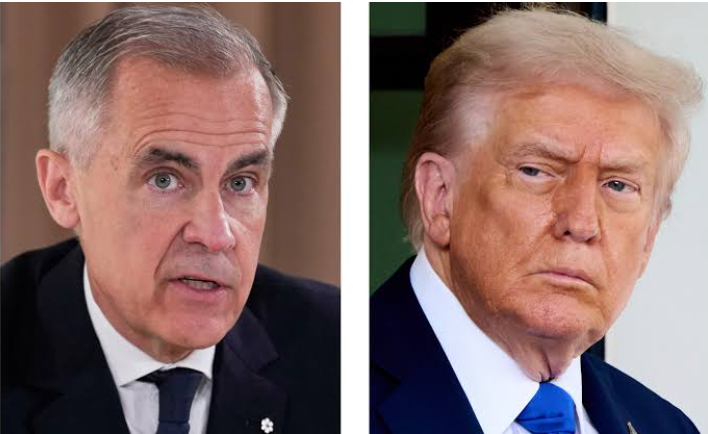
President Donald Trump has enacted a substantial 50% tariff on a variety of goods imported from Canada, citing “unequal treatment” faced by US industries, particularly in the automotive, dairy, and alcohol sectors.
This aggressive measure affects numerous everyday consumer items, including wine and hockey sticks, as well as industrial products like cement. Notably, several crucial Canadian exports, such as energy, potash, critical minerals, and fish, will not be targeted by these tariffs, indicating a selective approach in the trade dispute.
The move escalates tensions in US-Canada trade relations and could have significant implications for both economies.
Prime Minister Mark Carney announced Canada’s readiness to enhance trade negotiations with the United States in light of escalating trade tensions following the White House’s recent decision to implement duties on Canadian goods.
These tariffs will be enforced within 30 days and represent a significant increase in friction between the two countries. In response to prior tariffs imposed by former President Trump in 2025, Canada took action by imposing a 25% levy on approximately C$30 billion (around £16 billion or $21.7 billion) worth of US products.

Although Carney later lifted some tariffs, he maintained those on US cars, steel, and aluminium. Additionally, a ruling by the US Supreme Court earlier this year indicated that several of Trump’s tariffs, which were enacted under emergency powers, were deemed illegal.
However, the new tariffs implemented on Monday evening are based on a different and less commonly used legislative framework that has yet to be tested in court.
Trade Action
The new duties introduced by the United States affect all covered goods, irrespective of their inclusion in the ongoing free trade agreement known as the USMCA (United States-Mexico Canada Agreement).
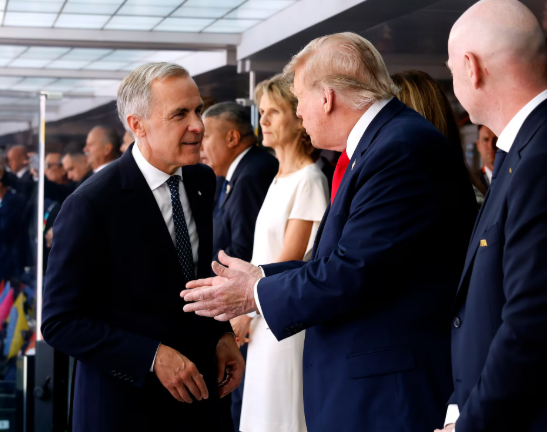
This action represents another step in a series of unilateral trade measures initiated by the US, as noted by Carney, who highlighted that these tariffs violate the USMCA and could threaten Canadian sovereignty implicitly referencing Trump’s previous remarks about integrating Canada as a potential 51st state.
The newly implemented import taxes further compound existing trade barriers. The US has maintained tariffs ranging from 15% to 50% on Canadian steel, aluminum, and copper.
Additionally, Canadian softwood lumber incurs a significant 35% tariff, while a 25% tax is imposed on non-US components used in American vehicles. In retaliation, Canada has enacted its own 25% counter-tariff targeting specific imports of American steel, aluminum, and vehicles.
This recent announcement follows President Trump’s threats to introduce tariffs in response to Canadian wildfire smoke affecting US cities, further complicating the already tense trade relations between the two countries.
Canadian wildfires rage as Trump warns Carney again over ‘poisoning’ US air
Canadian wildfires are a backdrop to recent tensions between the US and Canada, with President Trump reiterating accusations against Canadian practices that he claims affect US air quality, although wildfire issues are not addressed in his recent executive orders.
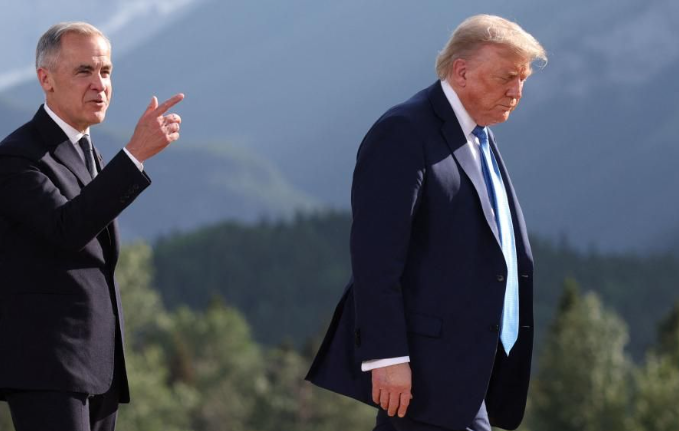
Instead, the proclamations highlight ongoing trade conflicts, specifically concerning automobiles, dairy, and alcohol, which signal a stall in negotiations between the two nations.
Trump has criticized Canada for imposing taxes on US motor vehicles and parts which he claims are not applied uniformly to other countries under the United States-Mexico-Canada Agreement (USMCA). He labels these taxes as “unreasonable,” suggesting that they discriminate against US products.
The interlinked nature of automotive manufacturing across North America adds complexity to this dispute, with Trump’s Commerce Secretary previously asserting that Canada should “come second” after the US in trade considerations.
The dairy issue remains contentious due to Canada’s supply management system, which places significant tariffs on imports exceeding quotas, sometimes reaching over 300%.
This system has long frustrated American producers. Additionally, a recent boycott by several Canadian provinces against US alcoholic beverages has emerged, further straining relations, with Canadian officials stating that they would consider lifting the boycott if the US eliminated tariffs on critical Canadian goods, including metals and cars.
In response to the tariffs, Ontario Premier Doug Ford has proposed a reciprocal approach, suggesting that Canada should implement similar tariffs in response to US actions—”tariff for tariff, dollar for dollar.”
This reflects the growing frustration among Canadian leaders regarding the US’s trade policies. The situation remains dynamic, as Canadian negotiators continue to seek an arrangement that alleviates some of the burden of US tariffs, while the US administration holds firm on its positions.
US blocks long-term renewal of North American trade deal
In early 2023, the US opted not to renew the United States-Mexico-Canada Agreement (USMCA) in its current form, despite Canada and Mexico seeking its continuation.
The US government is advocating for modifications to the trade deal originally negotiated during President Trump’s first term. Currently, the treaty will maintain oversight of North American trade for the next decade, but it necessitates annual reviews.
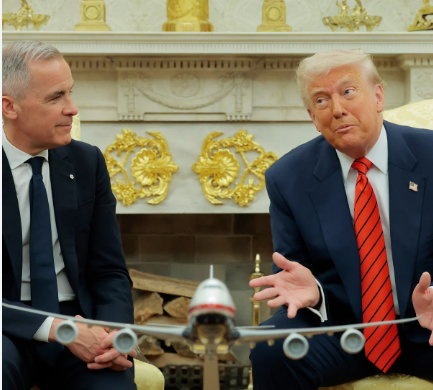
In February, the US Supreme Court invalidated extensive international tariffs that were imposed by Trump, determining that the president had overstepped his authority under the International Emergency Economic Powers Act of 1977, which is intended for national emergencies.
Following this ruling, the White House committed to using alternative means for imposing import taxes.
The new tariffs introduced recently stem from Section 338 of the 1930 Tariff Act, focusing on trade discrimination rather than emergencies. Candance Laing, President of the Canadian Chamber of Commerce, criticized the imposition of these tariffs as a “regrettable decision” and emphasized the need for officials to achieve “meaningful progress” in negotiations prior to the tariffs being enacted in 30 days.
Additionally, Chris Swonger, executive director of the Distilled Spirits Council of the United States, stressed the importance of both parties working towards a resolution, expressing concern that this decision could lead to escalating retaliatory measures.
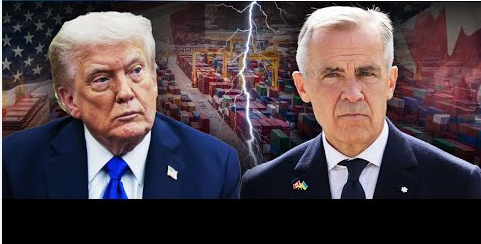
President Trump’s recent actions were highlighted in remarks by Carney following the White House’s announcement of a fresh directive. Trump signed three proclamations under Section 338, which likely pertain to specific administrative actions or policy changes. Additional details and context can be found in the full article available at the provided Times of India link.
Pingback: Tariffs: Canada Strikes Back as Carney Unveils New Retaliatory Tariffs on U.S. Goods - internationalmediawire.com