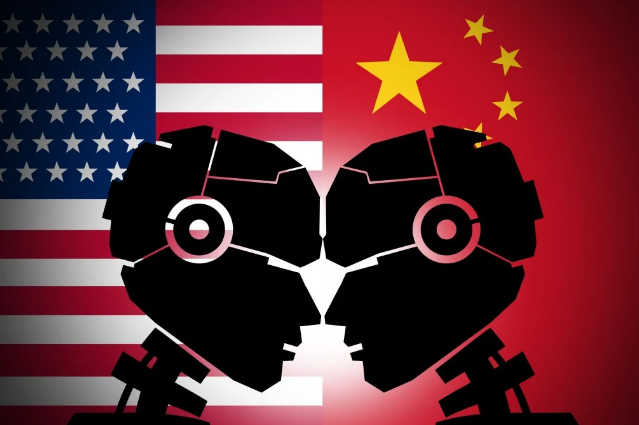
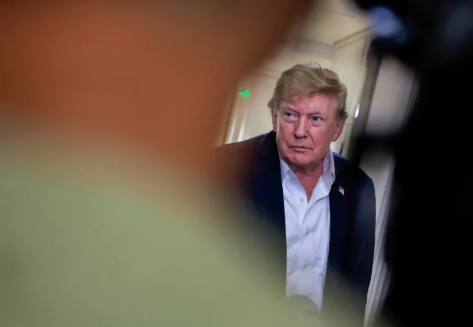
Beijing: Last weekend, world leaders addressed the pressing issue of artificial intelligence (AI) amidst growing concerns about its potential dangers. President Donald Trump emphasized the importance of maintaining U.S. leadership in AI development, dismissing calls from major tech figures like those at Anthropic, OpenAI, and Google to pause advancements in the field. He stated, “We’re leading China in AI…and frankly, I want to keep it that way, because whoever wins AI wins,” highlighting his determination to secure a competitive edge over China in the escalating tech rivalry. This stance underscores the significant national security implications of AI, positioning it as a critical frontier in global power dynamics.
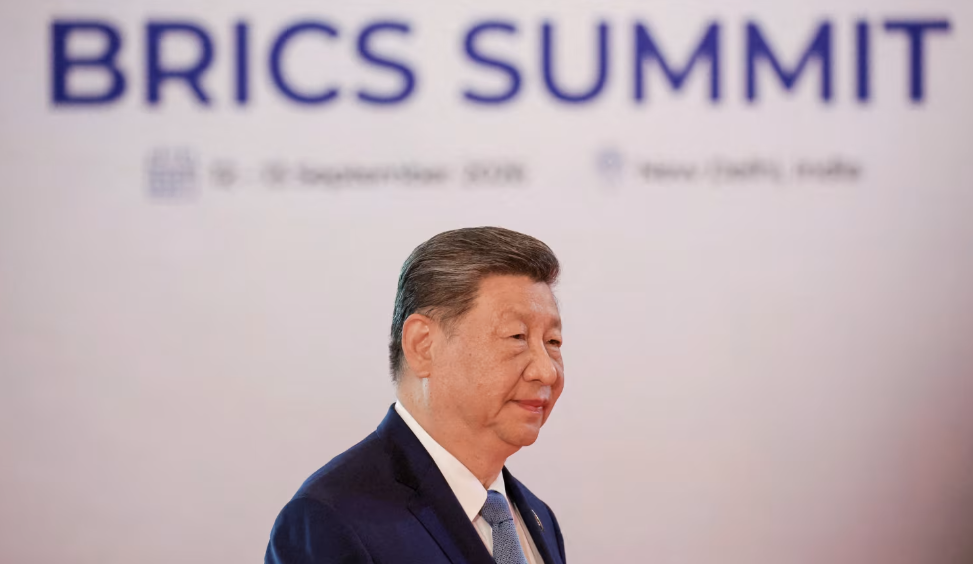
On Sunday, Xi Jinping, China leader, emphasized the need for enhanced international cooperation during a speech in India aimed at Global South leaders. He advocated for principles such as open source, openness, collaboration, and sharing, and introduced a vision for a global AI governance pact, although specifics remained unspecified. This appeal highlights the contrasting approaches of China and the US in the ongoing competition to lead in artificial intelligence.
The messages of Trump administration and Xi present a stark divergence, illustrating a significant lack of consensus and deep distrust between these two superpowers as they vie for dominance in the AI sector. The US is increasingly treating its AI capabilities as a strategic asset, seeking to safeguard its advancements and share them selectively with allied nations. Meanwhile, China, perceived as lagging in AI development, is advocating for a more inclusive and open framework.
Beijing The topic of AI is expected to take center stage at the upcoming summit between Trump and Xi in Washington in two weeks. In their previous meeting in May in Beijing, discussions on AI governance were held, yielding minimal substantive outcomes. Recently, the Chinese Ministry of Commerce announced a new agreement between the two leaders to initiate an intergovernmental dialogue focused on AI. However, given their overarching geopolitical rivalry, analysts maintain a pessimistic outlook regarding the likelihood of significant progress on this front.
How big of a threat is China?
Beijing Chinese AI has historically lagged behind American counterparts due to US technology controls that restrict access to advanced AI processors, crucial for developing complex models. However, in a surprising turn, the Chinese startup DeepSeek revealed a model last year that nearly matched the performance of leading American systems while utilizing significantly fewer computing resources. This breakthrough has sparked rapid advancements in Chinese AI labs, with companies like Alibaba, Z.AI, Minimax, and Moonshot unveiling competitive models that challenge the market dominance of US firms such as Anthropic and OpenAI.
Beijing Despite these developments, accusations of intellectual property theft have surfaced, with American entities, including OpenAI and Anthropic, alleging that Chinese firms have resorted to training their AI models using the outputs of advanced American models, a process termed distillation in the industry. Recently, US federal agencies such as the FBI, NSA, and Cybersecurity and Infrastructure Security Agencyhave accused Chinese AI companies of engaging in “industrial-scale” theft, further intensifying the scrutiny on their operations.
This evolving landscape raises significant concerns regarding the competitive dynamics between China and the US in the realm of artificial intelligence.In a recent comprehensive report, Anthropic revealed concerning activities by various individuals, including suspected operators linked to the Chinese government, who are exploiting its systems for nefarious purposes such as developing weapons and conducting surveillance on minority populations, specifically the Uyghurs in Xinjiang.
Beijing The report illustrates how Anthropic discovered attempts at surveillance, notably when a user, believed to have ties to the Chinese military, made queries to Moonshot Kimi model. These queries were unexpectedly rerouted to Claude, leading to the exposure of Moonshot covert strategy to redirect user requests. Furthermore, the report indicates that other Chinese companies, such as DeepSeek, have engaged in similar practices, underscoring a broader pattern of misuse of technology for surveillance efforts.

Beijing has firmly rejected recent allegations regarding its AI developments, while Chinese AI laboratories have predominantly chosen not to respond. Notably, Moonshot refrained from commenting on a CNN report last week, and DeepSeek did not reply to a request for comment. Guo Jiakun, a spokesperson for China Foreign Ministry, emphasized on Monday that engaging in “spreading various threatening narratives, pursuing confrontation and malicious competition” will only hinder global efforts towards AI governance, ultimately serving no one interests. He called for collective action from all parties to ensure the promotion of AI that is “open, inclusive, accessible and beneficial to humanity.”
What’s China proposing?
Beijing China is responding to perceived threats from the US regarding AI advancements. While the US views China rapid progress with concern, Beijing is equally alarmed by the cyber capabilities of American firms, evidenced by incidents involving OpenAI and Anthropic. Chinese officials, including State Security Minister Chen Yixin, frame AI safety risks differently from the US, focusing on the need for political control and social stability.
Beijing They characterize the US as a “hegemonic threat” that undermines China technological growth through actions like creating entity lists, enforcing technology controls, and monopolizing standards all geared towards national security. Chen argues that such practices fragment the global AI landscape and exacerbate development imbalances. Additionally, the state-backed Global Times criticized comments made by Anthropic CEO Dario Amodei, reinforcing China stance on the matter.
The editorial critiques a statement seemingly concerned with global AI security, asserting that a deeper examination uncovers a concealed agenda. It posits that the article includes numerous containment measures aimed specifically at China, ultimately characterizing it as a strategic blueprint reminiscent of Cold War tactics within the AI industry.
Are people in China worried about AI?
Beijing Concerns regarding artificial intelligence (AI) among the Chinese populace are considerably muted compared to those in the United States. While American executives and researchers have publicly expressed fear over the risks associated with AI technologies, such discussions in China are complicated by the stringent control exercised by the ruling Communist Party over the media and the surveillance of its citizens. This regulatory environment creates a significant deterrent for individuals wishing to voice their apprehensions.

Moreover, China technology sector operates under a centralized governance model, where the government enforces comprehensive regulations that dictate the capabilities and deployment of AI systems. This includes national AI safety standards that encompass various aspects such as training data, privacy, security, and content that is deemed prohibited. These regulations reflect a proactive approach to managing the risks associated with AI, emphasizing the government role in shaping the discourse around this emerging technology.
Beijing In China, there is a notable public optimism regarding Artificial intelligence (AI). According to a 2025 survey conducted by Edelman, a significant 72% of Chinese respondents expressed trust in AI technologies, a stark contrast to the 32% trust level recorded in the United States.
This disparity highlights differing perceptions of AI between the two nations. Furthermore, while Chinese AI laboratories have made rapid advancements and have closed the gap with leading American AI systems, they still do not match the capabilities of the most advanced US technologies. This situation may inadvertently discourage Chinese companies and researchers from voluntarily restraining the progression and implementation of high-capacity AI systems, as their motivation to catch up with the US continues to drive their development efforts. Beijing
Can the two powers come together on AI?
The prospect of cooperation between the United States and China on artificial intelligence (AI) appears dismal, primarily due to a significant lack of trust between the two powers. Although a trade truce was established in October of the previous year, ongoing tensions suggest that meaningful dialogue is still fraught with challenges. The core issue lies in mutual apprehension: the U.S. is concerned that any collaboration may allow China access to advanced technologies that could bolster its military and economic capabilities. Conversely, China perceives the U.S. emphasis on “national security” as a pretext for limiting its technological advancement. Beijing

Beijing Recent statements from Yuyuantantian, a social media account linked to Chinese state broadcaster CCTV, elucidate the requirements for initiating AI discussions between the nations. The account suggests that the U.S. must ensure its AI companies adhere to any mutually agreed-upon rules and regulations prior to entering negotiations.
This underscores the necessity of establishing a clear framework for dialogue. Furthermore, it asserts that a critical distinction should be made between actual safety concerns and mere competition in technology. The pervasive question remains not whether governance should occur, but rather who possesses the authority to delineate the safety parameters surrounding advanced AI models.