Russia has concluded its first wartime parliamentary election with the ruling pro Vladimir Putin United Russia party poised for a significant victory, following a three-day voting period marred by external conflicts and allegations of illegitimacy. The election, marked by a turnout of 56.66%, took place against the backdrop of intensified drone strikes launched by Ukrainian forces, with over 1,000 drones targeting Russia, including an assault on Moscow. The election included participation from residents in four Ukrainian regions annexed by Russia and Crimea, an area occupied since 2014, leading the Ukrainian government to label the voting in these regions as illegal and urging the international community to reject the results.
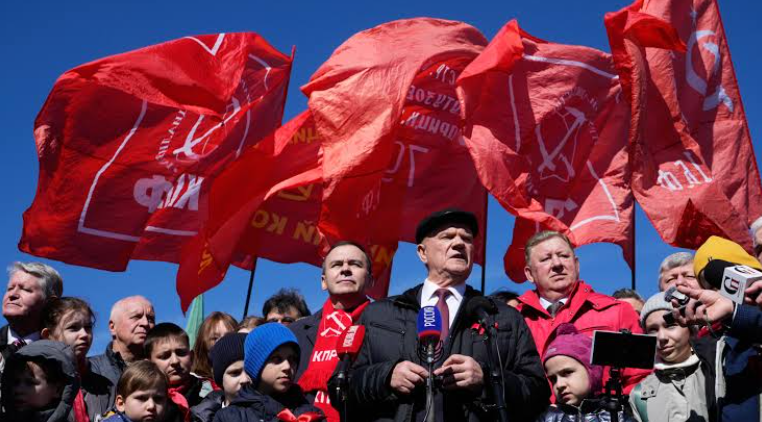
Vladimir Putin As the final polls closed on Sunday, preliminary official results indicated that United Russia, having framed the election as a measure of public support for the war in Ukraine, was leading with 57.5% of the vote. Other political factions, such as the Communists, LDPR (Liberal Democratic Party of Russia), New People, and Just Russia, while significantly trailing behind, are expected to secure seats in the State Duma, the lower house of the Russian parliament.
This tightly controlled electoral process has been characterized by a lack of genuine opposition, with critics asserting that the political environment does not permit authentic dissent, thus reinforcing the Kremlin authoritative grip on power amid ongoing military challenges and international condemnation. Vladimir Putin
Kremlin expected to keep control
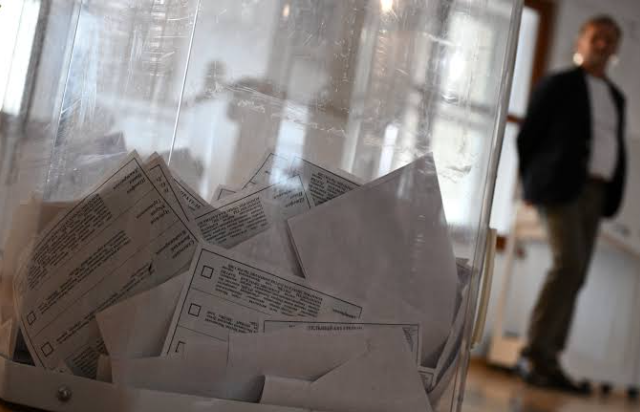
The Kremlin aims to assert its control through the upcoming parliamentary election, the first since the beginning of the full-scale invasion of Ukraine in 2022. This election is intended to demonstrate public support for the ongoing war and lend legitimacy to the government actions. In an effort to mitigate political risks, the Kremlin has effectively suppressed dissent, employing a significant state media campaign and exerting tight control over the electoral process.
The absence of genuine opposition candidates ensures that the Kremlin grip on Russian politics will likely remain firm, particularly in light of rising economic challenges and increased Ukrainian drone attacks within Russia. Vladimir Putin
During the election, voters will use two ballots to fill half of the 450 seats in the State Duma, with one ballot for political parties and the other for individual candidates in single-seat constituencies. Preliminary results are expected shortly after voting concludes in the western regions of the country. It is anticipated that United Russia, the primary party aligned with the Kremlin, will continue to hold a dominant position in the Duma, alongside several smaller parties that are part of the “systemic opposition,” which generally aligns with President Vladimir Putin policies on key issues. Vladimir Putin
Voting Systems Hit by Cyberattacks, Officials Say
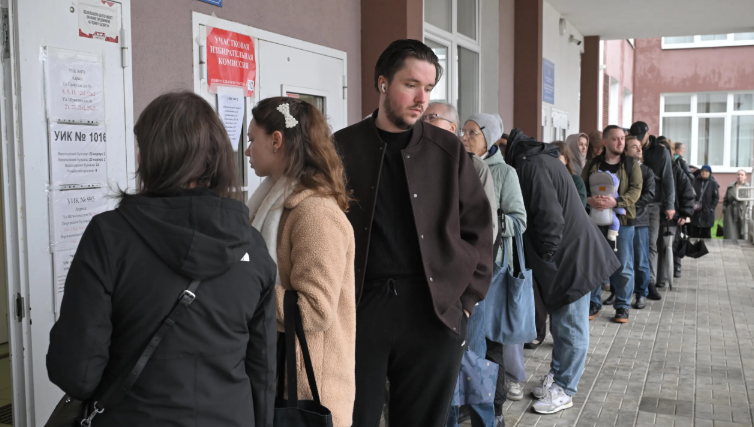
Voting systems in Russia reported experiencing a series of cyber attacks during the electoral process, although authorities indicated that the elections proceeded largely smoothly. Opposition figures in exile urged dissenters to gather at polling stations at noon, leading to significant lines in various locations, though it remains unclear how this affected election outcomes. The Kremlin is expected to utilize the election results as a demonstration of public support for President Vladimir Putin policies and the ongoing war, which has now extended into its fifth year without signs of resolution. Vladimir Putin
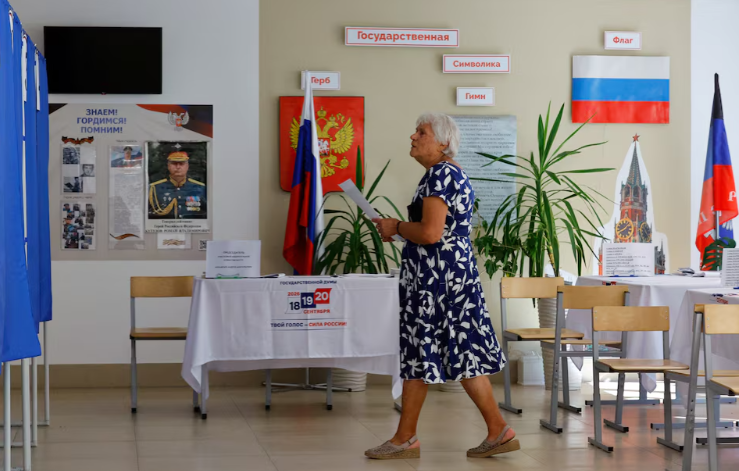
Ella Pamfilova, Chairwoman of the Central Election Commission (CEC), asserted that the recent cyber attacks had failed to dissuade voter participation, noting that turnout had reached nearly 57% by early evening. It is noteworthy that most anti-war candidates were excluded from the ballot, while those from the liberal Yabloko party, despite historically low polling figures, aimed to leverage perceived public fatigue regarding the war. However, anxiety over personal safety was prevalent, particularly after lengthy prison sentences were handed to two senior Yabloko members for their anti-war statements just before the elections.
In a minor act of resistance, Yabloko leader Nikolai Rybakov spoiled his ballot in protest, inscribing his party name along with the phrase “For peace.” The Kremlin has defended its approach to maintaining national unity and implementing certain censorship measures as essential during its declared “special military operation” in Ukraine, framing the conflict as a critical defensive response against a perceived hostile West. Additionally, Moscow has alleged that Ukrainian intelligence and other adversaries are intensifying efforts to foster unrest within Russia. Vladimir Putin
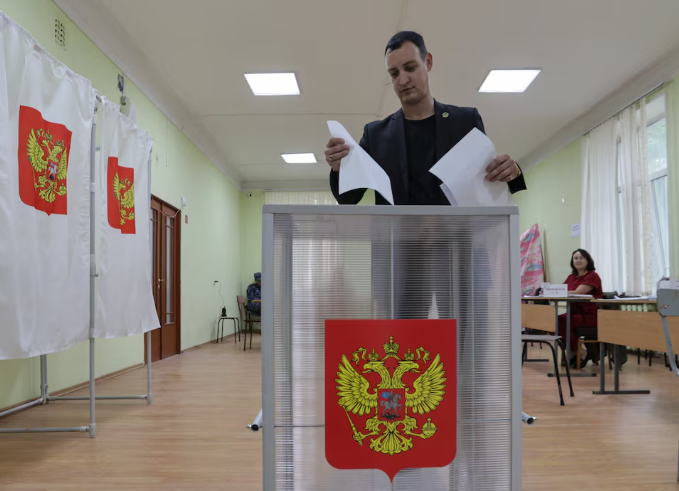
Opposition sidelined as observers report violations
The article discusses the sidelining of opposition parties in Russia during recent elections, highlighting significant violations of electoral integrity. The liberal Yabloko party, the only opposition group vocally criticizing the war, was removed from the ballot by the Supreme Court, limiting its representation to just a few candidates in single-constituency races. Many anti-war politicians were either imprisoned or forced into exile before the elections. Yabloko and the Communist Party, which has been cautious in its criticism of President Vladimir Putin, reported that many of their election observers were denied access to polling stations.
Vladimir Putin Furthermore, Russia decision not to invite observers from the Organization for Security and Cooperation in Europe (OSCE) was met with complaints, as the Russian Foreign Ministry accused the OSCE of bias in its criticism. The OSCE Parliamentary Assembly President, Pere Joan Pons, condemned this exclusion as a violation of Russia obligations as a member state.
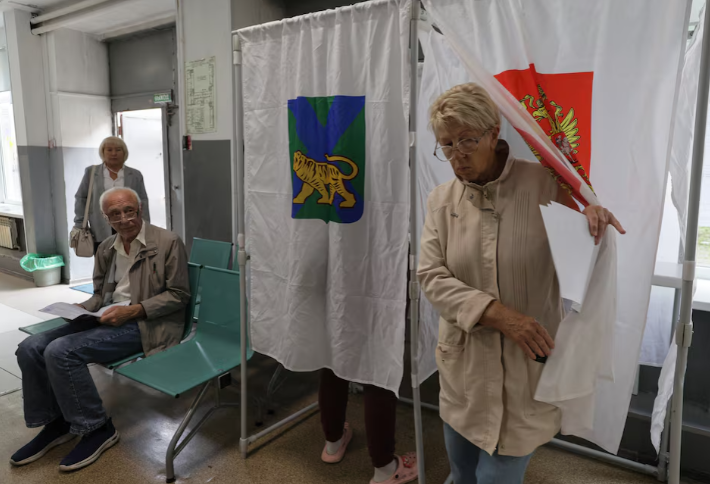
Yabloko detailed various election irregularities, including incidents where an observer fainted during arrest at a St. Petersburg polling station, under accusations of attempting to disrupt the process. Other reported violations included the tampering of sealed ballot boxes, unsecured polling stations overnight, and refusals to provide paper ballots. These claims, however, lacked independent verification. In a particularly concerning scenario in the Donetsk region, voters were observed casting their ballots under the watchful eye of an armed Russian soldier.
Issues with electronic voting in Moscow
The electronic voting system in Moscow faced significant issues during its recent implementation, as reported by Ella Pamfilova, the head of Russia Central Election Commission. Pamfilova indicated that the system was targeted by cyberattacks, attributing the blame to one of the systemic parties involved in the elections, though she did not specify which one.
Independent news outlet SotaVision documented multiple voter reports of glitches within the electronic registry systems across various polling stations in Moscow. In a troubling trend, voters were often not provided with paper ballots and were instead directed to cast their votes using electronic terminals. This situation raised concerns about accessibility and transparency in the voting process.
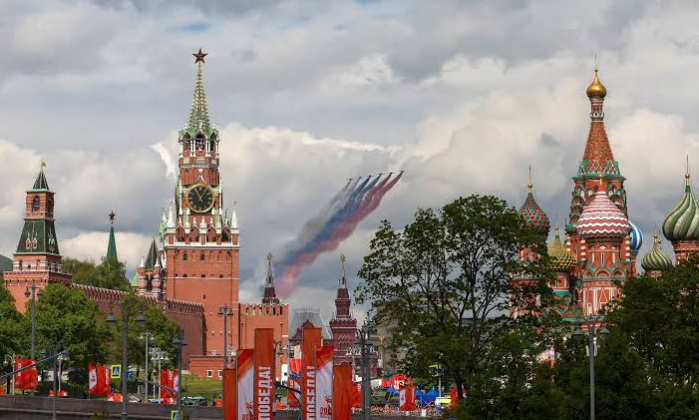
Leonid Volkov, a prominent associate of the late opposition figure Alexei Navalny, suggested that the failures of the paper ballot issuance system might have been intentional, possibly to coerce voters into using the electronic voting option. Volkov urged voters on social media to demand paper ballots, highlighting the dissatisfaction with the electronic method.
As the situation progressed, long lines began to form outside polling stations as many individuals chose to refuse electronic voting, indicating a significant portion of the electorate distrust in the system. Meanwhile, Yabloko party leader Nikolai Rybakov participated in the voting process in St. Petersburg. He notably marked his ballot with bright green messages advocating for “freedom,” “peace,” and expressing support for the Yabloko party, a move that aligns with his campaign to motivate supporters to spoil their party-list ballots.
Russian opposition abroad holds protests
The Russian opposition in exile organized protests to coincide with voting on a Sunday, urging anti-war Russians to participate. Notably, Yulia Navalnaya, the widow of prominent opposition leader Alexei Navalny, played a significant role in these calls for action. Thousands of Russians residing in Armenia participated in the vote, gathering outside the Russian Embassy in Yerevan, where many also took part in the “Noon for a Peaceful Russia” demonstration, showcasing anti-war sentiments and opposition to President Vladimir Putin through various posters.
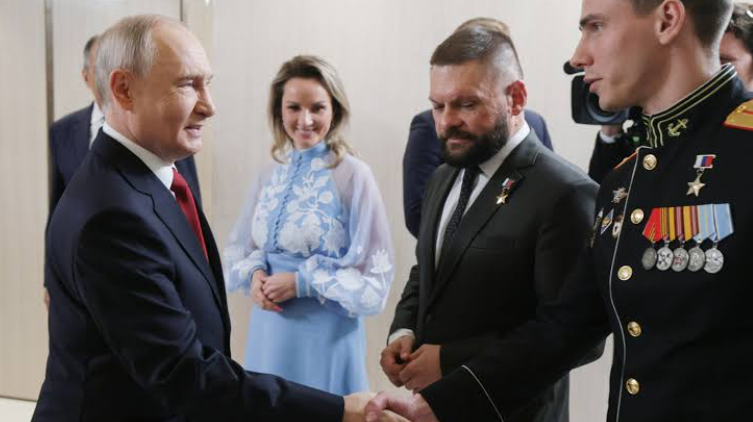
Vladimir Putin Journalist Mark Podberezin described the atmosphere at the embassy as one of intimidation, recounting remarks from election officials that suggested consequences for returning to Russia. Lidiya Klimenko expressed skepticism about the impact of her vote, highlighting the importance of solidarity among those opposing the war, emphasizing that the communal experience was just as vital as the act of voting itself.In Germany, voting also took place at the Russian Embassy in Berlin, where Andrei Pivovarov, a notable dissident and former leader of the Open Russia movement, spoke to a gathering of protesters outside, reinforcing the message of opposition and calling for change. Vladimir Putin
Ukraine Launches 100 of Drones in Largest Ever Attack on Moscow
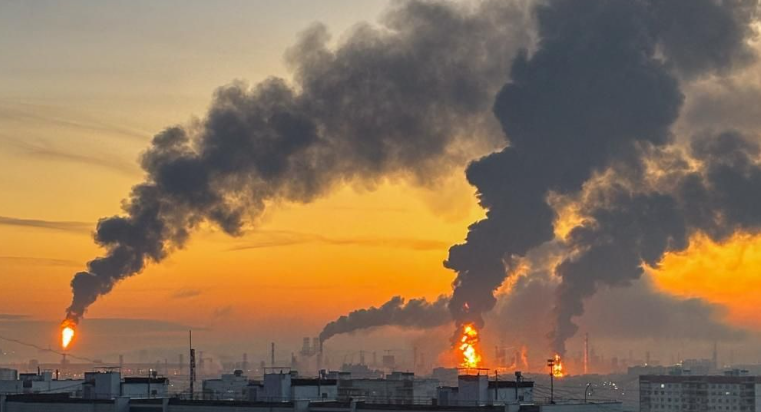
Ukraine Launches Hundreds of Drones in Largest Ever Attack on Moscow: Ukraine has conducted its largest-ever drone attack on the Moscow region, launching approximately 450 drones, as reported by Mayor Sergei Sobyanin. This unprecedented assault targeted significant sites, including Moscow main oil refinery and a residential building. The attack resulted in the shooting down of all the drones, with Sobyanin describing it as “the most massive” attack to date. Vladimir Putin
Read More
Summary
- Ukraine targets Moscow on last day of voting
- United Russia on track to retain control of State Duma
- Some technical issues, long lines reported in Moscow amid cyber attacks
- Critics say system does not tolerate real dissent