Tankers with Saudi crude turn back as Houthis open new front in US-Iran war

Two oil tankers transporting Saudi crude oil to Asia altered their routes in the Red Sea on July 21, following threats from Yemen’s Houthi movement, which is aligned with Iran.
This incident highlights the escalating tensions in the Middle East and the impact on global shipping routes, particularly through crucial energy chokepoints. Concurrently, U.S. military operations targeted locations in southern and western Iran, in response to Iranian actions against U.S. interests in Bahrain, Kuwait, and Jordan.
Houthis Additionally, a tanker was struck in the Strait of Hormuz, intensifying the conflict at a critical maritime juncture. This situation illustrates the growing complexity of the US-Iran conflict and its implications for global energy security, as reported by the Reuters Iran Briefing newsletter, which provides ongoing updates and analysis of the Iran war.
Iran announced that it had targeted infrastructure associated with Amazon in Bahrain, where the U.S. tech company operates a regional data center. Amazon has not yet provided a comment on the situation, and Reuters was unable to verify this claim.
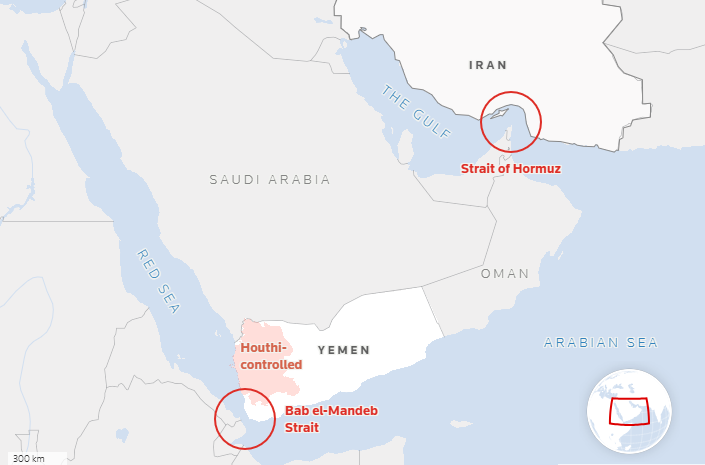
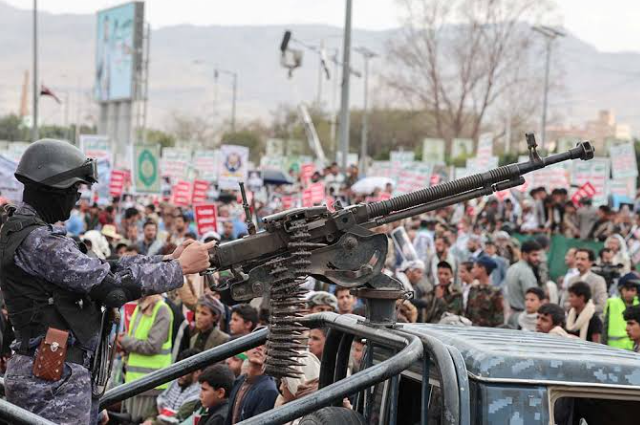
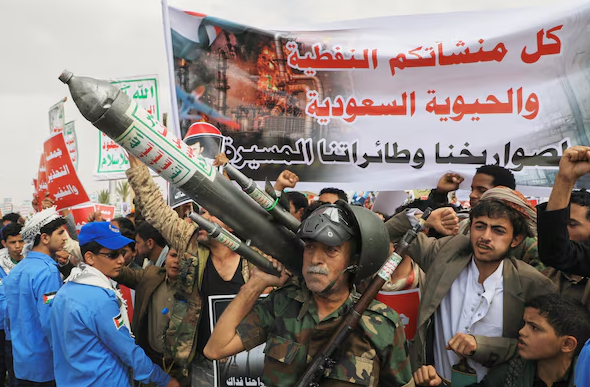
Houthis Meanwhile, the Houthis, who govern northern and western Yemenin cluding the important coastal area at the Red Sea’s entrance declared a naval blockade against Saudi Arabia.
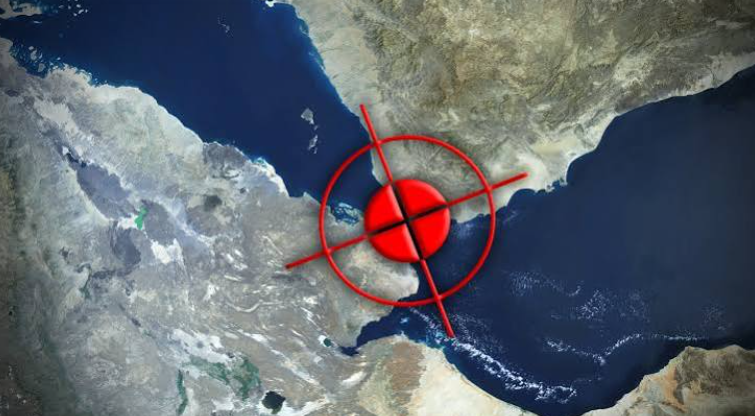
They issued warnings to shippers concerning any vessels that would load or unload Saudi oil, signifying a potential escalation in the conflict. U.S. President Donald Trump indicated that the Houthis had not yet closed the Bab el-Mandeb Strait, a crucial maritime passageway into the Red Sea, and he threatened retaliatory actions should they proceed with this blockade.
Trump stated that while no incidents have occurred yet, preparations are in place to address potential issues.
The announcement from the Houthi movement regarding an embargo has already led to significant changes, most notably causing two tankers, which had loaded Saudi crude oil destined for China and India, to alter their routes. This shift saw the tankers redirecting towards the Suez Canal instead of proceeding through the Bab el-Mandeb into the Indian Ocean.
According to the British maritime risk management group Vanguard, this represents the first confirmed adjustments in the routing of commercial tankers due to the Houthi embargo, which is anticipated to disrupt Saudi crude exports and regional shipping dynamics.
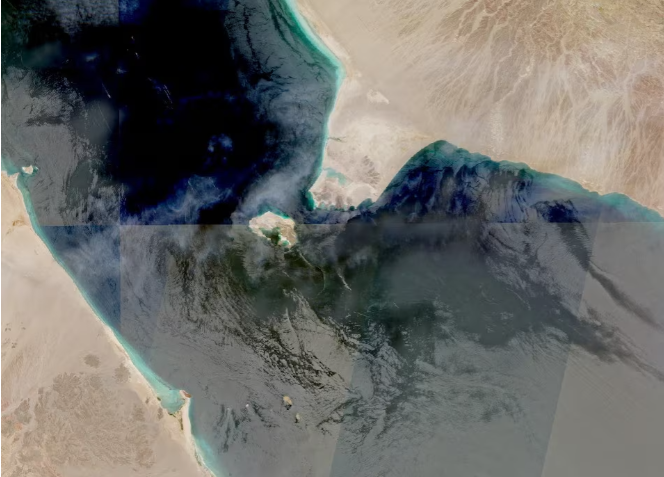
With the ongoing conflict affecting the Strait of Hormuz traditionally a major shipping lane the Red Sea now serves as the primary alternative, facilitating the transport of millions of barrels of Saudi oil daily via pipeline from Yanbu. Consequently, oil prices experienced a notable increase of over 2% on Tuesday, with Brent crude trading above $91 per barrel and U.S. gasoline prices rising above $4 per gallon.
U.S. STRIKES SOUTHERN, WESTERN IRAN
U.S. Central Command announced a series of airstrikes targeting Iranian military installations that include command centers, maritime capabilities, missile and drone launch sites, and air defense systems.

These strikes have been ongoing nightly for more than a week and have notably affected several locations including Shiraz, Konarak, Chabahar, Khorramabad, and a civilian site near Abdanan. While Iranian state media reported attacks in these regions, an official from Khorramabad mentioned that no enemy attack had occurred there.
Houthis The strikes have resulted in significant civilian casualties, with reports indicating that fifty civilians have been killed and around five hundred wounded, as stated by a health ministry official. Additionally, the U.S. has reported the deaths of three soldiers in the region, attributing the strikes as a punitive measure against Iran for their fatalities.

IRAN STRIKES ACROSS THE REGION
The United States and Iran have seen a significant escalation in tensions following the collapse of a recent interim deal aimed at halting hostilities. On a recent Tuesday, Iran executed a series of attacks throughout the Gulf, including drone and missile strikes on desalination facilities.
These attacks have heightened fears over potential freshwater shortages in desert nations that are heavily reliant on desalination for their drinking water supplies.
Kuwait reported a swift response to the Iranian offensive, which involved damage to power generation facilities critical for both electricity and water production.
Houthis Further concerns arose when Bahrain’s sirens alerted the public to Iranian strikes intended against infrastructure purportedly linked to Amazon, interpreted by Iranian Revolutionary Guards as retaliation for what they labeled a U.S. attack on an Iranian nuclear power plant construction site.

Houthis Moreover, Iranian state media indicated that their military had also launched assaults on U.S. military installations situated in Bahrain, as well as bases in Kuwait and Jordan. This pattern of aggressive actions signals a notable escalation in hostilities, reflecting the fragile state of regional security and the complexities of U.S.-Iran relations.
TANKERS STRUCK
On Tuesday, UKMTO, the maritime security agency, reported an incident in the Strait of Hormuz involving a tanker that was struck by a projectile, prompting the crew to abandon the ship and take refuge in a lifeboat. Concurrently, Iran’s Revolutionary Guards disclosed that two oil tankers experienced explosions and caught fire while navigating the southern shipping lane of the strait.
Houthis The United States has been advocating for vessels to utilize the southern lane; however, Iran insists on the use of a northern route closer to its coast, with plans to impose transit fees on that path.
Notably, data from Kpler revealed a significant drop in activity, with only four commodity vessels transiting Hormuz on Monday, compared to seven the day prior, primarily favoring the northern shipping lane.
Houthis In the context of the ongoing conflict, Saudi Arabia has mitigated disruptions in shipping by routing oil through pipelines to Yanbu on the Red Sea. Yet, should the Houthis fully obstruct this alternative route, it could severely impact global oil supply, leaving a majority of Saudi oil exports stranded.
DIPLOMATIC PUSH TO RESTORE CEASEFIRE
A senior Iranian official announced that Tehran has received a proposal from mediators for a 10-day ceasefire, aimed at salvaging an interim deal to end the ongoing war that began on February 28 due to U.S.-Israeli attacks on Iran.
Houthis This development indicates ongoing diplomatic efforts, highlighted by Iran’s Interior Minister, Eskandar Momeni, visiting Pakistan to request continued mediation. Meanwhile, U.S. President Trump, during a meeting with the Lebanese president at the White House, commented on the parallel conflict involving Israel and Hezbollah, asserting that while the Iranians are eager to engage in talks, the U.S. lacks interest until substantial negotiations occur.
This situation underscores the complexity and interwoven nature of regional tensions and diplomatic initiatives.
Summary
- Tankers had loaded Saudi crude bound for China and India
- US, Iranian forces exchange strikes
- Iranian forces target US sites in Gulf and Jordan
- Signs of diplomatic efforts to de-escalate conflict
The document summarizes key events related to the geopolitical landscape involving oil shipments and military tensions in the Middle East. It notes that several tankers have successfully loaded crude oil from Saudi Arabia, specifically destined for markets in China and India.
Houthis Additionally, there have been exchanges of strikes between US and Iranian forces, highlighting escalating military activities in the region. Iranian forces have targeted US installations located in the Gulf and Jordan, indicating a significant level of hostilities.
Despite these aggressive actions, there are emerging signs of diplomatic efforts aimed at de-escalating the ongoing conflict, suggesting that both parties may be seeking a resolution amidst rising tensions.
Pingback: Report: NJ Under Tornado Watch as Severe Storms and Flash Floods Slam Northeast 21 July - internationalmediawire.com
Pingback: Breaking: Has the U.S. reached a deal regarding the Strait of Hormuz? What is the proposed agreement, and what impact could it have if implemented? 5 Aug - internationalmediawire.com
Pingback: Report: Houthis Attack Saudi Arabia Refinery After Kingdom Signs Defense Pact - internationalmediawire.com